PHOTO
LONDON - The dollar stayed on the defensive on Thursday as hopes for a de-escalation in the Iran-U.S. war supported oil-exposed currencies, while Tokyo resumed its verbal intervention in support of the yen, making speculators cautious.
The United States and Iran are edging toward a limited, temporary agreement to halt their war, sources and officials have said, with a draft framework that would stop the fighting but leave the most contentious issues unresolved.
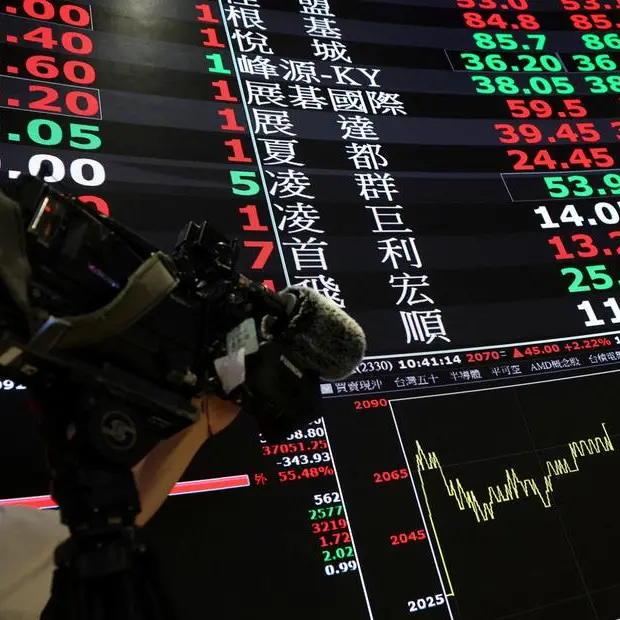
Reports of the possible progress have supported stock and bond markets globally since Wednesday, while weighing on the dollar against most major peers.
That momentum continued on Thursday, albeit in a more muted manner.
The euro was up 0.1% on the day at $1.1763 after gaining 0.47% on Wednesday, while sterling was 0.13% higher at $1.3615 after rallying 0.4% the previous day.
"Everyone is still very focused on the Middle East and where we are on the negotiations but really we just don't know. Markets are reflecting that the easiest thing is to wait and see what happens," Nick Rees, head of macro strategy at Monex Europe, said.
Oil prices continued to show some hopes of de-escalation that could allow exports from the Gulf to resume. Benchmark Brent June futures were at $98.6 a barrel, well off their recent highs, but also well above pre-war levels.
The Japanese yen was also a fraction stronger at 156.21 per dollar, having appreciated sharply on Wednesday with speculation that Japanese authorities had again intervened in markets to buy their currency.
Japan may have spent as much as 5.01 trillion yen ($32.06 billion) in its latest efforts to bolster its embattled currency, central bank data indicated on Thursday, signalling repeated bouts of intervention in markets.
Japan's top currency diplomat, Atsushi Mimura, said separately on Thursday the country was not restricted on intervention.
U.S. Treasury Secretary Scott Bessent will meet Japanese Prime Minister Sanae Takaichi next week, and the Nikkei newspaper said they would discuss curbing speculative yen selling, among other issues.
But analysts do not expect the yen to remain firm for long.
"Without stronger BOJ follow-through via consecutive hikes to address its behind-the-curve stance, the yen is likely to remain weak in the near term," Masahiko Loo, senior fixed income strategist at State Street Investment Management, said.
Repeated interventions raise the likelihood of broader policy action in the June to July window, consistent with the late 2024 playbook, Loo added.
Elsewhere, Norway's crown strengthened after the central bank raised its policy rate to 4.25% from 4% and warned inflation was too high. The dollar hit a fresh four-year low and was last down 0.9% to 9.249 crowns, while the euro was 0.6% lower at 10.851 crowns.
The risk-sensitive Australian dollar rose 0.3% and last fetched $0.7242, just below the four-year high it touched on Wednesday.
The Swedish crown was slightly stronger at 10.846 per euro and 9.21 per dollar after the central bank said the risk that the Middle East war would lead to higher inflation had increased somewhat, though it kept its policy rate unchanged at 1.75%, as expected.