PHOTO
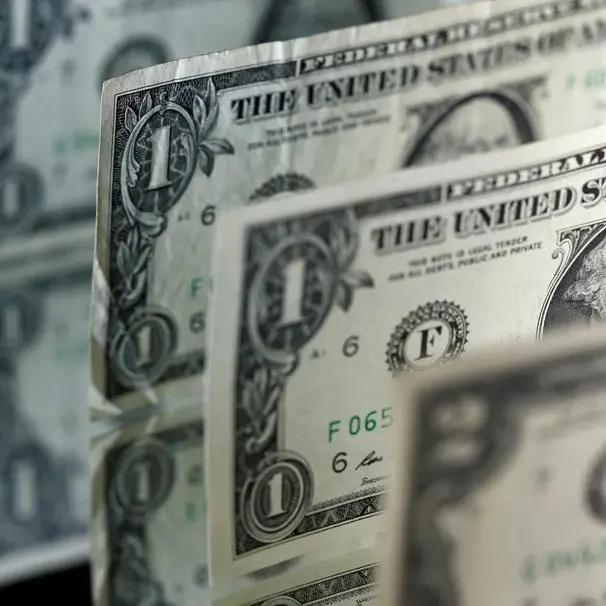
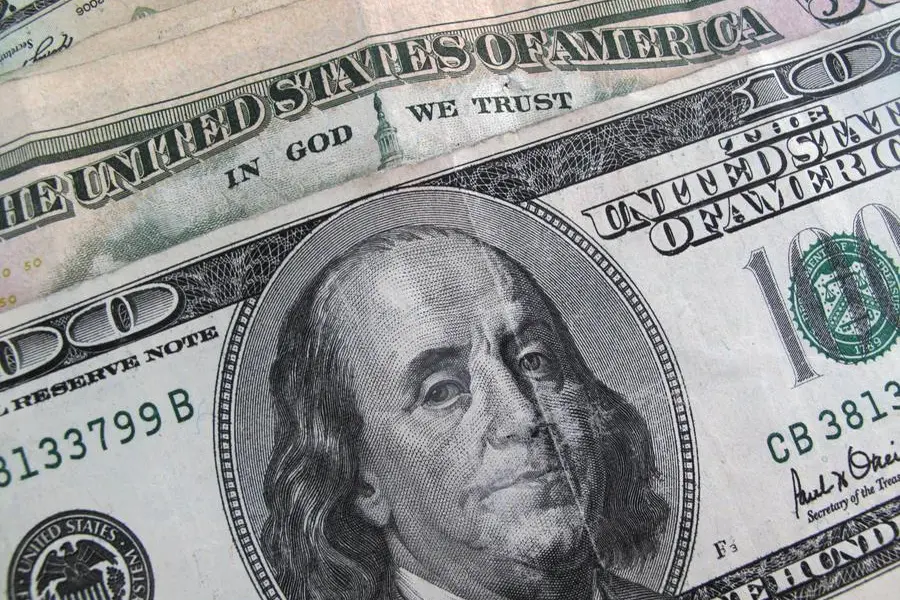
LONDON/HONG KONG - The U.S. dollar hovered near a 10-day low against other major currencies on Monday as a preliminary agreement to end the war between the U.S. and Iran sent oil prices tumbling and lifted risk sentiment.
U.S. and Iranian officials said on Sunday they had agreed on a framework for a deal to end their war, halt the U.S. blockade of Iran and reopen the Strait of Hormuz.
The memorandum of understanding is scheduled to be officially signed on Friday in Switzerland, but caution still lingered as markets awaited more details and as the fate of Iran's nuclear program was left for further negotiations. Oil prices slumped, with Brent crude futures down around 5% to $82.9 a barrel. The dollar index, which measures the greenback against a basket of currencies including the yen and the euro, was little changed at 99.51, hovering around its lowest since June 5.
Nick Rees, head of macro research at Monex Europe, said that despite the preliminary deal between the U.S. and Iran, markets would likely be cautious about pricing in further optimism.
"There's plenty of room to be disappointed here," he said. "Crucially, we haven't heard anything on the nuclear side. If that comes through over the next few days, then I think we can be a bit more constructive."
"But without a nuclear agreement, I don't think we can simply assume that any deal's going to hold. So we are cautiously optimistic, but that warrants a relatively small FX reaction," Rees added. The euro was last 0.36% higher at $1.1610, and the sterling rose 0.15% to $1.3423. Both were near their strongest levels since June 5. The Japanese yen was broadly steady at 160.13 per dollar, continuing to hold around the 160-level, widely seen as a line in the sand for potential official intervention.
CENTRAL BANKS IN FOCUS
Major central banks, including the Federal Reserve, the Bank of Japan, the Bank of England and the Reserve Bank of Australia, will deliver rate decisions this week, with markets focused on whether prospects for a peace deal will ease their inflation concerns and influence the current tightening trajectory.
The Federal Reserve is widely expected to hold rates in the current range of 3.5%-3.75% on Wednesday, but all eyes will be on the policy statement and press conference for what the new chair, Kevin Warsh, signals. Investors trimmed bets on a rate hike this year and now price in a roughly 50% chance of a move in December, down from over 70% a week ago, according to the CME FedWatch Tool.
"Negotiations on aspects of the deal are ongoing, but no doubt central bankers will be breathing a sigh of relief, for now at least, that the upside risks to inflation appear to be receding and not becoming the central scenario," said Prashant Newnaha, senior rates strategist at TD Securities in Singapore. The Bank of Japan is set to raise interest rates to 1%, a 31-year high, at its two-day meeting concluding on Tuesday. It is also expected to signal readiness to keep pushing up borrowing costs to combat inflation risks despite the peace deal.
Meanwhile, both the Reserve Bank of Australia and the Bank of England are expected to hold rates steady.