PHOTO
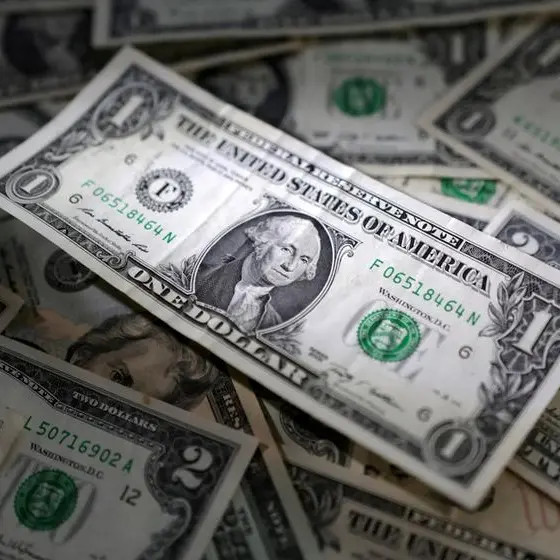
HONG KONG - The U.S. dollar rose slightly on Thursday, but remained near its lowest level since early March, as markets waited hopefully for further news about a possible U.S.-Iran peace deal.
President Donald Trump said the U.S.-Israeli war on Iran was "close to over," while the White House expressed optimism about a deal, saying more in-person talks would likely take place in Pakistan again.
Yet an Iranian official said big splits remained on Thursday, including over Tehran's nuclear ambitions, even as the two sides have made some progress, helping cool market optimism.
The euro briefly strengthened past $1.18 after rising for eight consecutive sessions, but was last down 0.1% just below that level.
Sterling was last roughly flat at $1.3553, after data showed UK growth beat expectations in February.
Both currencies hovered near their highest levels since before the Iran war began in February.
The dollar index, which measures the currency's strength against six major peers, rose 0.15% to 98.15.
It declined for eight straight sessions through Wednesday to give up most of the gains sparked by the war, as a tentative ceasefire revived appetite for riskier currencies.
"Markets are now basically looking past the conflict and pricing that there's going to be some kind of settlement," said Khoon Goh, the head of Asia research at ANZ.
"As markets are pricing out the war premium, we could see the dollar coming under further pressure and resuming the downtrend that has been established since basically last year."
The Japanese yen was little changed at 158.96 per dollar after the country's finance minister said Japan and the U.S. agreed to intensify communication on exchange rates after her meeting with U.S. Treasury Secretary Scott Bessent on Wednesday.
Data showed China's economy grew 5.0% in the first quarter, beating analysts' expectations, picking up speed on strong exports and policy support.
The offshore yuan traded at 6.8187 yuan per dollar, hovering near a three-year high.
The Australian dollar, which is often seen as a proxy for sentiment about the global economy, strengthened to a four-year high of $0.7197.
Australian employment rose broadly in line with expectations in March, prompting markets to maintain bets on a roughly 70% chance the Reserve Bank of Australia will raise rates again in May.