PHOTO
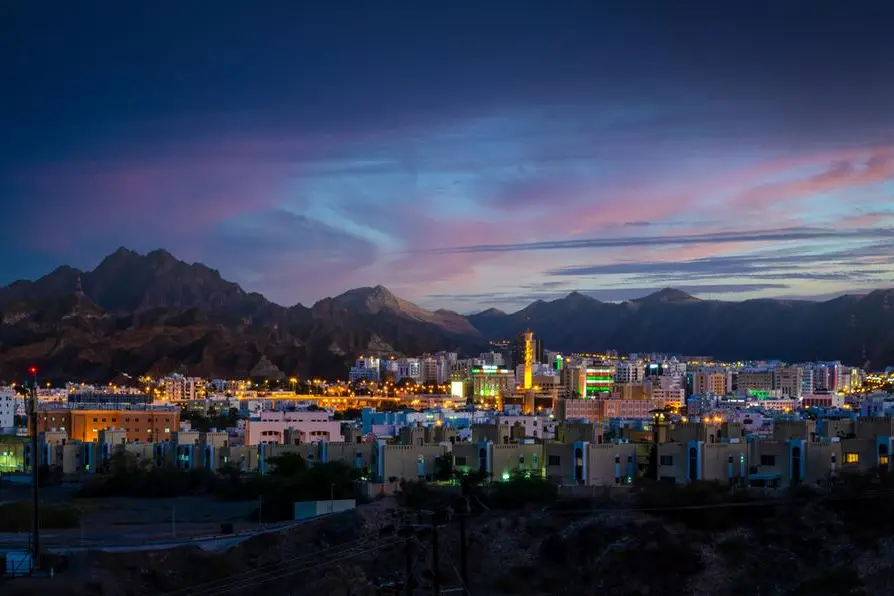
As Oman advances toward the ambitions of Oman Vision 2040, research and innovation are becoming central to sustainable growth, economic diversification, and national competitiveness. With more than 74 per cent of Oman Vision 2040 indicators showing measurable progress, the next phase requires a shift from infrastructure-led development to deeper knowledge production and applied research aligned with national priorities.
A Strong Foundation
Oman already benefits from a well-established research ecosystem. At Sultan Qaboos University (SQU), leading centres in earth sciences, remote sensing, and environmental studies support national planning and sustainability efforts. The Earth Sciences Research Center contributes to global work on Oman’s unique ophiolite geology, while the Remote Sensing and GIS Research Center enhances geospatial capabilities essential for land-use and resource management. CESAR adds critical analysis in environmental policy, air quality, and land degradation.
Beyond SQU, the University of Nizwa’s Natural and Medical Sciences Research Center advances biomedical and pharmaceutical research, and Innovation Park Muscat (IPM) plays a pivotal role in connecting researchers, startups, and industry. These institutions form an impressive landscape, but one that remains unevenly connected to broader national transformation frameworks.
New Research Centres
To move from incremental progress to structural transformation, Oman could now develop a new wave of mission-oriented research centres capable of converting knowledge into economic capability, diversification, and competitive advantage.
These proposed centres build on existing institutional strengths, using current academic and governmental ecosystems to reduce cost, accelerate implementation, and ensure policy relevance — all without creating unnecessary duplication.
1. Smart Cities and Urban Systems Innovation Centre
With urbanisation accelerating, Oman needs integrated approaches to mobility, planning, and digital governance. A centre rooted within the engineering and technology expertise of SQU — and naturally aligned with the Ministry of Transport, Communications and Information Technology — would provide a practical foundation. Pilot initiatives in Muscat, Al Duqm, and Suhar could serve as applied testbeds, linking national priorities with immediate, measurable outcomes.
2. Circular Economy and Sustainable Resources Institute
A national shift toward circularity requires research that bridges environmental innovation with industrial diversification. Innovation Park Muscat, already home to emerging clean-tech ventures, offers an ideal environment for such an institute. Its proximity to the Environment Authority and the Ministry of Commerce, Industry and Investment Promotion would make it easier to translate research into regulatory frameworks, commercial pathways, and industry adoption.
3. Public Policy and Strategic Governance Lab
As Oman continues public-sector modernisation, a specialised governance lab could support evidence-based policymaking, foresight, and institutional design. Housing such a lab within the ecosystem surrounding the Oman Vision 2040 Follow-up Unit — in close collaboration with SQU’s policy and economics faculty and existing national training structures — would ensure alignment with evolving reform programmes and provide a direct path to policy integration.
4. Data Analytics and Societal Resilience Centre
National resilience requires advanced predictive capabilities, AI-driven analytics, and integrated risk modelling. The University of Technology and Applied Sciences (UTAS), with its distributed campuses, lends itself naturally to a networked model. A coordinating node — such as UTAS Nizwa — could anchor a national platform connecting data systems, research teams, and sectoral partners across the country.
5. Blue Economy and Marine Innovation Hub
Oman’s 3,000 km of coastline remains one of its greatest underdeveloped assets. A marine innovation hub located within the emerging economic landscape of Al Duqm — and academically connected to SQU’s marine biotechnology expertise — would strengthen research in aquaculture, marine biotechnology, offshore energy, and coastal resilience. This positioning would help establish a coastal innovation corridor linking Muscat’s research capacities with Al Duqm’s industrial potential.
From Research to National Leverage
According to the National Centre for Statistics and Information (NCSI), Oman invests around 0.28 per cent of GDP in research and development, well below the global average of 1.7 per cent. Strengthening R&D through mission-oriented centres would enhance national competitiveness, stimulate high-skill job creation, and turn research outcomes into concrete economic value.
Strategic Insights
1.Oman Vision 2040 alignment ensures each centre contributes directly to diversification, sustainability, and national wellbeing.
2.Applied value creation is essential; research must translate into technologies, policy tools, live pilots, and market-ready solutions.
3.Integrated collaboration among academia, government, and industry reduces duplication and accelerates impact.
4.Agenda-setting capability emerges when research institutions collectively shape policy discussions, investment priorities, and reform pathways.
5.Global attraction power increases when well-structured centres become focal points for international talent, competitive fellowships, industry partnerships, and global funding.
The Way Forward
Establishing these centres is not an expansion of academia, but a strategic shift that anchors Oman’s development in intelligence, innovation, and long-term resilience. Through phased implementation and smart use of existing institutional infrastructure, the centres could be operational within three to five years and linked through a coordinated National Research and Innovation Network (NRIN). Such a network would translate Oman’s knowledge ambitions into tangible economic and societal impact — ensuring the country’s transformation is not only powered by infrastructure, but by the intelligence and creativity of its people.
2025 © All right reserved for Oman Establishment for Press, Publication and Advertising (OEPPA) Provided by SyndiGate Media Inc. (Syndigate.info).