PHOTO
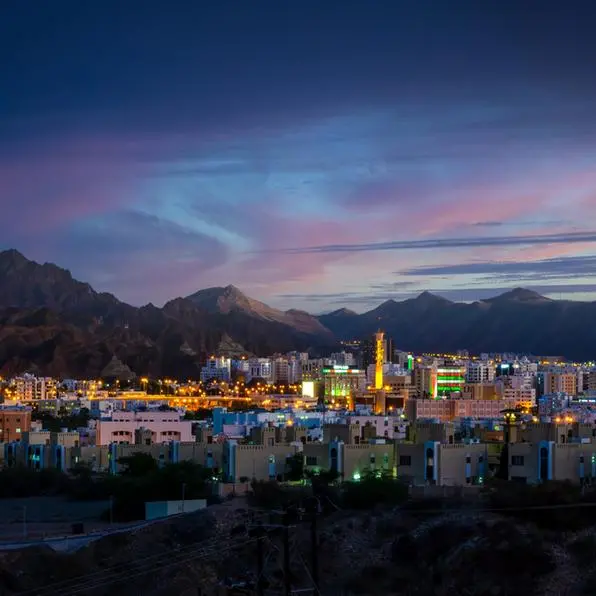
Muscat: The Ministry of Heritage and Tourism (MHT) has signed an agreement with the Development Foundation of the Oman LNG Company to finance the establishment of a visitors' center for the archaeological city of Qalhat, valued at RO3 million.The
UNESCO synopsis
Ancient City of Qalhat, which is located on the east coast of the Sultanate of Oman, includes the ancient city of Qalhat, surrounded by inner and outer walls, as well as areas beyond the ramparts where necropolises are located. The city developed as a major port on the east coast of Arabia between the 11th and 15th centuries CE, during the reign of the Hormuz princes.
The Ancient City bears unique archaeological testimony to the trade links between the east coast of Arabia, East Africa, India, China, and South-East Asia. It is located on the eastern coast of the Sultanate of Oman, approximately 20 kilometres north of the city of Sur.
The city was an important port on the Sea of Oman along the East Arabian Coast, which allowed for trade with the Persian Gulf and the Indian Ocean and hence functioned as a trade centre between India and, through it, East and South East Asia and the Arabian Peninsula. Qalhat flourished in the 11th to 16th century CE under the ruling of the Princes of Hormuz, who coordinated vital exports of horses, dates, incense, and pearls.
Following Portuguese attacks, the Ancient city of Qalhat was abandoned in the 16th century and has since been preserved as an archaeological site. The remains and monuments on site comprehensively represent a port city of the Kingdom of Hormuz and reflect its legacy, architecture, and urban design.
Qalhat exhibits the cultural and commercial interchange of values within the trading range of the Kingdom of Hormuz, which extended to India and as far as China and South East Asia. The archaeological site of Qalhat provides physical evidence of these interchanges, documenting the architectural features which indicate its produce, dates, Arabian horses as well as spices and pearls but also integrating the multi-cultural features of a medieval cosmopolitan city, with houses influenced by the needs of their various owners and inhabitants of foreign cultural origin. The ancient city also includes several highly representative buildings, which were referenced in narratives authored by historic travellers.
The Ancient city of Qalhat, since its abandonment in the 16th century, is an archaeological site. Its architectural and urban fabric and form remain authentic, almost untouched, as does its setting. The abandonment of the Ancient City of Qalhat plays a positive role in the conservation of its authenticity. The site has not been occupied since the 16th century and, therefore, it preserves all characteristics of organization, function, and architectural techniques corresponding to the Islamic Period in general and the period of the Hormuz Kingdom in particular. Conservation, visitor management, and site presentation plans aim at preserving this state to the largest extent possible.
Likewise, archaeological excavations have been well-planned, thorough, and minimal, an approach that should be commended and continued. Conservation works undertaken post-excavation will likewise be guided by minimum intervention approaches. The location of the Ancient City of Qalhat between the mountains, deep valleys, and the sea is essential to its largely retained authenticity in setting. Authenticity in meaning is related both to the authenticated history of the site and to stories and myths associated with it, which will be respected within the overall management approach.
2022 © All right reserved for Oman Establishment for Press, Publication and Advertising (OEPPA) Provided by SyndiGate Media Inc. (Syndigate.info).