PHOTO
DUBAI: Economic activity in the Middle East and North Africa (MENA) has shown remarkable resilience, despite persistent global uncertainty and heightened geopolitical tensions.
According to the IMF October 2025 Middle East and North Africa Regional Economic Outlook, the region has largely avoided direct fallout from higher U.S. tariffs and global trade restrictions. And while recent tensions have raised concern, their impact has been limited and short-lived.
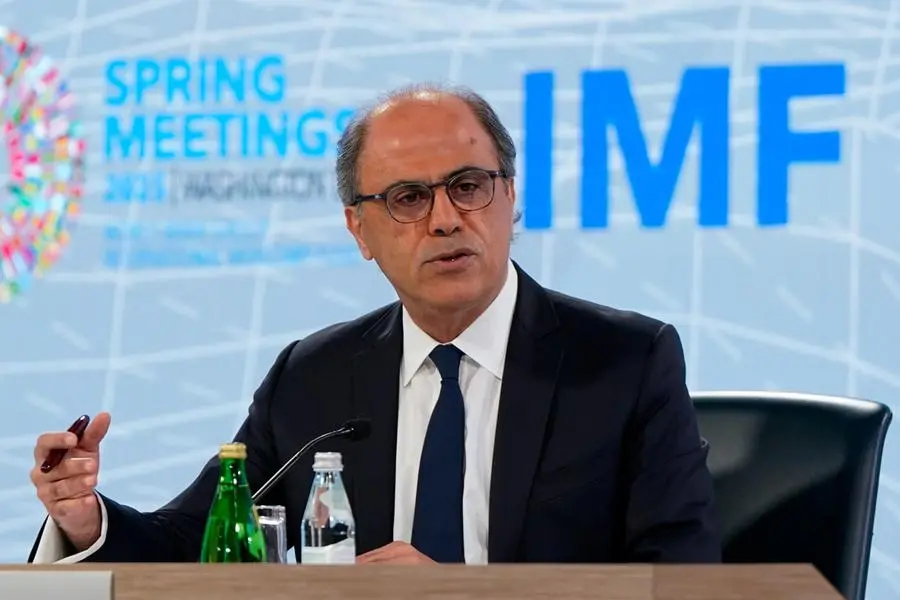
Growth prospects have strengthened since our last assessment. We now project regional GDP growth at 3.2 percent this year, up from 2.1 percent in 2024—a 0.6 percentage-point upward revision since May. Looking ahead, we expect growth to accelerate to 3.7 percent next year, 0.3 percentage points higher than our previous forecast, and to remain broadly steady over the medium term,’’ Dr. Jihad Azour, Director of the Middle East and Central Asia Department at IMF, told a press conference in Dubai today to launch the IMF October 2025 Middle East and North Africa Regional Economic Outlook Press Conference.
‘’These upgrades reflect a range of factors. Among MENA oil exporters, stronger growth stems primarily from higher-than expected production following the unwinding of OPEC+ cuts. Growth in these economies is projected to reach 3 percent in 2025 and 3.4 percent in 2026, compared with 2.5 percent last year.’’
For oil importers, Dr. Azour said, momentum is also improving. Growth is projected to rise to 3.5 percent in 2025 and 4.1 percent in 2026, supported by lower oil prices, strong remittances, robust tourism inflows, and better agricultural conditions. Continued progress on macroeconomic stabilisation and structural reforms is helping these economies build resilience and strengthen their outlook.
Looking ahead, he expected GDP growth in MENA to strengthen further this year and next, driven by resilient demand, higher oil output, and ongoing reforms. Over the medium term, growth should gradually accelerate as reforms and stabilisation policies take hold.
The challenge now is for policymakers to translate that resilience into sustained, inclusive growth over the long term, he added.
‘’The IMF’s partnership with the region remains strong and steadfast—through financing, policy advice, and capacity development—to help countries navigate uncertainty and seize the opportunities ahead. Since the start of 2024 alone, the IMF has approved $21.4 billion in financing for countries in the MENA region and Pakistan,’’ he concluded.