PHOTO
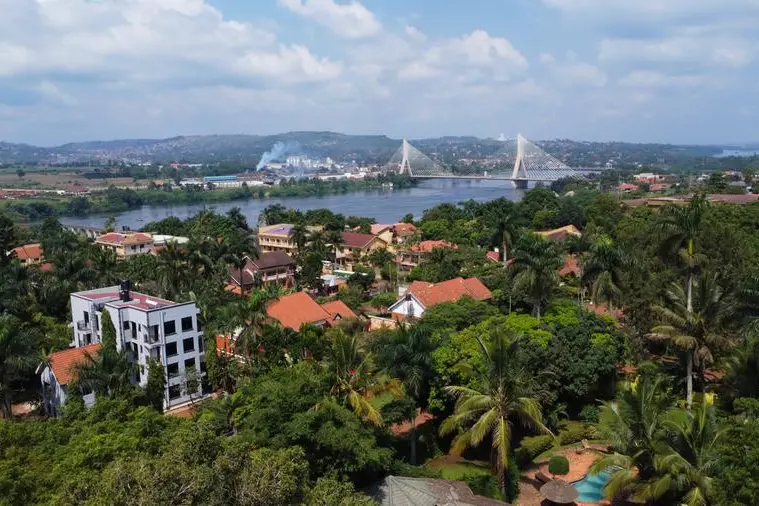
Uganda may have the second-lowest electricity tariff for large-capacity industrial consumers after Ethiopia, yet its domestic users face the second-highest power prices in the Common Market for Eastern and Southern Africa (Comesa) region.
The latest data shows that only Zimbabwe surpasses Uganda among Comesa members, laying bare investment and infrastructure gaps that could affect the region’s power market ambitions.
The Comesa Market Surveillance Report 2026, a compendium of data from energy regulators in the bloc, sheds light on the region’s power sector, detailing tariff structures and countries where power is affordable and accessible, alongside grid reliability, generation margins, bilateral electricity trade and the development of a regional power market.
The retail tariff for industrial consumers in Uganda is $0.055 per kilowatt-hour, while the residential price is $0.206, reflecting relatively high electricity supply costs and limited cross-subsidies for domestic users, despite the country enjoying a large surplus of electricity.
Julius Wandera, spokesperson for Uganda’s regulator, the Electricity Regulatory Authority (ERA), said the government considers low tariffs for the manufacturing sector an incentive to the economy.“It is a deliberate government policy to promote industrialisation, which eventually puts money into people’s pockets to afford the domestic tariff,” Mr Wandera said.
According to ERA, Uganda’s total installed capacity of 2,098.6MW is 95.2 percent renewables-based, of which 82.1 percent is hydropower, nine percent bagasse and 4.2 percent solar power, with the remainder generated from thermal sources.
Regional contrastEthiopia, on the other hand, reports a tariff of $0.022/kWh for residential users – the lowest in the region – and $0.0223/kWh for industrial consumers, while Zambia records a domestic tariff of approximately $0.0376/kWh.
This low tariff structure reflects government policies aimed at keeping electricity affordable but may also contribute to financial challenges for power utilities if revenues do not fully cover supply costs.
Ethiopia’s commercial tariffs are also significantly lower, at $0.0366/kWh, followed by Zambia at $0.096/kWh, reflecting broader economic strategies to maintain low electricity prices.
Along with Zambia and Zimbabwe, Kenya is among the bloc’s countries maintaining cost-reflective tariffs close to 100 percent, indicating stronger financial sustainability for electricity utilities, while other economies continue to operate below cost-recovery levels.
The report, released and approved by regional energy regulators on April 8, provides a structured assessment of electricity market performance and warns that significant tariff disparities across consumer categories, such as those in Uganda, may distort consumption patterns and affect the competitiveness of electricity-intensive industries.
The findings also present a paradox: some of the region’s largest hydropower producers suffer the most power outages and report some of the lowest access rates. The study covers 10 countries: Uganda, Kenya, Ethiopia, Burundi, DRC, Zambia, Zimbabwe, Eswatini, Mauritius and Tunisia.
Ethiopia, for instance, has installed capacity of 9,749MW, exceeding peak demand of 5,820MW, but reports access rates of 55 percent – two percentage points below Uganda – compared with Tunisia and Mauritius, which are close to universal access at 100 percent and 99 percent respectively.
Reliability gapTunisia, Zimbabwe, Mauritius and Kenya report relatively strong reliability performance, with low outage durations and interruption frequencies. Tunisia records a System Average Interruption Duration Index (SAIDI) of 0.2 hours per year, indicating a highly stable system.
Mauritius and Zimbabwe report outage durations of approximately 3.9 hours and 3.0 hours respectively, while Kenya records moderate outage levels with a SAIDI of 9.4 hours, reflecting ongoing improvements in infrastructure and grid management.
This contrasts sharply with Zambia, Uganda and Ethiopia, which experience more significant reliability challenges. Zambia records outage durations of about 203.8 hours, Ethiopia 141 hours and Uganda 106 hours, reflecting constraints in transmission and distribution infrastructure.“These reliability disparities reflect differences in electricity system planning, infrastructure investment and operational capacity across the reporting countries,” the report notes.
The report is instructive for countries preparing to launch power trade within the 13-member Eastern African Power Pool (EAPP). Despite producing nearly 10GW and neighbouring deficit economies such as Eritrea, Djibouti, Somalia and South Sudan, Ethiopia sells electricity to only one partner due to limited interconnections.
Uganda shows the most readiness for cross-border power trade, currently supplying electricity to four trading partners, while Kenya, Tunisia and the Democratic Republic of the Congo each export to one partner.
Countries with low generation costs associated with large-scale hydropower are more price-competitive. Uganda exports power at $79.6/MWh, Zambia at $68/MWh and Ethiopia at approximately $60/MWh.
Price divergenceBurundi reports relatively high electricity export prices of $170/MWh, with Kenya at $100/MWh. The DRC reports export prices of approximately $90/MWh, reflecting the value of hydropower exports.
Import prices also vary widely. Burundi reports prices of $90/MWh, while Zambia records approximately $153/MWh, indicating higher costs during supply shortages.
While most countries report balanced portfolios and modest to strong generation reserve margins – the buffer between installed capacity and peak demand, Eswatini remains a net importer, with peak demand of 252MW against installed capacity of 126MW – translating into a minus-50 percent reserve margin.
As the EAPP market prepares to go live, the report highlights the efficiency levels required to minimise transmission losses. Burundi records the highest losses in the region at 27 percent, Eswatini nine percent and Zambia 7.3 percent.
Uganda reports 4.9 percent transmission losses, indicating a relatively efficient network, while Tunisia records minimal losses, reflecting a highly efficient electricity system.
© Copyright 2026 Nation Media Group. All Rights Reserved. Provided by SyndiGate Media Inc. (Syndigate.info).