PHOTO
By Richard Li
Over the past decades, the global order has undergone significant transformation. Many analysts argue that the post-Cold War unipolar system, led by the United States, is gradually evolving into a more fragmented and multipolar landscape. Global dynamics are increasingly shaped by competing interests between advanced and emerging economies, democratic and authoritarian systems, as well as broader divisions between the Global North and Global South. At the same time, rivalry among major powers and the growing influence of middle powers are adding further complexity to the international system.
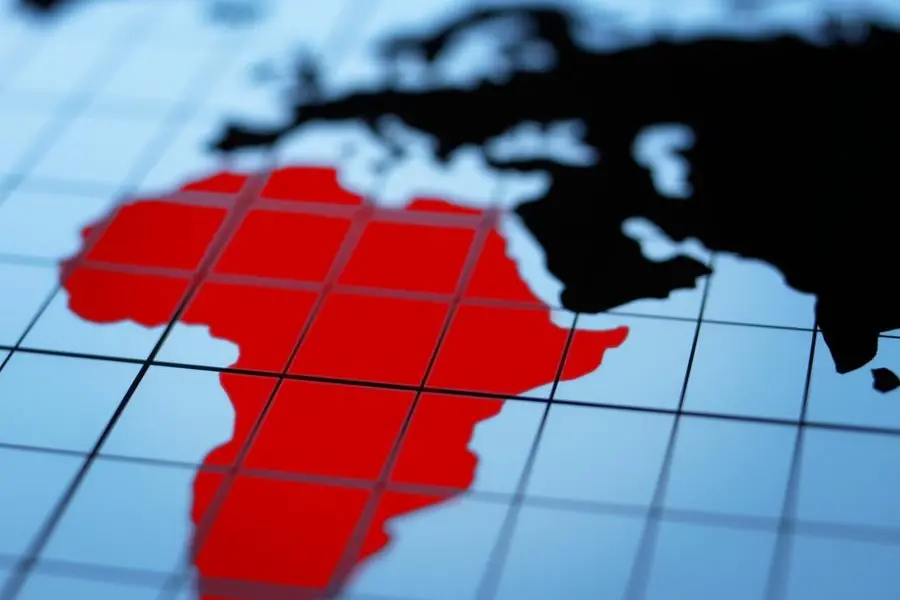
Against this backdrop, African economies—many of which are still in early stages of industrial and economic transformation—are likely to face a more uncertain and challenging external environment. Rapid population growth, combined with structural economic constraints and climate-related pressures, adds further strain. Together, these dynamics are expected to amplify a range of geopolitical and economic risks across the continent.
Fragmentation of the Rules-Based International Order
The rules-based international order has long provided a framework of norms and institutions governing global trade, finance, and diplomacy. This system has facilitated economic integration and supported growth in many parts of the world, including several African economies.
However, in recent years, there has been growing concern about increasing fragmentation within this system. Rising protectionism, trade disputes, and challenges to multilateral institutions have contributed to a more uncertain global environment. Tensions surrounding global trade governance, including the functioning of the World Trade Organization’s dispute settlement system, have raised questions about the effectiveness of existing mechanisms for resolving economic conflicts.
For African countries, which often rely on predictable trade rules and external markets, such developments may increase exposure to external shocks and reduce the effectiveness of traditional dispute resolution channels. In a more fragmented system, economic and political leverage may play a larger role in shaping outcomes.
At the same time, global military expenditure has risen significantly over the past two decades, reflecting broader geopolitical tensions. In Africa, security challenges—including political instability, military interventions, and localized conflicts—have become more persistent in certain regions, particularly in the Sahel. These dynamics suggest that security risks are becoming more structural rather than episodic.
Great Power Rivalry and Strategic Competition
The intensification of strategic competition among major powers is another defining feature of the current geopolitical environment. Relations between the United States, China, and Russia have become increasingly complex, spanning trade, technology, finance, and security domains.
For Africa, this presents both risks and opportunities. On one hand, heightened competition may lead to increased investment, infrastructure development, and diplomatic engagement from multiple global partners. On the other hand, it may also create pressure for African countries to navigate competing interests and alignments.
China remains Africa’s largest trading partner and a major source of infrastructure financing, while Western countries continue to play a significant role in investment, aid, and security cooperation. Russia has also expanded its presence in certain security contexts. As these relationships evolve, African governments may face more complex strategic choices.
Diverging global political and economic narratives further reinforce this fragmentation. Perceptions of global governance, development models, and international partnerships increasingly differ across regions. In this context, African countries are likely to continue pursuing diversified partnerships, balancing relationships to maximize economic and strategic benefits.
Rising Risks in Global Financial Markets
Global financial conditions are becoming more challenging, with rising public debt levels and tighter monetary conditions in advanced economies. According to projections, global debt levels are expected to remain elevated, raising concerns about long-term fiscal sustainability in several major economies.
Higher interest rates in advanced markets have implications for emerging and frontier economies, including those in Africa. Borrowing costs have increased, and access to international capital markets has become more constrained for some countries. Several African economies already face relatively high debt levels, which may limit fiscal space and increase vulnerability to external shocks.
Currency dynamics also play an important role. Movements in the US dollar, global interest rates, and commodity prices can significantly affect African economies, particularly those reliant on imports or commodity exports. While exchange rate movements can have mixed effects—such as influencing export competitiveness and import costs—the overall environment points to increased volatility.
These financial pressures may require policymakers to adopt more cautious fiscal and monetary strategies, while also strengthening domestic revenue systems and financial resilience.
Demographic Pressures and Social Stability
Africa’s demographic trajectory is one of its most defining characteristics. With a population exceeding 1.5 billion and a median age significantly lower than in most other regions, the continent has substantial long-term growth potential.
However, this demographic expansion also presents challenges. A large and rapidly growing youth population requires sustained job creation, investment in education, and expansion of economic opportunities. While youth unemployment rates vary across countries, underemployment and informal work remain widespread.
In some contexts, limited economic opportunities may contribute to social tensions, migration pressures, or vulnerability to recruitment by non-state armed groups. Security challenges linked to extremist organizations remain significant in certain regions, particularly where governance and economic conditions are fragile.
At the same time, recent years have seen an increase in civic engagement and youth-led movements across several African countries. These developments highlight both the risks and the potential associated with demographic change. With appropriate policy responses, Africa’s young population could become a major driver of economic growth and innovation.
Climate Risk, Food Security, and Displacement
Climate change represents a critical and long-term risk for African economies. Although the continent contributes a relatively small share of global emissions, it is disproportionately exposed to climate-related impacts.
Rising temperatures and increasing frequency of extreme weather events—including droughts, floods, and cyclones—are already affecting multiple regions. These changes have significant implications for agriculture, which remains a key source of employment and livelihoods across the continent.
Climate-related disruptions can affect food security, water availability, and rural incomes, potentially contributing to internal displacement and cross-border migration. Estimates suggest that tens of millions of people in Africa could be affected by climate-related migration in the coming decades.
Addressing these risks will require substantial investment in climate adaptation, resilient infrastructure, and sustainable agriculture. Strengthening early warning systems and regional cooperation will also be important components of effective responses.
Conclusion
African economies are entering a period of increased global uncertainty, shaped by geopolitical fragmentation, financial pressures, demographic shifts, and climate risks. While these challenges are significant, they also coincide with opportunities for strategic positioning, economic diversification, and institutional development.
To navigate this evolving landscape, African countries will need to strengthen economic resilience, invest in human capital, and pursue balanced international partnerships. Regional integration initiatives and domestic reforms will play a key role in enhancing long-term stability and growth.
Ultimately, the extent to which these risks translate into constraints—or opportunities—will depend on policy choices, governance, and the ability of African economies to adapt to a rapidly changing global environment.
Copyright © 2026 AfricaBusiness.com - All materials can be used freely, indicating the origin AfricaBusiness.com Provided by SyndiGate Media Inc. (Syndigate.info).