PHOTO
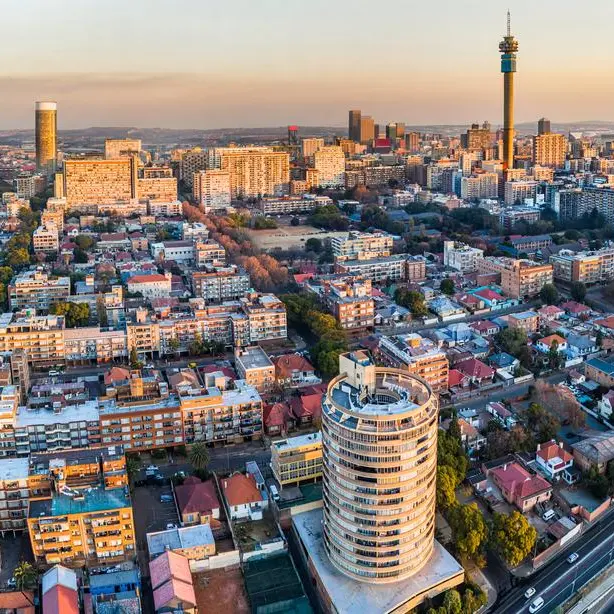
JOHANNESBURG - South Africa has proposed a sweeping overhaul of its decades-old rules governing money flows, aiming to bolster its position as a financial hub for Africa and attract more investor capital.
The finance ministry's proposals include raising discretionary offshore allowances for individuals, regulating crypto assets and easing capital-flow restrictions.
The Johannesburg Stock Exchange estimates the changes could attract at least 10 trillion rand ($608 billion) in investment over time.
Much of the legislation being overhauled dates back to 1961, with some provisions originating as early as 1933, Vukile Davidson, deputy director-general of financial policy at National Treasury, told Reuters in an interview.
"At the time, exchange control was principally used to deal with a wide range of issues beyond just capital flows management," said Davidson. "It was used to manage the domestic revenue base, to manage illicit flows, to ensure the stability of the financial sector."
That blunt instrument is now being replaced with more targeted reforms, he said, signalling South Africa's readiness to modernise and adopt a "positive bias" approach to managing cross-border capital flows.
National Treasury published the draft circular for public comment on April 17.
DOMICILE FOR NON-RAND FUNDS
A key aim of the overhaul is to address long-standing structural problems that have seen South Africa lose financial capital to rival hubs.
Under the proposals, asset managers would for the first time be allowed to run non-rand funds - which raise, deploy and report in foreign currencies such as U.S. dollars - from a South African base. Current rules require such funds to be legally domiciled offshore, even when they are managed locally.
"Places like Mauritius, increasingly Kenya and Kigali, and Dubai ... have been much more successful in attracting South African financial firms," Davidson said.
Samuel Mokorosi, head of deals and origination at the JSE, said rules requiring non-rand funds to be domiciled offshore were costing South Africa jobs and expertise.
The bourse, which leads Operation Phumelela - a private-sector reform initiative pushing for capital markets reform - welcomed the proposed change.
BRINGING CRYPTO INTO THE FOLD
The overhaul would also bring crypto assets formally into the exchange control framework, treating them for the first time as a distinct but regulated form of capital.
Crypto trading above a set threshold would be permitted only through a new class of regulated intermediaries, with mandatory declaration of holdings and significant transactions to National Treasury.
Crypto plays a growing but contested role in South Africa, where high adoption has made it a tool for trading, remittances and, increasingly, cross-border value transfer outside the traditional banking system.
The exchange control revamp forms part of a broader reform agenda pursued by the government in recent years, spanning energy, logistics, infrastructure, fiscal policy and financial regulation.
Davidson said the timing and pace of the changes were also influenced by geopolitical shifts that are creating opportunities for South Africa to attract capital flows.
($1 = 16.4660 rand)