PHOTO
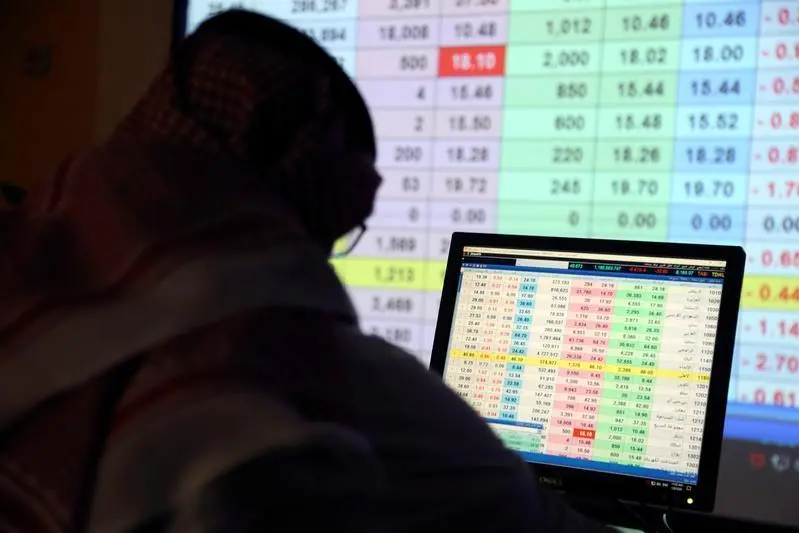
Nigeria’s oil and gas stocks emerged as the biggest winners on the Nigerian Exchange (NGX) in the first half of 2026, delivering a remarkable 90.2 per cent return and outperforming every other major sectoral index as investors piled into energy counters on the back of strong earnings, rising production, generous dividends and growing confidence in indigenous exploration and production companies.
NGX data showed the NGX Oil and Gas Index climbed from 2,670.24 points at the beginning of the year to 5,079.06 points at the end of June, making it the best-performing benchmark on the Exchange during the period.
The sector’s stellar performance came as the broader equities market recorded one of its strongest first-half performances in recent history. The NGX All-Share Index (ASI) advanced 47.43 per cent to close at 229,419.18 points, while total market capitalisation rose to N147.28 trillion, despite a broad-based correction in June that interrupted five consecutive months of gains.
The rally was underpinned by strong corporate earnings, banking and insurance recapitalisation, robust domestic liquidity, attractive dividend yields and sustained institutional participation, reinforcing investors’ appetite for equities.
The oil and gas index comfortably outperformed every other major benchmark. The NGX Industrial Index followed with a 79.0 per cent gain, rising from 5,676.48 points to 10,162.54 points, the NGX Banking Index advanced 36.6 per cent, reflecting investor optimism over ongoing recapitalisation in the banking industry, while the NGX Consumer Goods Index returned 15.6 per cent. The NGX Insurance Index was the only major benchmark to close the half in negative territory, declining 7.7 per cent.
Analysts attributed the oil and gas sector’s dominance largely to the exceptional performance of Seplat Energy Plc and Aradel Holdings Plc, whose strong financial results and improving operational performance fuelled sustained buying interest.
Seplat’s rally followed the successful integration of Mobil Producing Nigeria Unlimited’s onshore assets, which transformed the company’s scale. It posted 2025 revenue of $2.73 billion, up 144 per cent year-on-year, while average daily production surged 148 per cent to 131,506 barrels of oil equivalent per day. The company also increased its full-year dividend by 52 per cent to 25 US cents per share, reinforcing its attraction to income-focused investors.
Aradel Holdings also cemented its status as one of the market’s standout performers after reporting 20 per cent growth in revenue to N697.3 billion and a 55 per cent increase in profit after tax to N401.2 billion. Earnings from associates jumped 523 per cent following the increase in its stake in ND Western, while its expanding production profile strengthened investors’ confidence in the company’s long-term growth prospects.
Beyond company-specific performance, analysts said improving fundamentals across Nigeria’s upstream petroleum industry, including higher crude oil output, improved pipeline security, reduced crude theft and stronger cash flows among indigenous operators, helped drive the sector’s remarkable appreciation.
Despite the June correction, capital market expert and Vice Chairman of Highcap Securities, David Adonri, said the pullback should not be mistaken for the end of the rally in fundamentally strong stocks such as those in the oil and gas sector.
According to him, the weakness that typically emerges between late May and August is a seasonal feature of the Nigerian equities market, as investors reassess company valuations after full-year earnings and dividend announcements.
“After the corporate disclosures, the fundamentals of enterprises become very clear to investors. There is usually a realignment between those fundamentals and security prices, and that realignment results in market corrections,” Adonri said.
He said the correction is healthy because it aligns share prices with underlying corporate performance, adding that companies with strong earnings and improving fundamentals are likely to regain investors’ attention as half-year results begin to hit the market from July through September.
Adonri expects the oil and gas sector to remain one of the market’s key outperformers, supported by improving operational performance among indigenous producers and stronger earnings momentum. “Many companies have substantially recovered from the impact of the naira float, and those recoveries have been quite significant,” he said, noting that impressive interim earnings should provide fresh support for fundamentally sound stocks.
However, he cautioned investors against chasing momentum alone, stressing that the sharp first-half rally underscores the importance of investing based on corporate fundamentals rather than speculative buying.
“The market is driven by fundamentals,” he said. “Investors need to understand that prices cannot continue rising indefinitely without support from earnings and business performance.”
He added that another factor likely to shape market activity in the second half is the expected listing of Dangote Refinery, which he described as a potential game changer for the Nigerian capital market. According to him, some investors are already building cash positions ahead of the anticipated offering, a trend that may have contributed to recent profit-taking across the market.
Copyright © 2026 Nigerian Tribune Provided by SyndiGate Media Inc. (Syndigate.info).