PHOTO
NIGERIA’S surging stock market may be projecting resilience, but beneath the record-breaking rally lies an economy still exposed to inflation shocks, fiscal strain and global geopolitical turbulence, according to Johnson Chukwu, Group Managing Director of Cowry Asset Management Limited.
Presenting at the firm’s Quarterly Economic Discourse for Q1 2026, Chukwu described the economy as “resilient but vulnerable,” warning that strong financial market performance continues to diverge sharply from the realities facing households.
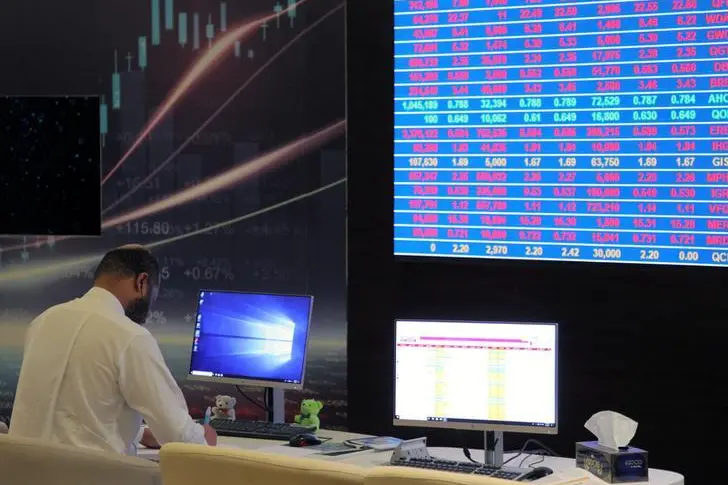
At the heart of that paradox is the Nigerian equities market, now one of the best-performing asset classes globally.
The NGX All-Share Index surged 29.35 per cent in the first quarter of 2026, building on a 51.19 per cent gain recorded in 2025. Market capitalisation climbed to N129.21 trillion, translating to nearly N30 trillion in investor gains within three months.
Chukwu said the rally is largely liquidity-driven, rather than anchored on broad economic strength.
“This is a liquidity-driven market,” he noted, pointing to declining real yields in fixed income instruments that have pushed investors toward equities in search of higher returns.
With inflation still elevated at 15.38 percent in the month of March having reversed its 11 months consecutive decline from 15.06 percent in February, driven largely by FX pass-through, energy costs, and persistent food supply constraints; equities have increasingly served as a hedge against value erosion. Regulatory changes, particularly increased pension fund exposure to stocks, have further boosted demand, alongside strong corporate earnings and attractive dividend yields.
Sectoral performance reflects a market lifted by select themes, rather than broad-based growth.
Oil and gas stocks surged 64.22 percent, buoyed by rising crude prices amid Middle East tensions. Industrial goods followed with a 54.60 percent gain, supported by resilient construction demand and pricing power.
Banking stocks rose 22.75 percent on higher interest income and foreign exchange revaluation gains, while consumer goods lagged at 9.67 percent due to weak purchasing power. Insurance stocks recorded the weakest gains, underscoring uneven investor appetite.
Chukwu cautioned that the rally is unfolding against a volatile global backdrop defined by geopolitical conflict and slowing growth.
Disruptions in the Strait of Hormuz have heightened uncertainty, pushing oil prices higher and amplifying global inflation risks. While this offers revenue upside for oil-exporting Nigeria, it also threatens capital inflows and financial stability.
“The markets are holding up, for now, but may be underpricing the risk of a deeper macroeconomic disruption,” he warned.
Nigeria’s economy grew by 3.87 percent in 2025, supported by improved oil output and non-oil sector expansion. Yet, Chukwu stressed that macroeconomic gains have not translated into improved living conditions.
“This highlights the disconnect between macro stability and household reality,” he said.
The Central Bank of Nigeria has begun cautiously easing policy, cutting its benchmark rate to 26.5 percent, while maintaining tight liquidity controls.
At the same time, the naira has stabilised and foreign reserves have strengthened, supported by improved portfolio inflows and foreign exchange reforms.
However, fiscal risks remain significant. The N68.32 trillion 2026 budget is built on optimistic assumptions, while rising debt servicing costs continue to limit fiscal flexibility.
Despite bullish momentum, Chukwu warned that the equities market remains vulnerable to shocks.
Rising interest rates, persistent inflation and global risk aversion could trigger capital outflows and corrections, particularly in emerging markets.
“War shocks transmit through oil to inflation, then to interest rates and ultimately to equities,” he said.
Giving an outlook, Chukwu maintained that equities could remain attractive in the near term, supported by liquidity and inflation-hedge demand. But sustaining the rally, he said, will depend on macroeconomic stability, policy consistency and the ability to navigate an increasingly uncertain global environment.
“In chaotic markets, clarity is alpha,” he stated. For now, Nigeria’s stock market may be booming, but the broader economy is still walking a tightrope.
Copyright © 2026 Nigerian Tribune Provided by SyndiGate Media Inc. (Syndigate.info).