PHOTO
House of Representatives on Thursday resolved to probe activities of International Oil Companies (IOCs) as well as regulatory agencies over estimated $20 billion decommissioning & abandonment compliance gap in breach of the provisions of the Petroleum Industry Act, 2021.
The resolution was passed sequel to the adoption of a motion on urgent public importance titled: ‘Need to investigate decommissioning and abandonment compliance, in the Nigeria Petroleum Industry in line with Petroleum Industry Act of 2021’, sponsored by Chairman, House Committee on Political Parties, Hon. Zakaria Dauda Nyampa.
In his lead debate, Hon. Nyampa explained that decommissioning and abandonment (D&A) is the process of safely shutting down and dismantling oil and gas facilities, wells, and infrastructure after their productive life is a critical issue in Nigeria’s petroleum sector.
“The House also notes that globally, the regulatory regimes mandate operators to set aside funds during the productive life of assets to cover future decommissioning, dismantling, remediation, and site restoration costs, which run into billions of dollars, as failure to plan adequately exposes the host communities to massive environmental, financial, and social liabilities.
“The House is aware that the fund is designed to address the environmental, safety, and financial risks associated with abandoned or decommissioned facilities, preventing state liabilities and ensuring orderly asset closure in accordance with the best global best practices.
“The House is also aware that in Nigeria, the Petroleum Industry Act (PIA) 2021 (Sections 232-233) and the NMDPRA/NUPRC Decommissioning and Abandonment Regulations (2022) require all licensees and lessees to: Establish D&A programmes for their assets, Contribute to D&A Escrow Accounts ring-fenced for dismantling and remediation, Secure regulatory approvals for plans, timelines, and funding, and pay applicable penalties for non-compliance.”
Under the arrangement, the regulatory agencies are expected to mandate the operator to establish a dedicated escrow fund for licensed facilities based on the estimated residual value and projected decommissioning cost of the facility, spread evenly over its remaining operational life; and make mandatory annual payments into the escrow account, impose prescribed penalties for non-compliance.
“The House is worried that most States in Nigerian are facing increasing risk exposure due to low compliance with decommissioning and asset transfer provisions in the oil industry, including the upstream, midstream, and downstream sectors, which face decommissioning liabilities and lack formal remediation plans or funding provisions, instances where, International Oil Companies (IOCs) exited assets in the Niger Delta and transferred them to domestic operators without adequate provision for D&A, effectively externalizing future liabilities to the government and Host Communities, leaving behind aging wells, flow stations, pipelines, FPSOs and platforms with few D&A escrow funds established, despite multi-billion-dollar liabilities.
“The House is also worried that about 90% of operators in Nigeria’s petroleum sector, including refineries, depots, pipelines, gas plants, and retail infrastructure, are non-compliant with PIA provisions.
“Regulatory bodies NUPRC and NMDPRA have failed to effectively enforce penalties, leading to fiscal leakages, environmental risks, and loss of governance credibility. This inaction threatens Nigeria’s oil sector reputation and sustainability.
“The House is alarmed that Nigeria’s upstream oil sector, with over 250 OMLS/OPLs, 1,500 producing wells, and hundreds of flow stations, faces financial exposure in Decommissioning & Abandonment (D&A) costs. Data Sourced from Global and Local Platforms such as Wood Mackenzie, IHS Markit, and even NUPRC, data estimates place D&$500,000 and $1 million per well and $20-50 million per field for associated surface facilities, totaling liabilities of $10-15 billion; however, less than 20% of operators have adequately funded their D&A escrow accounts, leaving cumulative funds supervised by NUPRC/NMDPRA below $1 billion, far short of the requirement.
“The House is concerned that Nigeria’s midstream and downstream sector faces a potential remediation liability of $4-5 billion due to widespread infrastructure breakdown.
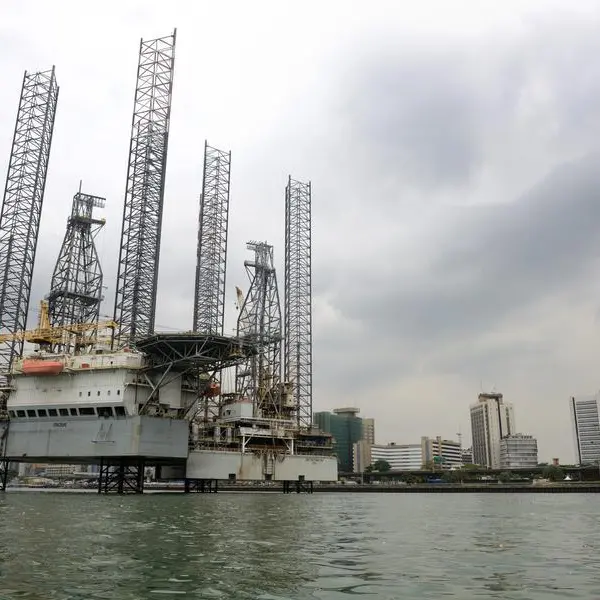
“The House is cognisant that the risk of this inaction will result in abandoned offshore rigs, rusting pipelines, and non-functional refineries, which could lead to oil spills, toxic contamination, and severe ecological damage, which will worsen environmental degradation, fueling unrest and risks of explosions, gas leaks, fires, and pipeline vandalism, endangering lives and infrastructure in host communities.
“The House is also cognisant that Nigeria’s petroleum industry faces a $15-20 billion decommissioning & abandonment compliance gap, with low compliance risk of abandoned assets, pollution, and stranded costs. However, firm legislative oversight can secure billions in D&A escrow accounts, protecting the environment, communities, and public finances. The National Assembly has a chance to act decisively and establish a legacy of environmental stewardship and fiscal responsibility.”
To this end, the House resolved to set up an Ad-hoc Committee to investigate decommissioning and abandonment (D&A) compliance in Nigeria’s petroleum industry in line with the Petroleum Industry Act and report its findings and recommendations to the House within 12 weeks for consideration and further legislative action.
Copyright © 2022 Nigerian Tribune Provided by SyndiGate Media Inc. (Syndigate.info).