PHOTO
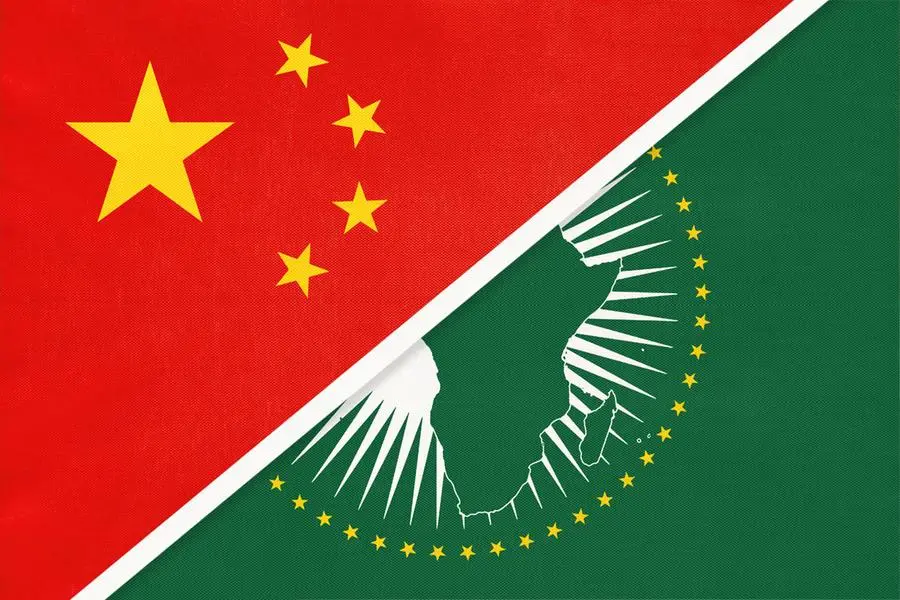
Beijing is turning to soft power to deepen its footprint in Africa, shifting focus from trade and infrastructure to direct people-to-people engagement as it marks 70 years of diplomatic ties with the continent.
The decision, announced in 2024 during the Forum on China–Africa Cooperation (FOCAC), will be implemented extensively this year to complement, not compete with, existing levers of economic and political contacts in Africa.
Two weeks ago, Wang Yi, China’s Foreign Minister, officially launched the China–Africa Year of People-to-People Exchanges at the African Union headquarters in Addis Ababa, Ethiopia. The initiative marks a new phase in relations with the continent, focusing on cultural, educational, and social ties beyond trade and infrastructure cooperation.
China says there will be 600 events this year under the theme “strengthening dialogue between Chinese and African civilisations through direct people-to-people interaction.”Mao Ning, China’s Foreign Ministry spokesperson, said last week that Beijing views the anniversary as “an opportunity to carry forward traditional friendship” and strengthen mutual learning, one of the goals identified in President Xi Jinping’s book on ‘governance of China.’Chinese officials argue that each country should develop according to local realities, while learning best practices from others. However, African Union Commission Chairperson Mahmoud Ali Youssouf said China had already provided a “model” worth emulating.
The emphasis on direct contact is a relatively new approach, with Beijing planning forums, exchange visits, joint sessions, cultural events, and competitions to mark 70 years since it first established diplomatic relations with an African country.“This is very important to China because it is now a major power, and its ability to remain influential on the world stage depends on its attractiveness to other countries. That is the foundation for the focus on soft power,” said Dr Cavince Adhere, a Nairobi-based analyst of China–Africa policies.
Cultural exchanges“Secondly, we see their rivals, such as Washington, doubling down on hard power, using any means to secure national interests. This has not been well received, even by Washington’s close allies. Thus, Beijing is amplifying its attractive points to other countries,” he told The EastAfrican.
China’s soft power strategy, according to official plans, will centre on cultural exchanges without interfering in internal matters. It will support scholarships, expand Confucius Institutes, back multilateral platforms such as the African Union and South–South cooperation, and promote professional exchanges.“I hope it works for them because it worked for other countries, including the US,” Dr Adhere said.
Although billed as cultural development, analysts suggest the events could become a pillar for future business and reputation in Africa.“Beijing’s selective choice of countries demonstrates a calculated mix of realpolitik and strategic messaging,” said Jervin Naidoo, a political economist at Oxford Economics Africa, referring to Wang Yi’s New Year trip to Africa this month. His itinerary initially included Ethiopia, Somalia, Tanzania, and Lesotho, although he did not travel to Mogadishu.“Ethiopia – a key AU member, one of China’s largest trading partners, and one of Africa’s largest landlocked countries seeking sea access – offers both regional market opportunities and connectivity prospects for China, particularly in maritime logistics. Somalia, facing sovereignty challenges, resonates with China’s focus on territorial integrity and the One-China principle.
Political and economic influence“Tanzania, a regional hub in East Africa, underscores China’s interest in political and economic influence in the region. Lesotho, a smaller Southern African state, signals Beijing’s attention to less prominent nations, reinforcing its image as a partner that values equality and inclusivity.”China has sent foreign ministers to Africa every January for the past 36 years. Beijing’s economic influence has grown steadily, with trade volumes reaching nearly $300 billion last year. Its stance has often been one of non-interference in partners’ internal affairs, a point Wang Yi emphasised on his latest African trip.
Previously, Beijing focused on building direct bilateral ties. In Tanzania, relations were elevated to a Comprehensive Strategic Cooperative Partnership in 2024, with both sides pledging to support each other’s core interests.
China has also prioritised projects in infrastructure, health, education, agriculture, green development, and the digital economy – what it calls “systematically upgrading practical cooperation between the two sides for mutual development.”Countries recognising Beijing and the One-China policy have been offered zero-tariff treatment on all tariff lines, although each must negotiate directly with Beijing and sign agreements. Kenya was among the countries that signed a preliminary trade deal to benefit from the offer.
China has often faced criticism over debt-trap diplomacy. Advocates of the new exchanges argue they could reduce negative perceptions and create space for smoother commerce.
This year also marks the start of China’s 15th Five-Year Plan for economic and social development. Beijing says it is pursuing advanced modernisation by “promoting high-quality development, further deepening reform and opening up, delivering prosperity for all,” according to President Xi Jinping’s New Year speech.
Xi also highlighted “international technological cooperation” alongside scientific innovation, research, and collaboration with partners to tackle common challenges such as climate change and poverty. He stressed that people must remain central to all policies.
© Copyright 2026 Nation Media Group. All Rights Reserved. Provided by SyndiGate Media Inc. (Syndigate.info).