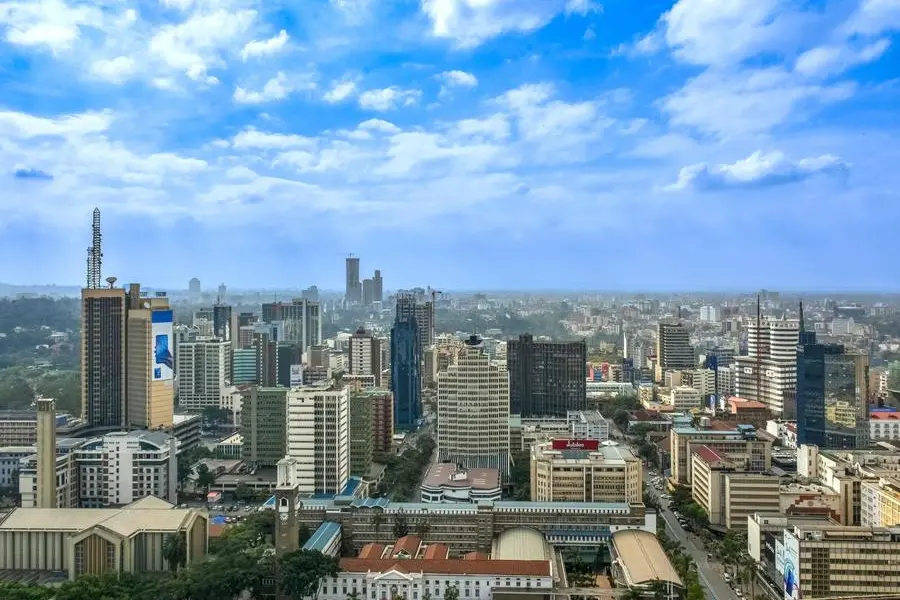
PHOTO
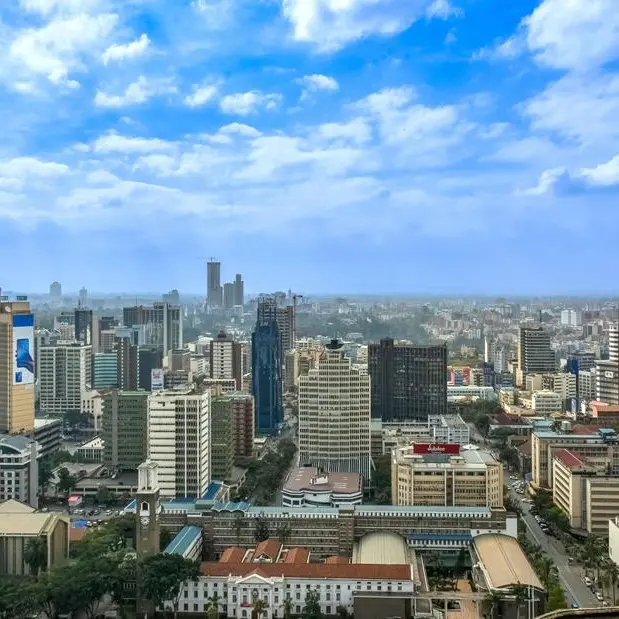
When Kenya’s Nairobi Metropolitan Services (NMS) was established in March 2020 to take over key functions in Nairobi County, it seemed like a one-off move.
However, six years later, President William Ruto’s administration is introducing a different version of NMS. This week, the two entities signed a cooperation agreement on Wednesday, sparking immediate controversy.
This time, the two levels of government will collaborate on transport and road infrastructure, solid waste management, water source development and supply, sewerage expansion and public lighting.
However, Nairobi Governor Johnson Sakaja has claimed that certain powerful individuals within the national government are keen to take control of key City Hall functions, a move which he says he will not allow.
Nairobi Senator Edwin Sifuna now wants the Ksh80 billion ($620 million) Cooperation Agreement between the National Government and Nairobi County government halted, terming it a power grab through the backdoor.“From its structure, the governor will play subservient to the Prime Cabinet Secretary, making Governor Arthur Sakaja the new deputy governor for all intent and purposes. This to me is not a cooperation but takeover,” Mr Sifuna said.
The State announced a steering committee established to oversee the Agreement. It has 12 members but two thirds are appointees of the National Government.
Under Article 186 of the Kenyan Constitution, Kenya’s 47 counties are given specified functions while the national government plays others.
Further, for effective devolution, the frameworks for consultation are outlined in the Intergovernmental Relations Act.
But Nairobi is a lucrative entity that has seen some stakeholders argue it was a mistake to devolve it. Some argued it should be modelled on other cities on the continent where the national government directly appoints officials to run its affairs.
In Kenya, in 2020, the national government tasted this. Under President Uhuru Kenyatta, Lt-Gen Mohamed Badi was recruited from the military by to take on the role of head of NMS.
Talks of another takeover by the national government have resurfaced.
As soon as the deal was signed, a case was filed in court to nullify the deal. The court refused to grant the orders. But members of the city county assembly, a local legislature, started collecting signatures to impeach Governor Sakaja.
The county assembly also formed an ad hoc committee to look into the deal and report back in 11 days. Depending on the findings, they will endorse or reject the deal.
But the deal also left unanswered questions on the cooperation especially on how it affects ongoing contracts on surrendered functions like garbage collections and the levels of levels of accountability for each side.“We have not ceded any functions. A transfer of functions is not what we are discussing. It is not something we are going to do. If there was a transfer of functions, there would be a document as provided for in Article 187 of the Constitution,” said Mr Sakaja.
However, Principal Secretary for the State Department for Housing and Urban Development Charles Hinga said the deal is done.
Speaking during the International Relations Society of Kenya City Diplomacy workshop, the PS said that the ownership and control of Nairobi County are partially in the government’s hands.“Nairobi is not a county but a capital city, so collaboration with the national government is inevitable,” Mr Hinga said.“This Nairobi is dysfunctional. Is it not time that, as the head of diplomacy, we said that Nairobi should not be run as a county, but as a capital city?” he posed.
For the two years, NMS gobbled up more than Ksh27 billion ($209 million) from the Exchequer but ended up leaving the county government with pending bills of around KSh15.5 billion ($120 million).
Despite tapping the Kenya Revenue Authority (KRA) to manage City Hall revenue collection, the taxman managed a paltry KSh8.6 billion ($66.7 million) in the financial year ended June 30, 2020, one of the lowest recorded at the time, falling far short of the KSh17.2 billion ($133.3 million) target.
A slight improvement was recorded in the next two financial years between 2021 and 2022 with KRA collecting KSh9.96 billion ($77.2 million) in the financial year ended June 30, 2021 against a target of KSh16.4 billion ($127.1 million).
The own source revenue dipped to KSh9.2 billion ($71.3 million) in the following fiscal year against even a lofty target of Ksh19.6 billion ($151.9 million).
KRA was appointed the principal county revenue collector on March 16, 2020 as part of the agreement in the deed of transfer of functions of the county to the national government.
© Copyright 2026 Nation Media Group. All Rights Reserved. Provided by SyndiGate Media Inc. (Syndigate.info).