PHOTO
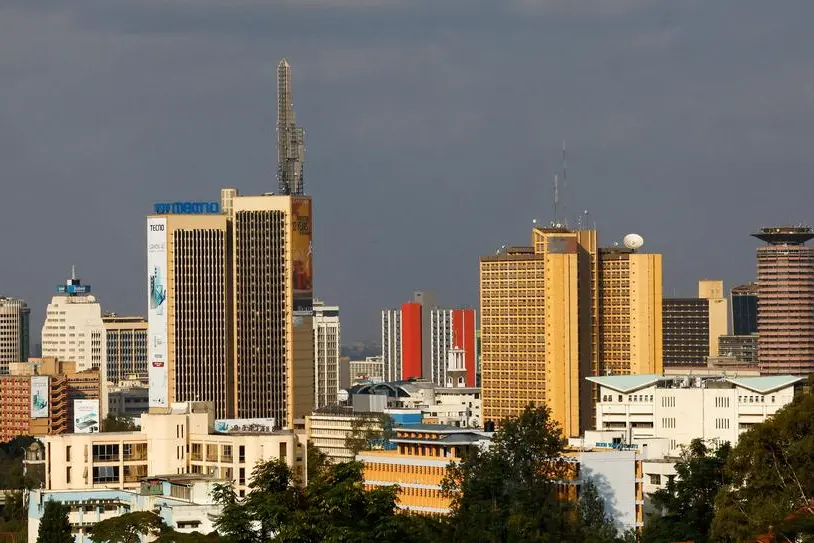
Kenya and Zambia were the most affected countries by a rise in approved corporate mergers within the Comesa trade bloc last year, reflecting the increasing presence of regional companies in Nairobi and Lusaka, new disclosures reveal.
Usually, for each merger received, the Comesa Competition Commission (CCC) establishes which member states are affected based on where the merging parties derive turnover in the Comesa bloc.
Last year, Nairobi and Lusaka were impacted by all the 48 transactions that occurred within the 21-member states of the Common Market for Eastern and Southern Africa (Comesa) bloc.“In 2024, the CCC approved 43 mergers unconditionally and granted five comfort letters, so, all in all, this brings the merger-related assessments to 48,” the watchdog told The EastAfrican. “This means that all the 48 merger-related cases had effect in Zambia and Kenya.”Comfort letters are issued for those transactions that the commission assesses but they do not need to be billed as full mergers. This is presumed based on whether the transaction meets the regional dimension test and the prescribed turnover.
According to the CCC annual report, in 2023, the approved 26 transactions, and following year’s 48 mergers signal the growing desire by companies to expand regionally in search of new revenue streams to boost profitability and ensure decent returns to their shareholders.
According to the report, Kenya and Zambia were each affected by 48 merger cases, followed by Uganda (45), the Democratic Republic of Congo (39) and Mauritius (36), with the least number of cases affecting Comoros (11) and Eritrea (five).
In 2023, the most number of merger cases affected Kenya (30), followed by Uganda (26) and Mauritius (25), with the least number of cases affecting Comoros (eight) and Eritrea (five).
According to the report, most of the merger cases occurred in the banking and financial services sector, which had seven cases, followed by energy and petroleum sectors (six cases), with agriculture and ICT having four cases each and mining and aviation with three cases apiece.
The distribution of cases across the sectors in 2024 showed a shift from 2023, where the energy and petroleum sectors received the most cases (12), followed by banking and financial services as well as agriculture sectors with five cases each.
In 2024, sectors such as construction, retail and transport and logistics received two cases each, compared to 2023, where no transactions from these sectors were assessed.
The least number of mergers assessed in 2024 were in the pharmaceutical, insurance, food and hospitality sectors, compared to 2023, when the least number of cases were in the healthcare and pharmaceutical sectors.
The commission handled 56 merger cases last year, of which five were granted comfort letters, one was abandoned and seven were carried forward to 2025, as they were still under assessment.
Therefore, the CID (Committee Responsible for Initial Determinations) made decisions on 43 cases within the stipulated time provided in the regulations.
On the other hand, 36 transactions were registered in 2023, of which 26 were approved unconditionally, two approved with conditions and one rejected and the rest carried forward to 2024.
The 26 transactions approved without conditions in 2023 marked a reduction from the 40 recorded in 2022.
Parties to any notifiable merger are required to inform the CCC within 30 days of the decision to merge failing which sanctions may be imposed.
A notifiable merger is one with a regional dimension and whose combined annual turnover or value of assets, whichever is higher, is at or above the thresholds prescribed by the Comesa competition rules.
The merger notification fees across Comesa vary from a minimum of $50,000 to a maximum of $200,000 depending on the companies’ annual turnovers.
An estimated 50 percent of the fees paid to the commission as merger filing revenues are distributed to member states and utilised for the development and strengthening of their national competition laws and capacity building in their national competition authorities.
For instance, in February 2024, the CCC received a notification regarding the proposed acquisition of 51 percent of the shareholding in Cimerwa Plc by National Cement Holding Ltd (NCHL) from PPC International Holdings Proprietary Ltd (PPC International).
Cimerwa was controlled by PPC International, a company incorporated in South Africa, which in turn is a wholly owned subsidiary of PPC Ltd, while NCHL is a private company incorporated in Rwanda and a special purpose vehicle established for the purposes of the proposed transaction.
NCHL is directly controlled by ERC Holdings Ltd, a company controlled by a trust where its beneficiary also controls National Cement Company Ltd and National Cement Company Uganda Ltd, which are both involved in the production and supply of cement and clinker in Kenya and Uganda, respectively.
© Copyright 2022 Nation Media Group. All Rights Reserved. Provided by SyndiGate Media Inc. (Syndigate.info).