PHOTO
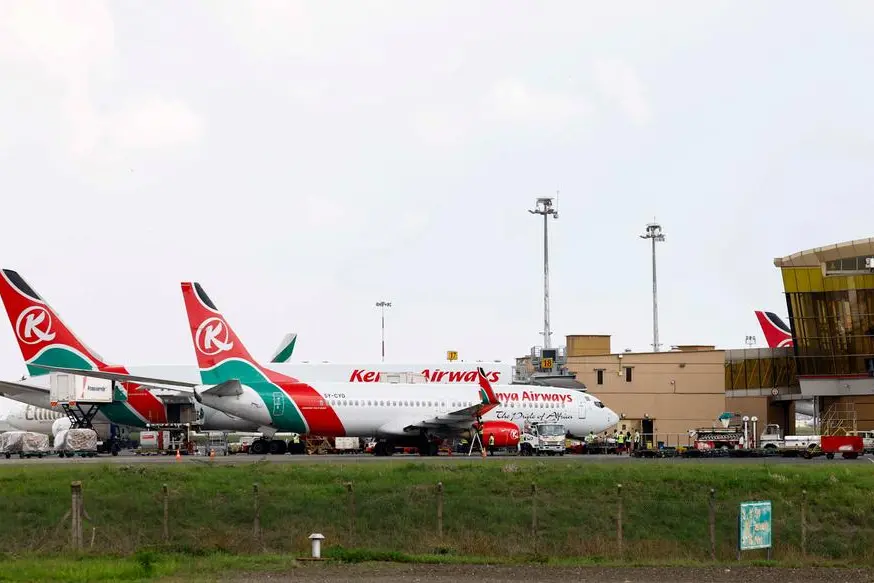
Kenya Airways has ruled out a change of name, logo or colours as investors seek to inject capital to revive its operations, quelling fears of losing its flag-carrier status in its turnaround plan.
The airline’s management said the current restructuring strategy prioritises restoring profitability and strengthening the balance sheet without altering its corporate identity, even as discussions with potential investors progress.
Acting CEO George Kamal said that KQ is in talks with at least four strategic investors drawn from across the globe — including one from Africa -- but the carrier’s identity is not part of the negotiating chip.“Every investor comes with their own view…but at the end of the day, Kenya Airways, the pride of Africa, will remain the same, it’s not going to change and it will have to remain as a national carrier and a national asset,” said Mr Kamal at a press briefing.
The confirmation comes a few weeks after rumours of ongoing talks with a Singaporean carrier and Qatar Airways sparked fears of a possible rebrand should the flag carrier fall into the hands of a private or international investor, especially if the deal involves complete buyout.
KQ, which has been struggling financially for over a decade, is banking on the strategic investor to recapitalise it, helping modernise its fleet and improve its route network in efforts to restore it to profitability.
National Treasury Cabinet Secretary John Mbadi last month said that the government, KQ’s largest shareholder, will offer it to investors in a deal that could be worth up to $2 billion, as part of efforts to reduce its exposure while retaining a stake.
Mr Kamal said it has not been decided whether the strategic investor will take up equity or inject capital in the form of debt, adding that the airline could consider a mix of both or onboard more than one investor.“Some of them are coming for equity, some are coming for debt. Either way, the entity, the logo, the airline will remain the same,” he said.
It remains unclear what stake the government is willing to cede or how the deal will be structured within the airline’s ongoing restructuring framework. The State’s stake in the carrier has risen over the years, after the airline defaulted on its foreign loans guaranteed by the State, forcing the Treasury to take over the loans in exchange for more equity.
Modern fleetKQ intends to use the money raised from the strategic investor mainly to modernise its fleet, which currently has an average age of 14.5 years, with a number of planes currently parked for routine maintenance.
It comes after years of losses pushed the carrier to the brink, leaving it nearly incapable of repaying debts owed to local and international lenders, forcing consistent bailouts by the government.
The carrier made losses for over a decade between 2013 and 2023, then posted a profit of $38.5 million largely due to forex gains, before returning to a loss in 2025, blamed largely on capacity constraints. Its total debt currently stands at $2.4 billion.
With the money expected from the strategic investor, KQ intends to buy and lease newer planes, expanding and modernising its fleet to increase its route network and number of destinations served across the globe.
It seeks to acquire at least 26 more planes, increasing its fleet size to 60 within the next two to three years and reducing the average fleet age to below 10 years, boosting its capacity to operate more long-haul routes from Nairobi.
This expansion will place the airline in stiffer competition with regional and international carriers such as Ethiopian Airlines and major Gulf airlines like Emirates, Etihad, and Qatar Airways, which have aggressively expanded their networks across Africa.
The planned investor comes at a time when the carrier’s hub – Jomo Kenyatta International Airport – is set for a major upgrade that will add a second runway and a new terminal aimed at more than doubling its current capacity.
© Copyright 2026 Nation Media Group. All Rights Reserved. Provided by SyndiGate Media Inc. (Syndigate.info).