PHOTO
Tanzania's headline inflation rate remained stable between June and July, holding at 3.3 percent, according to a recent report from the National Bureau of Statistics (NBS). This stability is largely attributed to steady or decreasing prices for essential goods, particularly food.
The NBS report noted that prices for cereals, non-alcoholic beverages, construction materials, and garments were largely stagnant during this period.
Specifically, the prices for construction materials like cement and corrugated iron sheets declined slightly, by 0.3 percent and 0.2 percent, respectively. Essential food staples, including maize, sorghum, rice, legumes, root crops, vegetables, beef, and chicken, also saw prices drop by varying percentages.
This favorable trend in food prices comes as Tanzania projects a record-breaking maize harvest of about 12 million tonnes for 2025. This success is credited to a combination of government-subsidised fertilizer and adequate rainfall.
The Bank of Tanzania (BoT) recently highlighted a strengthening domestic economy, driven by both public infrastructure projects and a rising private sector.
Agricultural investment, in particular, has seen a significant boost. The credit extended to the agricultural sector recorded a 30.2 percent annual growth, reflecting strong demand and a government focus on subsidies for seeds, fertilizers, and irrigation systems. This investment aims to increase food production, ensure food security, and support rural livelihoods.
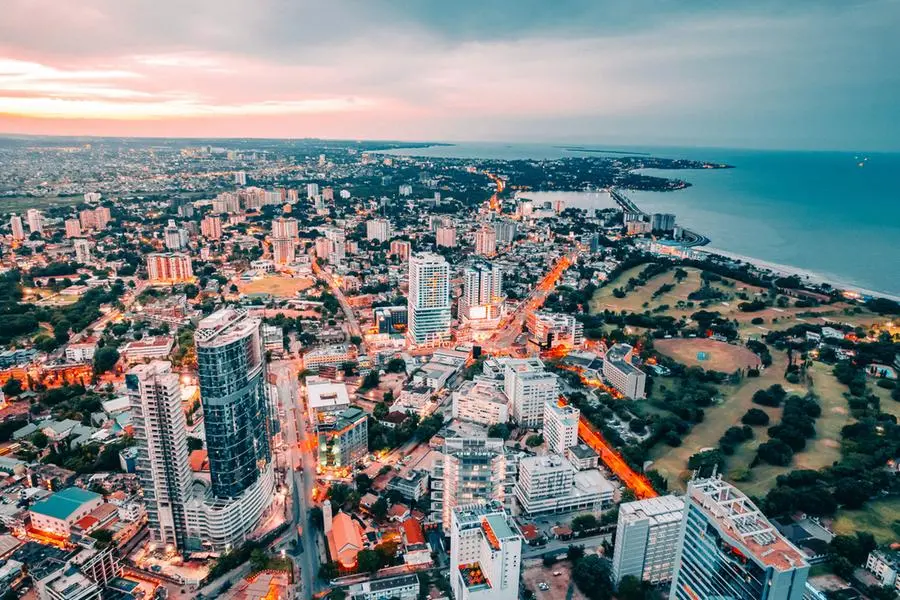
The real estate market is also poised for steady growth over the next five years, fueled by foreign investment, infrastructure expansion, and a rising urban population.
Residential property prices are projected to grow by 4-6 percent annually, with Dar es Salaam potentially seeing increases of up to 7 percent. The market is expected to grow at a compound annual growth rate of 4.7 percent between 2024 and 2028.
A significant driver of this growth is the government's relocation of its administration from Dar es Salaam to Dodoma in 2026. This move has created a high demand for housing and commercial spaces to accommodate civil servants and the growing number of people migrating to the new capital.
To meet this need, institutions like the National Housing Corporation (NHC) are aiming to construct about 200,000 new units per year, targeting civil servants and middle-income earners in both Dar es Salaam and Dodoma.
© Copyright 2022 Nation Media Group. All Rights Reserved. Provided by SyndiGate Media Inc. (Syndigate.info).