PHOTO
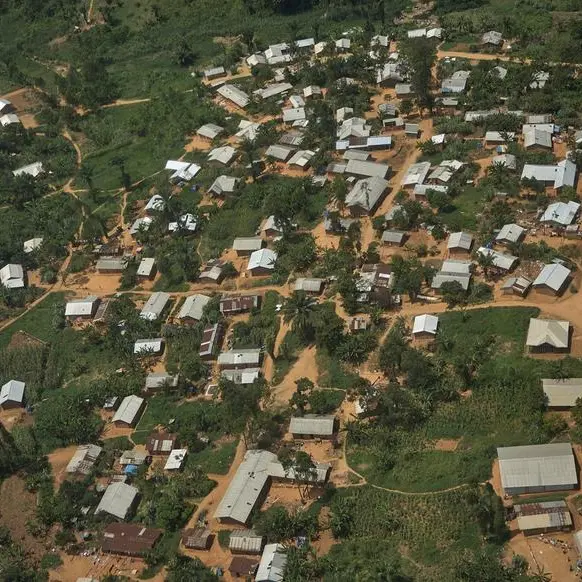
The Democratic Republic of Congo’s mineral-rich subsoil has become the focus of a high-stakes dispute that could shape the narrative on custody of geological data from as far back as colonial days.
As it is, millions of geological archives for the Congo are held in Belgium’s Africa Museum. And mining firm Kobold Metals, a US company backed by Jeff Bezos and Bill Gates, wants to peruse the data for decisions on where to put their money. The firm, which has agreements with Kinshasa to explore lithium deposits in southern regions of Manono, hopes to use artificial intelligence to unlock the country’s full geological potential.
But Belgium has refused to release the century-old records, setting up a clash between scientific custodianship and commercial ambition.
The company says it can’t deploy any technology without the archival documents, seen as essential to analyse the vast expanses of the DRC and assess the country’s geological potential.
Belgium refuses to hand over the coveted archives, the result of geological studies and explorations dating back to the early 20th century when the DRC was then known as the Congo Free State.
The challenge is to master the mapping of critical minerals, which are abundant in the DRC. Kobold Metals claimed it had “raised $537 million in a funding round to expand the exploration of critical minerals on a global scale using artificial intelligence”. The company also said it planned to “finance the expansion of critical mineral exploration across five continents.” Cobalt, copper and lithium are the metals targeted by the American firm, all essential to the energy transition.
François Kervyn, head of the earth sciences department at the Africa Museum, however, cautioned the archives may not tell the full story.“There is no map that tells you to dig here or there and you will find lithium,” he said.
Rare materials“That’s not how you should look at it. In fact, these archives are particularly valuable in the current context. These are very varied documents, some of which mention the presence of minerals that were not highly sought after at the time but are today.“Just think about the contents of our computers and smartphones: certain rare materials are very valuable, and so is the information about them, even if it is old,” added Bart Ouvry, director of the Africa Museum.
Belgium has already committed to returning the archives to the DRC after digitising them. However, Kobold Metals wants to digitise them itself, and quickly. For the director of the Africa Museum, this is out of the question: “It’s a lot of archives. Privatising them does not seem fair to us and would give one company a significant commercial advantage over another, which is not in line with our identity as a public and scientific service.”An agreement between the Congolese authorities and the American mining company has nevertheless been signed to allow access to the archives. In July 2025, the DRC and Kobold Metals committed to “cooperate to provide free public access to historical geoscientific data through the National Geological Service of Congo (SGNC) in the interest of all”. The agreement stipulated that “in order to accelerate free access to geoscientific data, Kobold Metals will deploy a team to the DRC’s geological archives at the Africa Museum to begin digitising the archives before 31 July 2025”.
However, Belgian Minister for Science Policy Vanessa Matz insists Kobold Metals cannot take possession of the original documents because Belgium did not sign the agreement. “This is not within Belgium’s jurisdiction. It is up to the Congolese state to decide what to do with its archives once Belgium has digitised them,” she noted.
The European Union has recently released funds as part of a programme to support the mining sector and accelerate the digitisation of these archives. Launched in 2024, the plan is now entering its concrete phase: four scientists began work on February 1, while four archivists are due to start on March 1. The aim is to digitise, classify and make the documents accessible for scientific research, the Congolese authorities and potential private companies. The process is expected to take several years. Only then will the data be accessible.
© Copyright 2026 Nation Media Group. All Rights Reserved. Provided by SyndiGate Media Inc. (Syndigate.info).
Patrick Ilunga