PHOTO
Western Union is a global money transfer company, which also deals with currency ex- change. How have these roles played out over the years, given the complexity of the African business environment and the risks associated with funds transfer across borders?
Let me start with what is a guiding prin- ciple for all of us in Africa, and globally: we want to add value to our customers’ lives. And how do we do that? Through expanded choice for their international money transfers, new partnerships, and a relentless focus on transaction safety and compliance.
The business environment in Africa is indeed complex – and we have always operated at the intersection of cross- border money transfers and forex. With a complex regulatory environment across the continent, we have a vital, dual role: manage the forex spread responsibly and ensure we can cover any hard currency shortage, while maintaining strict Anti- Money Laundering (AML) and compliance standards.
To achieve that, over the years we have adapted our model to better suit local realities, managing risk effectively and ensuring customer affordability. Let me also stress the role our forex plays in en- suring hard currency availability, a key issue in many African markets. So, over- all, I believe we are serving our partners and customers well and adding real value.
Western Union also promotes remittance in- flows to individuals and businesses across different African countries and beyond. Has that improved since the take-off of the African Continental Free Trade Area (AfCFTA)?
The AfCFTA has certainly opened more possibilities for stronger trade connec- tions, and ultimately, economic growth. Remittances are a true growth engine, not only for consumers but also for compa- nies, and especially SMEs – for the entire value chain.
Through offering more cross-border money transfer choices, we operationalise the spirit behind the establishment of the AfCFTA, making the flow of capital easier and faster. We have lots more to do, but I am confident our contribution will in- crease in the future.
As the Regional Vice-President and Head of Africa, what significant changes have you brought to the business and its operational modalities?
In that context, my priority has always been to put Africa at the centre of our company and of global decision-making. I am greatly pleased that with the support of our management, we have been able to achieve that.
When it comes to specific achieve- ments, my strategic approach, and that of the entire team, was two-fold: accel- erating our digital transformation and reinforcing our retail business, while ensuring a robust compliance framework is always in place.
In the end, what I believe has been achieved in Africa is offering custom- ers more choices. From a mostly cash- based business, we are now offering our customers a lot more options to receive and send money, from digital apps to sending directly to bank accounts, cards or wallets.
In the end, all these additional op- tions ensure that we remain true to our purpose: help people build better lives and foster financial inclusion, especially for communities that need it the most.
Data shows the company has a revenue of more than $4bn. How much are the African operations contributing to this bottom line?
We are a global company of five different regions. All the five regions have strong connections between them. I view our contribution as a lot more than a bottom- line metric.
Some of our key global corridors (country-to-country remittance flows) are between Africa and for instance, Europe or North America. So, our contri- bution goes far beyond our Continent - I believe it has global significance for our company.
African banks and fintechs have evolved sig- nificantly in their use of technology in the payment space. How is Western Union sup- porting this evolution?
We have always been a catalyst for digital growth, so I am really proud of our work there. Apart from offering expanded ac- cess to direct payments to bank accounts, cards and wallets, and scaling our app across multiple African markets, we have invested a lot in educational campaigns, especially in cash-driven markets, to help build trust in digital platforms.
At the same time, we partner a lot with tech players, including banks and fintechs, to ensure seamless send-and- receive capabilities for customers, and have also invested a lot of time and ef-fort in ensuring interoperability.
As Africa is rapidly evolving into a digital powerhouse, we have and will continue to be trusted partners in that evolution, empowering businesses, consumers and communities to con- nect to the global economy seamlessly.
What do you think should be done to bring about more modernisation to ensure that people have easy and quick access to fi-nancial services?
I believe we should focus on three im- portant themes. Firstly, we need to work across Africa in improving the infrastruc- ture necessary to enable more and better financial services. This is the only way to reduce friction and improve service delivery and reliability.
Secondly, we need smarter and more adaptable regulation that will foster in- novation and consumer protection. This is truly important.
Thirdly, we need more collaboration. Government entities, central banks, com- panies, all the foundational parts of the payment ecosystem need to come together for more discussion. Remember, no single market player can modernise alone.
What has been your relationship with banks and other financial institutions and companies within your transaction value chain? Partnership is at the heart of how we do business, it is in our corporate DNA. From major global retail and digital brands, to banks, post-offices, fintechs, we are working across the payment sector’s value chain.
When it comes to banks, we ac- tively collaborate with them to cre- ate a network that customers can trust. We have always seen ourselves more as enablers than competitors to financial institutions. And that has greatly helped to build mutually ben- eficial relationships across the value chain.
The payment industry has seen a rise in unofficial channels due to the high cost of sending funds to remote areas through official channels. How is your company dealing with this challenge?
I mentioned at the start of the inter- view how we prioritise adding value for our customers.
When you send your money through our network, you know it will arrive at your sender safely, with transparent pricing. To put it simply: consumers need affordabil- ity, but they also need trust and security for their transactions. This is what we offer. And added to that, with our network offering transparency to regulators and tax authorities, we help the entire finan- cial system across the continent mature, while sharing the benefits of growth with everyone!
Western Union has presence across differ- ent African countries and regions. How do you ensure cohesion and realisation of set goals?
First, what unites us all and drives our work is our purpose: to make financial services accessible to all; to help people and communities connect with one an-other and to the global economy, enabling them to build better lives. This is, if I may say so, particularly prevalent in Africa.
When it comes to our business ap- proach, we have a strong regional strat- egy that leverages local expertise and is anchored in the continent’s unique reali- ties, balancing global priorities and local responsibilities. This approach is based on clear strategic pillars: give customers the trust and flexibility they need; provide them with better, faster and more afford- able options for their money transfers; have an open, continuous dialogue with local regulators across Africa.
So, in a continent that is so incredibly diverse, we have, I believe, achieved a uni- fied and cohesive approach.
Are there other services provided by Western Union that are not widely known within the business community?
Quite a few in Africa! We expanded our payment directly to bank account, card and wallet capabilities; we have NGO solutions available; and we facilitate the disburse- ment of aid and pensions. Our priority is to constantly innovate and serve our customers as best we can.
There are several other money transfer compa- nies that are gaining ground across the world. How are you able to handle competition and the changing financial sector dynamics in the global business world?
Western Union is the world’s first fintech with a proud history of innovation, span- ning 175 years. This says something about our company’s adaptability and resilience. We are proud of our history – but we have our eyes always on the future, and how we can serve our customers better. We regain our customers’ trust with every decision we make, with every transaction we han- dle. That’s how we stay relevant.
What Western Union offers is unique in the market and is very difficult to repli- cate: a vast global retail network combined with digital platforms, strong compliance capabilities and new consumer services. Our customers want flexibility and trust. We give them both. Competition drives innovation. It makes us become better and innovate more. So, we welcome it!
What is Western Union doing to ensure it is complying with money laundering and illicit financial flow rules?
Compliance is a top priority for Western Union. It is not the job of one department: it is a key element of our culture, that permeates everything we do and every decision we make. We have an un- shakeable commitment to protect our customers and the integrity of our financial network. As a top market player, we are keenly aware of our responsibilities in that field.
Africa has one of the most de- manding regulatory environments globally – we liaise with more than 40 different regulators. We have an ongoing, productive dialogue with them; in a rapidly evolving opera- tional environment, our continued proximity to regulators is a top pri- ority for us.
What are the biggest challenges facing Western Union in Africa at present?
I think that the main challenges for us are navigating a fragmented reg- ulatory environment, FX volatility across the continent and of course, as for any other business, cybersecurity. As I mentioned above, constantly investing in system security, remaining true to our purpose and adding value to our custom- ers’ lives across Africa is what ensures our success in the market.
Where do you see Western Union in Africa in the next five years?
We are on a path of constant innovation – of offering customers more and better choices and remaining true to our pur- pose. I am proud of our achievements and confident of our future success. We will continue on the same course, providing seamless connections between retail cash and digital – and playing an even bigger role in facilitating the cross-border con- nections that matter so much in today’s world, and especially for the people and communities of Africa. This is our North Star. n
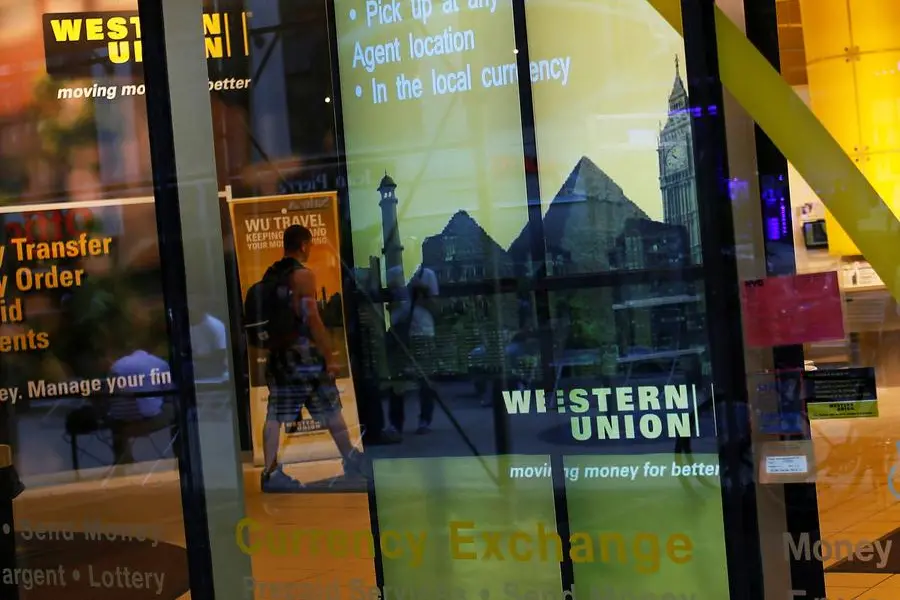
Western Union networks connect diasporan African communities with the continent through secure and efficient financial services
Western Union is the world’s first fintech, with a proud history of innovation, spanning 175 years. This says something about our company’s adaptability and resilience.
© Copyright IC Publications 2022 Provided by SyndiGate Media Inc. (Syndigate.info).