PHOTO
The Africa Forward Summit comes at a particularly unsettling moment in the global system. Economic fragmentation is deepening, supply chains are shifting, and climate commitments remain uneven, while trust in multilateral institutions is under pressure.
In that environment, Africa’s role cannot be to sit on the margins. It has to be part of the centre of the conversation. That is what the Africa Forward Summit in Nairobi is trying to do. Co-hosted by President William Ruto of Kenya and President Emmanuel Macron of France, this is the first time the summit is being held in an Anglophone African country.
The Summit marks a subtle yet significant shift in how Africa engages with global partners. It is not just a change of setting. It is a change of terms. For years, Africa’s external relationships have been shaped by a framework that no longer fits. The donor-recipient model has lingered long after the realities moved on. Africa now sits at the centre of global growth, considering the energy transition and the future workforce. Yet that position has not always translated into influence over financing, market access, or decision-making. That is the gap Nairobi is seeking to close.
Africa is not asking to be included. It is already part of the solution. From climate resilience to food systems to technology, the world’s biggest challenges cannot be addressed without Africa’s full participation. The real question is whether that participation shows up in outcomes. Which brings us to the shift that matters most.
We have had no shortage of well-worded communiqués over the years. The issue has not been agreement. It has been follow-through. What feels different in Nairobi is the attempt to ground the conversation in execution. There is a stronger focus on bankable projects, investment pipelines, and delivery that can actually be tracked. The priorities themselves are familiar, but they carry more weight when tied to outcomes.
The first is economic transformation that keeps value on the continent. Africa has long exported raw materials and imported finished goods. That model has held back industrial growth and limited job creation. Green industrialisation offers a path forward, especially given Africa’s renewable energy capacity, with great examples like Kenya’s energy mix that is nearly 90 percent from green sources. But potential is not the same as delivery. Industrialisation at scale depends on reliable power, affordable financing, and consistent policy. Without those, the risk is that Africa simply exports a different version of raw potential.
The second priority is value capture. Africa produces at scale, but too often captures only a fraction of the value. Agriculture makes this clear. Producers take on the risk, but do not see the full return. Efforts like geographical indication frameworks are part of a shift toward correcting that imbalance. They are about recognising origin, protecting quality, and strengthening pricing power. But again, this depends on execution. Without proper certification, market access, and enforcement, the gains will be limited. With them, the impact could be significant.
The third priority is participation in building the technologies shaping the next phase of growth. Africa cannot afford to sit on the sidelines of the digital and artificial intelligence economy. With the youngest population globally, the stakes are immediate. The ambition to build, rather than simply consume, is clear. The challenge is whether the systems are in place to support it. That means sustained investment in education, infrastructure, and regulation that allows innovation to scale.
Across all three priorities, the issue is not direction. It is delivery. The summit is expected to create a broader shift in how Africa engages globally. Partnerships are expanding, particularly across the global south. This opens up more options and creates space for stronger negotiation. It introduces a degree of balance that has not always been present. But more partners do not automatically mean better outcomes. Some relationships risk repeating the same extractive patterns under new labels. Without clear terms and strong governance, diversification can dilute rather than strengthen Africa’s position.
Which brings us back to a harder question. If Africa is as central to global stability and growth as we say it is, why does that not consistently translate into fairer terms of trade, finance, and mobility? Nairobi does not answer that question. But it does bring it into sharper focus. Because positioning Africa as essential only matters if it changes outcomes. That is where this moment will be tested. Nairobi is becoming a place where these conversations are being shaped, alongside other centres across the continent.
Nairobi's role will not be defined by the number of summits it hosts. It will be defined by what happens after. Do commitments turn into projects? Do those projects get completed? Do they create real economic value? That is the standard. The summit arrives at a moment that calls for clarity and discipline. The expectations are clear. What happens next will show whether this shift holds and whether it carries real weight.
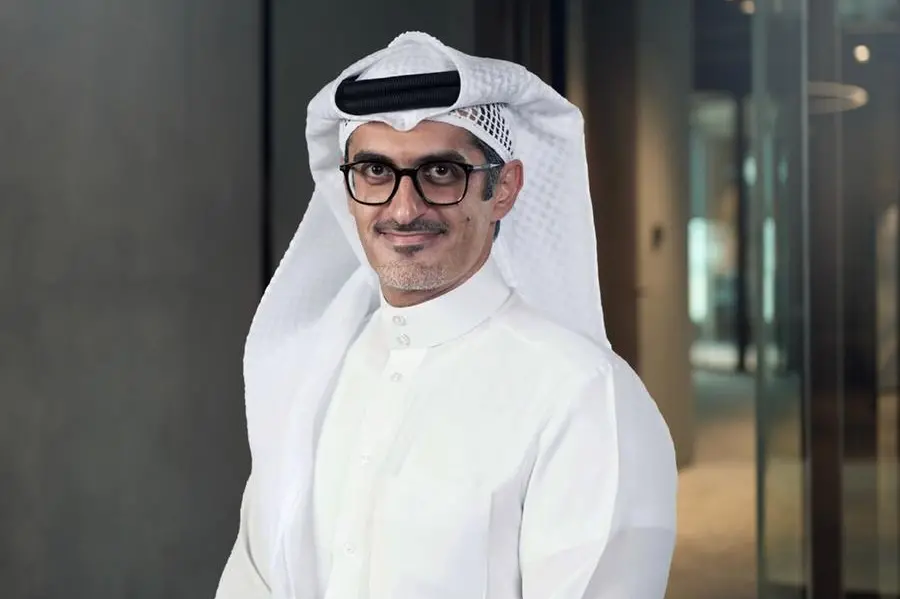
The writer is the Prime Cabinet Secretary and Cabinet Secretary, Ministry for Foreign and Diaspora Affairs of the Republic of Kenya.
© Copyright 2026 Nation Media Group. All Rights Reserved. Provided by SyndiGate Media Inc. (Syndigate.info).