Friday, Mar 09, 2007
Gulf News
Mumbai: When more than one million Sindhis fled from Pakistan in the aftermath of India's Partition 60 years ago, the story of their struggle to restart life all over again in a new land exemplified their indomitable spirit.
The community is once again facing a challenge in the age of globalisation and this time its very existence and identity is threatened, says a prominent Dubai-based Sindhi businessman.
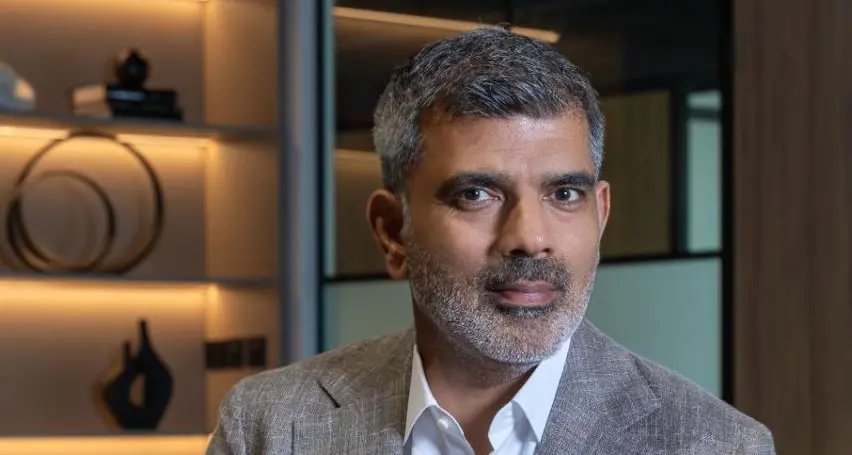
The uniqueness of Sindhi culture and its rich language is under threat of globalisation and the younger generation, though highly educated, is "not comfortable with our language as they grow in environments where they associate with other languages, which ultimately become the chief and comfortable vehicle for communication for them", said Dr Ram Buxani, Chairman of ITL-Cosmos group, Dubai.
At an international seminar held by the Department of Sindhi, University of Mumbai, as part of celebrations to mark its 150th year, Buxani said: "Fifty years ago if one had asked a person who is a Sindhi, the answer would have been 'a person from Sindh'.
"With the dispersal of the Sindhi diaspora far and wide, the answer to the same question would certainly elicit a different answer, especially from the younger generation who may have a vague notion about their ancestral land."
But it is never too late, he says, and urged Sindhi leaders and the community to take collective efforts to preserve and perpetuate the purity of Sindhi language.
He lamented that even the traditional dress of Sindhis was vastly ignored except at marriages or cultural events and Sindhi cuisine never got its due recognition unlike specialities of other communities.
Contributions
But, "a Sindhi never gives up", he said to the audience comprising community leaders like Ram Jethmalani, Srichand Hinduja, Dr L.H. Hiranandani, Niranjan Hiranandani, Nanik Rupani, Ashok Hinduja and Mazharul Haq Siddiqui, vice-chancellor, University of Sindh, Pakistan.
Also present were chief guest S.M. Krishna, Maharashtra governor, and Dr Vijay Khole, vice-chancellor of Mumbai University.
"We were called refugees in our own country and yet Sindhis, wherever they went, contributed immeasurably, building schools and colleges, hospitals and clinics, catering to 80 per cent of the non-Sindhi population."
In Mumbai alone, there are nearly 20 prominent colleges, like Jai Hind College and K.C. College, run by the Sindhi community.
Other noteworthy efforts of the community in the field of education include the Vivekananda Education Society of Bombay and the Mira Education Society of Pune as well as schools in Baroda. Mumbai's Jaslok and Hinduja hospitals are also outstanding institutions, he said.
At a time when migrants to Mumbai could not find rented accommodation, the Sindhis came up with a solution. "The ownership flat system is a Sindhi innovation in this city.
"India has not allowed the community to nominate even a single representative in the law-making body of the country to look after the interests of such a vibrant and economically viable community," he pointed out.
Gulf News 2007. All rights reserved.