Among the regular bundle of grievances uttered by Dubai residents, there's one that crops up time and again.
You can't walk anywhere.
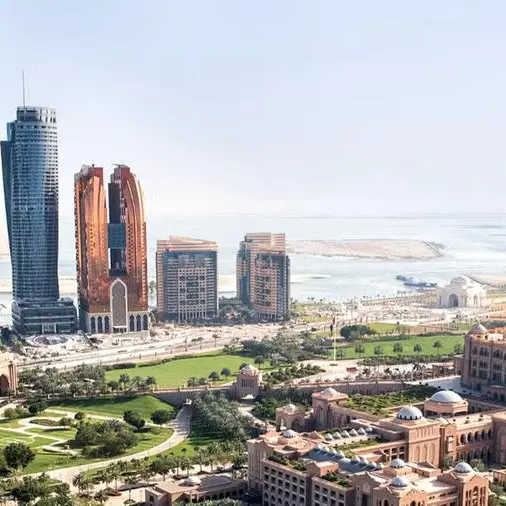
One British newspaper columnist described the emirate as "a motorway punctuated by shopping centres" - and concluded that to attempt to take a stroll anywhere in Dubai was "suicidal." Attempting to navigate any of the sprawling streets of the UAE capital Abu Dhabi on foot is equally arduous, if perhaps not quite as life threatening. The times, however, are definitely a-changing.
When Robert Hardy, of engineering and development firm Mott MacDonald, says that in "10 to 15 years, it's absolutely feasible" Dubai and Abu Dhabi could be as pedestrian-friendly as "the great cities of the world - London, Paris, even New York" - well, it certainly raises eyebrows. Really? Speak to Hardy, based here for nearly six years, about current road design in UAE urban environments and phrases such as "appalling", "inefficient", "conservative", "expensive" and "lack of value" pepper his speech.
But try telling him that the environment and extreme weather conditions preclude either of the emirate's main cities from being proper pedestrianised hubs and he's having none of it. "For six or eight months of the year, I don't know if they are that different to anywhere else," he says.
"If you look at Orchard Road in Singapore, temperatures are very hot all year - they don't even get the cooler period like the UAE does - yet Orchard Road is buzzing with people walking up and down huge wide footpaths, nipping in and out of shops, spilling out of sidewalk cafes, hopping on the bus, pushing kids around in a push chair - and you can get from one side to the other very easily."
Hardy has a mantra that, in an urban environment, the car "should be at the bottom of the food chain". That's clearly not the case here. But the Abu Dhabi Urban Planning Council has a vision. As part of its plan for 2030, it has instigated an Urban Street Design Manual to complete a radical overhaul of the capital's infrastructure to make its streets lively public places.
This will be done by enforcing limited on-street parking, wider footpaths, introducing bus lanes, adding more public transport options including Light Rail Transit and far more pedestrian crossings.
With Dubai's road surface being ripped up and re-laid for the Sufouh tram project, Hardy reckons now's the ideal time for it to follow in Abu Dhabi's footsteps.
"It needs a complete overhaul but there are opportunities to do that over the next few years," he says.
"I know we would walk around a lot more if the urban environment allowed us to. You can't design urban streets for cars and trucks - you have to design them for all the other types of people using that space. It's not just about buildings - it's the bits in between the buildings that matter."
Because, as the saying goes, all trips begin and end with a walk.
© 7Days 2012