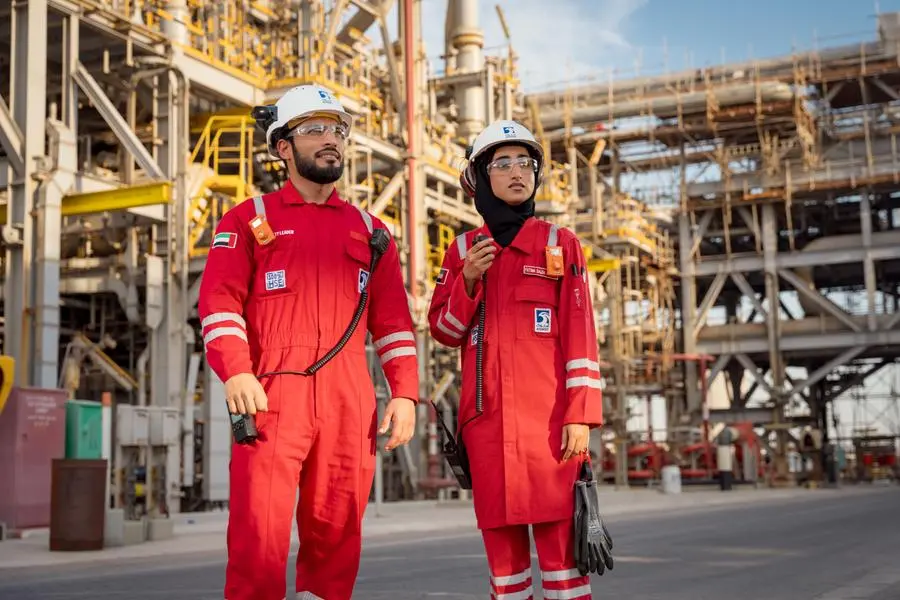
Members of Tunisia's Amazigh community hope their language will be part of the country's new democratic constitution.
Tunisians of Amazigh descent are calling for the inclusion of their culture in the country's new constitution.
"Amazigh is not just a language; it is a civilisation as well as the history of Tunisia and the culture of the Tunisian people," Hajer Welhezi told Magharebia. "That needs to be secured by the constitution to protect it and to prevent any forced or voluntary extinction or eradication."
"It is the responsibility of each Tunisian to do so because it is a national treasure that all Tunisians have to value. It is time to stop talking about Amazigh as a minority. Only the Amazigh language is a minority not the people. Thus, defending and rehabilitating Amazigh civilisation and its branches is not only a matter for the speakers of the language, it is a national affair," Welhezi said.
Activists are using social media to campaign for the inclusion of two articles in the new constitution. The first stipulates that Tunisia is a free, independent and sovereign state with Islam as its religion and Arabic as its language with a republican form of government. The second article calls on the government to recognise the Amazigh language and culture as part of the national identity and to work towards its development.
Badis Kachtilou, a young Tunisian of Amazigh descent, told Magharebia that the call for recognition was aimed at all Tunisians, including the government, political parties and civil society.
"It also asks them to step forward for their historical duty and work toward the inclusion of the two aforementioned articles in the new constitution of Tunisia, in order to make the future in post-revolution Tunisia a place where all Tunisians enjoy their lives without feeling excluded or marginalised," Kachtilou said.
He added, "Our Amazigh brothers in Morocco made great achievement and saw their language become part of the constitution as another official language, besides Arabic. According to the new constitution, the Arab identity of Morocco was abolished and replaced by an Islamic identity. The term Arab Maghreb was also dropped and replaced by Greater Maghreb."
"We hope that Tunisia will also achieve that," he said.
"Tunisian identity can't be summarised neither in one religion nor in one language," Ahmed Welhezi said. "It is a combination of this group of human beings sharing the same land and common history, and the North African Amazigh civilisation and culture, sharing also the same aspirations, dreams, and all the likes that make a living people."
"We aspire to build a new Tunisia that is open, modernist, and tolerant. We are driven by a deep understanding of the particularities of our civilisation and of its historical and geographical position," declared Mourad Zitouni, another young Tunisian. "Our people are not one or two centuries old but rather thousands of years."
Nizar Ferchichi said it was "necessary to recognise the cultural and civilisation diversity".
"Some people want to summarise our national identity in one dimension that represents a certain era which enriched our history and civilisation, so how can we force the Tunisian people to accept only the option of an Arab identity?" he asked.
"Amazigh is an indelible part of the identity of any Tunisian. Degrading, fighting, or denying that part of our identity would be treason of our country and our ancestors, and even worse it would be denying one's origin," Ferchichi told Magharebia. "Yes for recognising a Tunisian Arab-Amazigh identity and no for eradicating and denying the Amazigh identity".
© Magharebia.com 2011