Monday, Mar 14, 2005
Messages such as "Cool Kuwaiti wants to meet a pretty girl" and "I love you Eagle of the Orient" flash along the bottom of the television screen as a sultry singer gyrates to the music.
Switch on, day or night, any of a dozen Arabic music channels and that is what you see: the new pop stars of the Middle East pouring out love songs, surrounded by crowds of exuberant back-up dancers. Everyone on screen is young, beautiful and exuding a sensuality that pushes the boundaries of what is considered decent in the Arab world.
Not only this, but for the mostly teenage audiences from Morocco to Iraq there is also an opportunity to text flirtatious messages that run across the screen.
Music videos, beamed by satellite channels, are now the only uncensored mass cultural form in the Arab world. Islamists rail against them, conservative parliamentarians try to ban them and governments keep some of the more daring offerings off the terrestrial stations they control. But none of this seems to dent their popularity with the young.
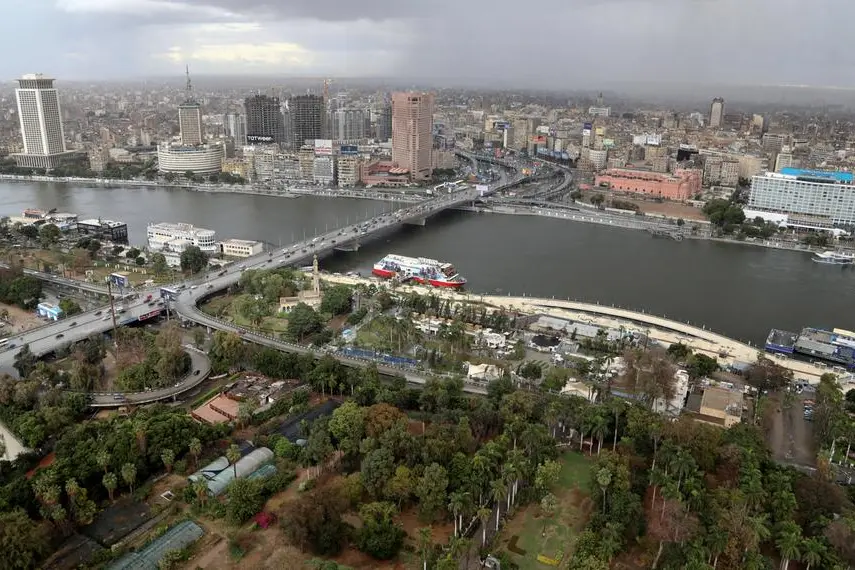
"I like music videos, because they introduce me to fashion," says Mohamed Wagdi, a university student in Cairo. "Not all of them are indecent. I like watching the spectacle, though the music is not always that good. But there should be no censorship, whoever wants to watch should be able to. Just like on the internet."
Despite the almost daily invective in the local press against music videos, enough of an audience exists across the region to support the explosion of about 12 music channels, all privately owned within the region.
The faces of the new stars, most of them Lebanese artists such as Nancy Ajram, Elissa and Haifa Wahby, grace hundreds of magazine covers and hoardings on the streets of Arab cities.
Egypt has its own answer to the Lebanese divas Ruby, who scandalised her compatriots by appearing in a belly-dancing costume in the streets of Prague in her first music video. Another song, performed while she rode an exercise bike, aroused an uproar that reached parliament and prompted the musicians' union to try to ban her from singing. Egyptian television does not broadcast Ruby's songs.
"Music videos are a tool for moral destruction. There is no doubt about that," says Mohamed Mursi, a Muslim Brotherhood member of the Egyptian parliament. "They are against our religion and our morals." He would like the Egyptian authorities to block satellite channels that carry explicit videos.
Last week, Islamist students at the University of Alexandria demonstrated against music channels, which they accuse of spreading corruption. They carried placards saying: "You will be able to keep your eyes shut" a play on the words of the motto of Rotana, a satellite station that is now the region's largest music producer.
Adel Sherif, an owner of a video production house in Cairo, says: "If a music video arouses controversy but people watch it, then it is a success. But if public opinion starts looking for the makers and criticising them for what they are showing, then it is a failure."
The channels occasionally pull a video if there is too much negative reaction. That happened recently to one that showed what was considered an indecent image of a horse. But for the most part, the industry thrives on the eroticism of its products. Singing ability is not always paramount.
"The success of the music video industry is a kind of reaction against sexual repression in the Arab world," says Khaled Agha, the Beirut-based marketing director of Rotana. "But the degree of openness that exists now has allowed some people who have no musical talents, but who look good, to become singers."
In a region with a rich classical singing tradition, the often poor quality of the voices is another source of criticism. But it is not an argument that dissuades the fans.
"Music videos present an ideal world full of beautiful girls," said Amina Khairy, a social commentator for the Al Hayat newspaper. "Most of them are shot in fantastic houses with wonderful gardens. It's a virtual world, which fascinates just like American movies used to fascinate, but this one is closer because it is peopled by Arabs."
Heba Saleh in Cairo
Copyright The Financial Times Ltd 2005. Privacy policy.