Friday, Jun 29, 2007
Gulf News
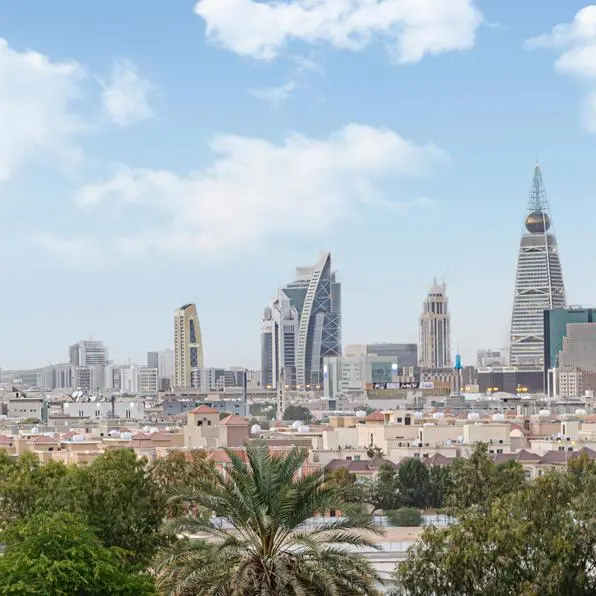
Dubai: After decades of Arabs looking at Egypt's role in regional issues as vital and decisive, Saudi Arabia, which played a supportive role in Arab decisions and positions for a long time, has begun to emerge as a leader in Middle East affairs in what analysts describe as a "natural" progression.
However, the shift between the role of "leadership" and "strategic follower" has created a veiled tension between the two heaviest-weight Arab countries, added analysts and experts. Officials in both countries denied it.
"Talk of a hidden crisis or lack of warmth in Saudi-Egyptian relations is a mere rumour that is being spread by some and believed by them," said presidential spokesperson Sulaiman Awad, after the talks of Saudi monarch King Abdullah Bin Abdul Aziz with Egyptian president Hosni Mubarak in Sharm Al Shaikh on Tuesday.
"The general feeling is that there is tension in Saudi-Egyptian relations despite the fact that President [Hosni] Mubarak said such a thing is not true," said Imad Jadallah, an expert at Al Ahram Strategic Studies Centre in Cairo.
However, statements from both countries on building a causeway linking Saudi with Sharm Al Shaikh supports the view that tensions exist. Saudi media announced weeks ago that the Saudi monarch will lay the foundation of the project, but Mubarak immediately denied the implementation of the project.
Internal issues
"There is an impression [among many Egyptians] that there are Saudi attempts to overtake the Egyptian role," added Jadallah.
Both Riyadh and Cairo, meanwhile, seem to be categorised by the West under similar criteria, a factor that analysts believe facilitates the emergence of a leading political role for Saudi Arabia.
"On the official level, relations between the two are strategically stable and both countries are running in the American orbit. They are also categorised by Washington as being among the moderate Arab countries," said Abdullah Al Sinawi, Editor-in-Chief of Al Arabi Al Nasri newspaper in Cairo.
At a certain point, "both countries faced similar American criticisms," added Al Sinawi. Saudi and other Egyptian analysts, however, stressed that Riyadh's emerging leading role "was not deliberate", but rather a "natural" result of changes dating back to 1979 when Egypt signed a peace treaty with Israel.
Since then, Cairo's abstention from moving within the framework of the Arab movement, coupled with its recent internal issues, including introducing reforms and controversial constitutional amendments, have limited its movement and deepened its "weak internal immunity", noted analysts.
While Saudi Arabia, with its importance to Islamic and Arab nations, coupled with the lack of other Arab countries to take the lead, "had no choice" but to jump to the forefront especially when most of the Arab countries depend on the Kingdom's support, said Dr Wahid Hashim, Associate Professor of political science at King Abdul Aziz University in Jeddah.
Coordination
"Historical and political movements put the Kingdom in a leading Arab political seat," said the US-educated Hashim in a recent interview with Gulf News.
"But the Kingdom ... has not forgotten the Egyptian role or the Jordanian role. It always moves with coordination and discussions with the two [countries]... Saudi Arabia is the head of what I call the Arab troika," he added.
While Egyptian analysts differ on the impact of the peace treaty on the Egyptian role, they agreed on the internal factors that led to Cairo's movement to the back seat.
With American pressures and the economic crisis in Egypt, "the margin of Egyptian movement has begun to abate," said Jadallah.
Bigger role
At the same time, oil giant Saudi Arabia plays a bigger role in regional issues.
During the past few years and months, Riyadh took the initiative to mediate issues such as the crisis over Darfur and the Palestinian question - both files were "traditionally" related to Egypt. It also discussed with Iran the tension over Iran's nuclear programme.
"Surely, the Kingdom holds a huge responsibility," as a chair of the Arab summit, said Mohammad Al Zulfa, member of Shura Council in Saudi Arabia in an interview with Gulf News. He stressed that King Abdullah has been discussing Arab issues with many world leaders during the past few years.
Saudi Arabia carrying Arab issues to the rest of the world is not new, but was done by previous kings as well, Al Zulfa added.
Gulf News 2007. All rights reserved.