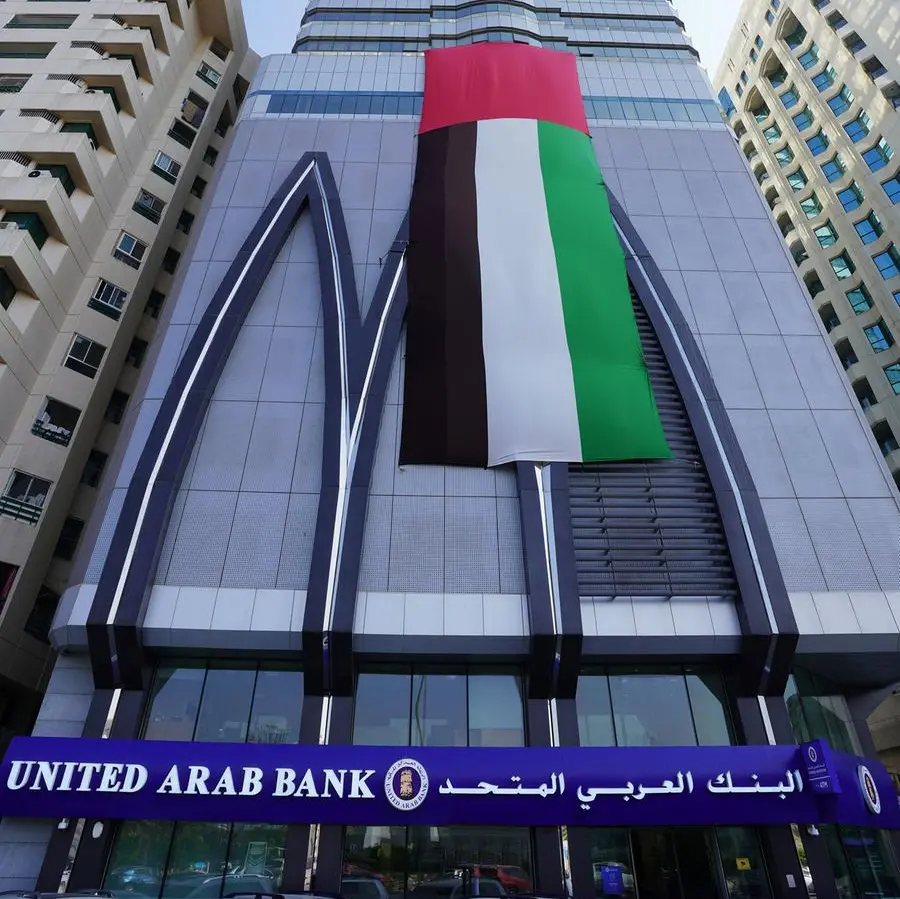
Beirut is witnessing architectural renaissance since BCD has emerged as the home of landmark buildings. By mixing tradition and modernity with east and west, Beirut is offering an architectural language which is diverse but unique at the same time. One of the authors of this new language is world-famous Australian-British architect Kevin Dash who is engaged in many landmark projects in the BCD area, but he particularly takes pride in Banque Audi Plaza, the new headquarters of one of Lebanon's leading banks.
'Real Estate & Investment Magazine' had the following interesting interview with Dash.
Can you tell us about the circumstances that led you to design buildings in Beirut Central District?
Bank Audi had planned to build its new headquarter in the BCD area. The owners of the bank had decided to make the new building more internationally oriented center in terms of organization and structure. To realize their ambition, and as they were looking for an architect with international experience in designing banks, they contacted me, and that's what brought me to Beirut.
I used to be the design partner of a very big commercial firm of architects in London. Going back, I'm from Sydney, Australia. I was asked by a London based architectural firm to work on a specific project. When I finished the job, they asked me if I would stay on in London to help them transfer their design thinking from the 60s to the 80s. So, I stayed there for 10 years and stepped out to establish small atelier of my own. The reason in doing that was, that as a partner, particularly as a design partner in a big commercial practice, you never actually finish anything to your own satisfaction because it's like a process where you end up not recognizing your own work. When you do a work, it's handed over to other people within the organization who add their own attitudes and influence until often at the end of the process, you don't recognize if that was the work you started with. I found this unsatisfactory, because my background is completely different. As an architect in Australia, I used to implement the whole thing and detailed the whole thing myself, so I left the firm.
Do you think that a design should be the manifestation of its environment?
The function of a bank building is universal. The organization of a bank in Lebanon is little different from a bank in Sydney, or Hong Kong, or Japan or London but the actual footprint of a building is relatively uniform. The building materials used in construction are also pretty much the same throughout the world. There is a commonality, and the construction techniques and the technology are pretty much established as a uniform understanding across the globe. So, when you talk about context, there are two things to consider. One is the visual context, which largely has to do with scale, material and so on in addition to how things are handled aesthetically. The other is the social context. All these were taken into consideration by an Australian architect operating out of London to develop a building based in Beirut. And the job was done very successfully I might say. Everybody was happy both from the functionality point of view and from the contextual point of view. It is absurd to say that a good architect interested in contextual design can only design in a particular environment. It's like saying that an English doctor can only operate on an English patient. An architect is like a tailor. A good tailor can cut a suit to fit any shape.
What makes you a unique designer?
I don't think there's anything that makes me unique. In fact, I believe that when the client gives you a good brief, a workable brief, the end result will be pretty much the same with a good architect or a dozen other good architects. If you approach the whole project from a common sense point of view, and you're not doing the job for yourself and your own image, and everything is done to satisfy the client, then a dozen architects will end up with the same design.
Then why there are architects who are famous and others are not?
That's fairly recent phenomenon. It is a growing trend but I personally find it unfortunate. It doesn't mean that I disapprove, but it doesn't interest me at all. In a book I recently read, there was an idea that said "too many writers too interested in curving their own sculpture". It's a little bit bleak, but actually it more applies to architects than to writers. We are living in an age of celebrity and people find that they can mark the celebrity. So, for example, somebody wants to add value to their project, they commission somebody with a known reputation, Norman Foster for example, and they mark the building as a Norman Foster design or whatsoever. This is just modern commercialism.
Most people consider architecture as an art, and as an art, don't you think it should have a signature?
Not all architecture is art. Most buildings have a degree of functionality attached to them, sometimes more so than others. For example, a hospital has to be 100% technical. There are buildings that are architecturally important, but most are institutional buildings like churches, townhalls, courthouses, airports and similar landmarks. The rest is just stuff.
What about Burj Al Arab in Dubai?
It is built deliberately to give an image to Dubai; otherwise as a commercial initiative, it doesn't make any sense at all. The Opera house in Sydney has put Sydney on the map. You have a combination of the Sydney harbor bridge and the Opera house in the perspective. These two objects, part of the city, define Sydney. But you can't expect the entire city to be an architectural work to qualify the city, because you will end up with an architectural zoo. And this is what's happening in Dubai now.
In Dubai, they are fighting to give a sense of a dress to each individual building, and at the end, it just becomes a visual chaos.
In contrast to that, I live in a square in London where all the 19th century houses are absolutely identical in actual square shapes. The prestige of the address is defined by its communal identity. Whereas in Dubai, individual building are trying to make their own address ending up in a visual chaos that doesn't suit me enough.
The job that I do, frankly saying, if it works well for the client, for the organization that it is intended to serve and if no one notices it when it is finished, I consider it a success.
What is the criteria of successful design?
Well, my approach is that I consider each site having its own assets which might be the view, orientation, transport connections, the slope, whatsoever. If you understand the site which is the direct context of the project, than you begin to understand what benefits it has, the drawbacks, and so on. So, you have the site and its assets added to the owner's requirements as a template. Plus you have the laws related to planning and construction. An architect can end up with a successful design if he considers those three conditions and optimizes the end results.
Besides the Audi headquarters, what other projects in Lebanon will have your signature?
I'm helping many local architects in regard of some ongoing projects, which include the Serai Gate developed by VEN.INVEST HOLDING, the Le Gray, and I'm working with Rafael Moneo to design the Souks in Solidere.
Islamic real estate fund to target US market
The Bahrain-based Arab Banking Corporation's UK subsidiary, ABCIB Islamic Asset Management Limited (IAM), Kuwait-based Global Securities House (GSH) and the Broe Companies of the US have announced the successful launch of The Bronco Fund. This is a Sharia'a-compliant real estate fund that will invest up to $140 million in US real estate. The fund's target is to acquire a diversified portfolio of offices and industrial assets located in major US cities using the "value add" investment strategy.
Zenath Real Estate to develop $555 million worth of hotel and other projects in the UAE
Zenath Real Estate, one of UAE's leading property development companies and a part of the Khalid Abdullah Al Ghurair Group, has announced the launch of a string of new hotel, residential and commercial projects in the UAE worth $555 million. During the course of the next two years, 10 luxurious hotels developed by Zenath will be up-and-running across the UAE.
Energy City Qatar achieves sales of $960 million
Energy City Qatar has announced phenomenal pre-sales and sales of more than $960 million, only weeks after releasing 92 plots of commercial land for sale to investors. Energy City Qatar, which will cover an area of approximately 1.2 million square meters, is a realized futuristic vision, synergistic with the Qatar government's drive to create a comprehensive home for the Gulf's and world energy industry and those who work in it. Energy City Qatar is located within the prestigious Lusail development project, a new city that will be home to more than 200,000 residents.
Burooj Properties launches a property investment project in Jordan
Burooj Properties, a solely owned subsidiary of Abu Dhabi Islamic Bank, recently launched property investment products within its property development project 'Burooj Jordan' located in Al Jeezah - south Amman. Established in partnership with the Jordanian Company 'Al Bustan Real Estate', the 'Burooj Jordan' project consists of more than 130 pieces of lands on the airport road, and 35km away from the 7th circle allocated for residential units, handicrafts and light industrial use, within a master plan developed in compliance with the highest international standards, to offer a full range of services.
© Real Estate & Investment Middle East 2007