Despite some setbacks, Morocco's economic performance improved considerably in 2013. Though low demand from Europe was still a challenge last year, stronger agricultural output and high foreign direct investment, together with efforts to diversify export markets and restore the fiscal balance, pushed GDP growth up to 5%.
Morocco's financial indicators have inched downwards in the past few years as the trade deficit has grown, prompting the government to turn towards external sources and bond markets. However, the planned 2014 budget has also shifted funds to capital spending for infrastructure and housing construction, which along with sustained industrial activity will help sustain a still-robust level of expansion over the coming year. Growth estimates for this year range from 2.5% by Moroccan authorities to 4% by the IMF.
Shoring up public financesA December IMF assessment noted that Morocco's public debt, though high, is sustainable, and that the fiscal deficit is beginning to shrink as the government pulls back its expenditures. The tightening balance sheet has led the government to reduce spending on wages, reform its underfunded pension system, and overhaul subsidies for food and fuel, which cost an estimated Dh42bn (€3.73bn) in 2013.
Blanket subsidies are to be replaced with a system that targets the disadvantaged more effectively, although reforms have been delayed. Efforts to push through cuts to fuel subsidies divided Morocco's ruling coalition and prompted a cabinet reshuffle in October. Progress in this area is, however, gaining traction, and the 2014 budget aims to reduce the annual deficit to 4.9% of GDP from about 5.5% in 2013.
Even with these cuts, the Haut Commissariat au Plan, the agency in charge of economic planning, says the government will have to finance the equivalent of 7.4% of GDP from external sources in 2014. In a deal concluded with the World Bank in December, Morocco will receive $4bn (€2.9bn) in loans for state projects in energy and infrastructure - up to $1bn (€732m) a year between 2014 and 2017. This is an increase from the $600m (€439m) in annual loans provided under a previous agreement from 2011 to 2013. For Morocco's economic reform programme, it is a vote of confidence.
The government is also seeking to bolster the economy and public finances through international debt markets. Reports circulated in late November that Morocco may soon sell €1bn in eurobonds, which would make it the second-largest issuer of sovereign eurobonds in Africa. Most recently, Morocco raised $750m (€549m) through a debt issue last May. The bonds performed well over the course of the year, partly due to a boost in confidence as the state moved to cut its subsidy spending.
As the eurozone crisis and rising national deficits have kept liquidity tight, Moroccan banks, too, are turning to international capital markets. The three largest banks, Attijariwafa Bank, Banque Centrale Populaire and BMCE Bank, all announced plans in 2013 to raise funds externally. BMCE, the first to do so, issued $300m (€220m) of five-year paper at a rate of 6.5% in late November. That same month, Attijariwafa secured the support of its general assembly to issue bonds of up to $1bn (€732m) on domestic or international markets, according to a Reuters report, though no date has yet been announced.
Driving economic growthWhile the government is working to shore up its balance sheet, it nonetheless has an eye on supporting long-term growth. The 2014 budget allots Dh126.7bn (€11.3bn) for investment, a 4.6% increase year-on-year. Much of this will be funnelled through major public enterprises, including Morocco's road, railway and port agencies. Al Omrane, a government-owned developer, aims to launch more than 156,000 work sites in 2014, including housing and urban construction projects, and another 23,000 sites in partnership with the private sector. The Office National de l'Eléctricité et de l'Eau plans to spend Dh7bn (€622m) on boosting Morocco's power capacity.
The energy sector in particular is expected to generate domestic and foreign investments in 2014. Plans are under way to develop solar and wind energy infrastructure, and interest is growing in Morocco's offshore oil potential. Expectations of reserves are modest and far below that of neighbouring Algeria, but independent oil companies, both big and small, have licensed a number of oil blocks in the last 18 months, bolstered in part by recent discoveries in non-traditional producers elsewhere in Africa.
Exploration in Morocco has been limited to date, but operators are speeding up their efforts. Up to 10 wells are set to be drilled offshore in the period to mid-2015, nearly doubling that of the past two decades. According to a Reuters report, this could mean $500m-1bn (€366m-732m) in investment, a significant jump for a region that is still relatively unexplored.
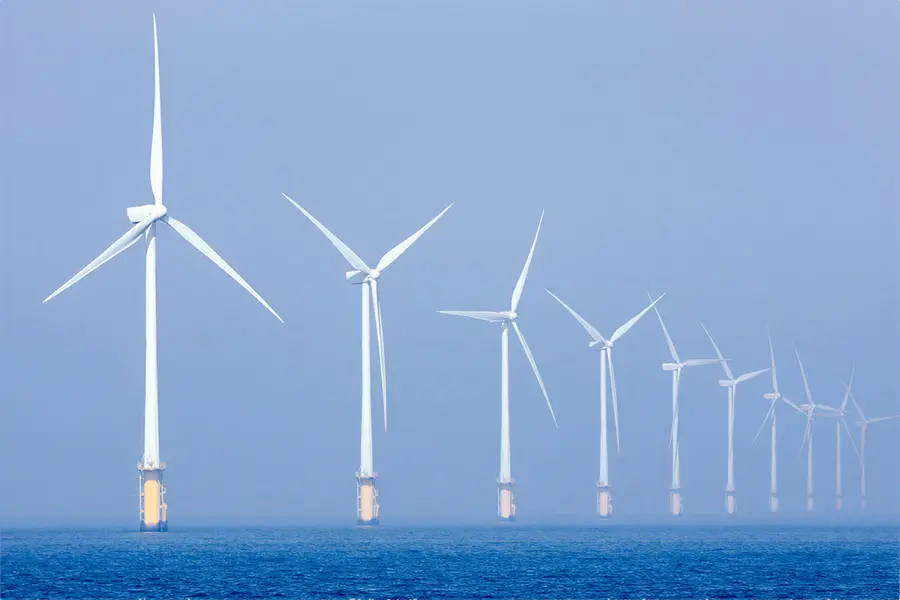
The government is also ramping up investments in renewables as part of a national plan to achieve four GW of solar and wind energy capacity by 2020. The state's solar programme, launched in 2009, aims to construct five major solar plants nationwide. Construction began in 2013 on the first, a 160-MW facility in Ouarzazate, with the $1bn (€732m) contract awarded to a consortium led by Saudi Arabia's ACWA Power International. The Moroccan Agency for Solar Energy launched tenders in late 2013 for two more concentrated solar power plants, which will add a combined 300 MW to the complex in Ouarzazate. In late October Morocco secured a €654m loan from the German state-owned bank KfW to support the two projects.
Plans to expand the national infrastructure and boost power capacity will help support a number of industries and drive economic growth in 2014. There are still tricky challenges to confront, including sub-par growth in Europe and subsidy reform, but the ongoing initiatives will nonetheless lay a solid base for future growth.
© Oxford Business Group 2014