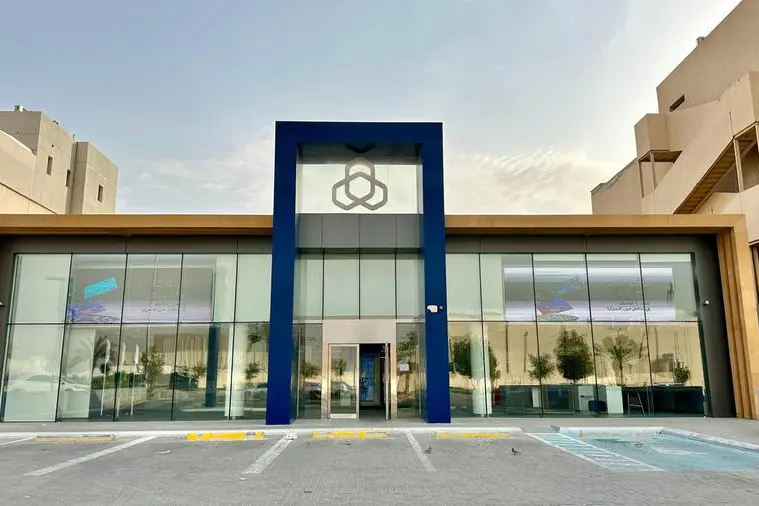
Invensys, one of the leading global producers of industrialcontrol systems, is significantly expanding its local operations
Since the industrial revolution, engineers have been using their little gray cells the human brain's central processing units to advance the way modern machines operate.
The first generation of machines was able to follow simple sets of instructions, sounding an alarm if anything went awry. The second generation had alternative sets of instructions and human intervention was not required until the machine ran out of instructions to follow. The current generation, on the other hand, are able to anticipate problems and learn from past experiences.
This continual state of evolution has reached a point where the level of sophistication and specialized knowledge required in manufacturing means that it is too costly for most producers to create both hardware and the software to control it.
The result is that there are only a handful of big names specializing in the production and programming of control systems for large-scale industry worldwide.
Invensys is one of those companies. With facilities in 60 countries, 35,000 employees and 2007 revenues of £572 million (LE 6 billion), the global industrial automation, controls and transportation group has been providing Egyptian power stations and petroleum refineries including the MIDOR refinery in Alexandria and Cairo North Power Plant with control systems since 2003.
In 2008, Invensys is taking its Egyptian operations a big step further. The company concluded a joint venture agreement to create control systems for domestic and regional oil and gas projects, it is bidding for a chunk of the LE 7 billion railway budget and it is establishing Egypt's first Industrial Automation Engineering Center of Excellence (IAECE).
The Center of Excellence
The IAECE will be established alongside the company's already existing Engineering Excellence Center (EEC) to support Invensys's worldwide operations and to assist knowledge transfer to Egyptian industry.
The Cairo EEC the company's fourth center along with those operating in China, India and Argentina is currently staffed by 270 engineers, with plans to expand to 500 engineers within two years. In 2007 the EEC produced 300,000 hours of software engineering for its global customers, which include Exxon Mobil, Total, Aramco, BP and Shell.
Engineers working at the new IAECE will assemble and integrate automation systems, which Invensys plans to export throughout its Middle Eastern and African markets.
"I attach great importance to this new venture," says Invensys CEO Ulf Henriksson. "We are committed to building a world-class modern facility, which will include a versatile staging area, workshop and warehouse capable of handling the largest automation projects. Naturally we hope that our significant local presence will help enlarge our installed base in the country and promote the growth of high technology."
Mohamed Farouk, Invensys's director for excellence centers, outlines the new facility's role in more detail: "The first business model employed by the excellence center is an in-sourcing, off-shore center for Invensys world-wide," says Farouk. "It is a software engineering center that serves high cost centers such as the USA, EU and Canada, as such [high cost] centers benefit from the lower cost-per-hour rates present in countries like Egypt."
Farouk is adamant that he is not just running a call center with a fancy name. "These centers employ a combined workforce of 500 highly qualified engineers and programmers, more than half of which are in Egypt," he says. "Such centers provide high-value engineering to other Invensys offices. In numbers, the revenue per head count working 1,600-2,000 hours a year ranges from $35,000 to $50,000 [LE 185,500-265,000]. Meanwhile the same individual working in a call center would generate $10,000 [LE 53,000] in revenue with the same work hours during the same period. Of course there is a difference in qualification. Our excellence center requires a high level of training and education, while call center representatives need a skill set," Farouk adds.
A Business of Partners
"The second business model is to establish partnerships in high-value projects in the oil and gas, railway and white goods markets around the world," says Farouk.
This model came into play in Egypt in early 2008, when Henriksson met Minister of Petroleum Sameh Fahmy. "Upon deciding to commence with the second business model in the local market, we found that the biggest clients in Egypt were actually the government, so direct partnership with them was a question of time," says Farouk.
"This model is perfect for both of us [Invensys and the Ministry], because despite profit sharing we can't find a better local partner than the Egyptian government to ensure continuity and profit. Meanwhile, the government will ensure quality and timely delivery of the project because it is a full-time partner. It is a win-win situation," he says.
The result of this meeting was the signing of a joint venture between state-owned ENPPI and GASCO, and Invensys subsidiary Invensys Process Centers.
"The joint venture will commence operations by October 2008. It is a production facility in the North Suez Bay that will produce integrated computer controlled systems for local as well as Middle Eastern and African projects. The project will include refinery production experts and local support staff to ensure our continuity within this critical market," says Farouk. "On the local scene we will be able to provide instant maintenance, whether on a software or hardware level, since everything is produced locally by local experts. On a regional basis, we will have faster access with the factory in Egypt as it lies in the middle of our MEA operations."
In numbers, the capital of the venture is $1 million (LE 5.3 million). Though not a substantial amount, Farouk says, "We expect that the business generated by this production plant in the coming three years will range between $25-30 million [LE 132.5 - 159 million] in sales. The reason for this big revenue versus small capital is that our industry is an intellectual industry and, therefore, the majority of our overhead costs are dependent on the quality of the engineers working in the plant rather than highly sophisticated hardware."
Next Stop, Invensys
Egypt's railroad system, the oldest in Africa and the Middle East, has been operational since the early twentieth century. Despite upgrades to cope with usage demands, some trains have been operational since the 1952 revolution.
"But due to recent accidents, the Ministry of Transport has started to work with world-class consultants like Bose and collaborate with Cairo University to come up with a suitable overhaul plan for the railway network," says Farouk.
The budget for the overhaul is worth almost LE 7 billion.
"With such a huge budget, the local Invensys team took notice. And since 40% of Invensys worldwide operations are related to producing and programming railway control signals, we decided to enter the Ministry of Transport bids to seize the available opportunity," says Farouk.
Invensys has entered three bids, all of which are related to railway crossing signaling control systems. "All three bids are worth LE 120 million, and would take two to three years to complete," says Farouk. "Though the Ministry is very adamant that such projects be completed as soon as possible, and so we will finish the projects in several phases, delivering each one once it is completed."
Securing the bids would be a major step forward in the company's Egyptian expansion plans, which will continue regardless of the bid results. "We intend to grow vertically," says Farouk. "We will increase our engineering staff from the current 300 to almost 800 engineers. Also, we will increase the number of man hours exported from the current 400,000 hours to 1.2 million hours."
Invensys is also looking to expand in a different direction: the amount of local components used in its projects.
"Components are not only hardware, 60% of our content is intellectual property, which means engineering know-how as well as components," says Farouk. "For the joint venture, we will start with 50% local components, then within the next 18-24 months we will increase it to 75%. This percentage will increase as a result of lowering dependency on foreign expertise in addition to increasing production capacity," he says. "As for the railway development project, we will use a considerable amount of foreign expertise until our engineers are qualified enough, and then we will increase the local component."
With three bids in the pipeline, a joint venture and the IAECE on the cards, Invensys is focusing on stabilizing the projects and expanding the capacity of its EEC. Whatever the short term brings though, the company is certainly here to stay.
By Tamer Hafez
© Business Today Egypt 2008