29 December 2007
Commentary by Ghanie Ghaussy
Freedom and order for more justice: social market economy - a model for the Arab world?
This is the latest in a series of commentaries The Daily Star is publishing in association with the Konrad Adenauer Stiftung, a German research foundation.
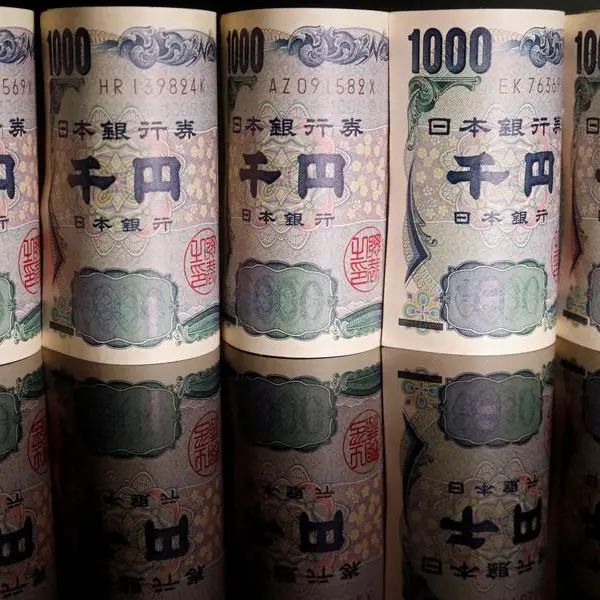
Being a major tool of monetary policy, the exchange rate policy serves to influence the price of foreign currency, denominated in national currency, on the national exchange market, particularly if the latter is subject to strong variations. Within the free exchange rate system adopted by the International Monetary Fund (IMF) member states, exchange rates vary according to currency offer and demand on exchange markets.
When exchange rates vary quite strongly, central banks intervene by buying or selling currencies in order to stabilise the exchange rates on the market. Being IMF members, Arab countries have also committed to accepting market-driven free exchange rates. However, for monetary or balance of payments reasons, they intervene on the exchange market to avoid too strong fluctuations of currency prices (exchange rates).
On the whole, states intervene on the exchange market only in either of two cases: either because a deficit of the balance of payments would induce strong devaluations, that is a drop in exchange rates, or else because a surplus of the balance of payments would induce strong revaluations, that is a rise in exchange rates on exchange markets. Excessive devaluation, as much as high revaluation, constitutes a serious threat to international trade, to the evolution of global income and to the situation of employment in the countries concerned and, consequently, to the stability of national economy as a whole. It must be added that these active interventions in matter of exchange rates do not always generate the effects desired. Indeed, the current balance of payments may react in an "abnormal" way to currency devaluation and revaluation. This case in point often occurs in developing and emerging countries - in which most Arab countries belong. This abnormal reaction induced in particular by a devaluation may be explained economically by the elasticity of the demand on currency.
The listing of exchange rates on the markets of Arab countries differs from one country to another. On the whole, rich countries - such as Kuwait, Libya, Saudi Arabia and the United Arab Emirates - have quite significant currency incomes thanks to exports of oil whose prices have been constantly on the rise on the global market over the past few years. This situation generates significant surpluses of the current balance of payments and keeps foreign debt within a quasi-negligible rate. These countries export their capital and invest their currencies on the short or medium term on international markets.
In the past, fear of foreign takeover or domination of markets swayed in industrialised countries due to the considerable flow of petrodollars. The Mexican crisis and the long-term decrease in oil prices on the global market during the 1990s have left such fears unfounded. Rich Arab countries have always used part of their surpluses for imports of goods, so much so that their balance of payments has ended up posting a deficit again, and this, even in Saudi Arabia, the top oil exporter during the 1990s. Besides, petrodollar surpluses have served for long-term foreign investments, particularly in the US and in Western Europe. According to data released by the IMF, the foreign currency reserves of these countries have increased significantly since 2001 due to the rise in oil prices following the war in Iraq. On the other hand, such countries as Egypt, Jordan, Lebanon, Syria, Morocco, Tunisia and Yemen experience heavy indebtedness. Some of them depend on capital imports in view of their negative current balance of payments. In order to illustrate the problem of these countries, it would be interesting to propose a few figures: in 2003, a year for which we have statistics for Arab countries issued by the IMF, the foreign debt, denominated in percentage of GDP, amounted to 111 percent for Syria, 110 percent for Lebanon, 84 percent for Jordan and 75 percent for Tunisia. For Egypt, this rate posted 31 percent, while for Algeria, Morocco and Yemen, it was respectively 40, 47 and 40 percent. In order to assist these highly indebted countries toward overcoming the balance of payments difficulties which constitute major risks for economic stability, the IMF grants transition loans in accordance with the "stand-by arrangement."
Apart for the chronic surpluses and deficits mentioned above, one notes - even in rich Arab countries - short term currency fluctuations. These fluctuations often have a negative impact on global income, as well as on domestic balance. The increase in the money stock due to rising currency incomes is a special case. If this increase is not accompanied by a greater offer in goods, the country runs the risk of an "inflationist" price rise. It is for this reason that, even in this case, exchange rates are modified; in other words, the state intervenes actively on the exchange market.
As a general rule, Arab countries - which are also member-states of the Arab League - wish to manage their own exchange rates systems. Given the fact that free fluctuation of exchange rates comprises, in particular when the fluctuations are significant, several economic risks, Arab countries have also opted - insomuch as they have pegged their currency to the dollar, SDRs or the euro - for the "managed floating" policy, that is, controlled flexibility. This implies that the formation of exchange rates is left, generally speaking, to the market. However, the relevant authorities on the national level may intervene, periodically and according to the economic situation, on the exchange markets by buying or selling currencies.
The chief objective remains achieving the "long-term balanced exchange rate," that is the "right trend" which, from the point of view of the proper authorities, serves as a reference. Such interventions avoid too strong fluctuations of exchange rates. They become necessary in the face of the globalization of capital markets and the short and medium term capital flows on international exchange markets. Such interventions also help facilitate the process of adaptation of national macroeconomic monetary aggregates. The efficiency of these interventions depends on the time of intervention, the amount of foreign currencies or of national currency sold or bought on the market and on the continuity of the economic and monetary policy of the relevant monetary authorities.
Ghanie Ghaussy is professor emeritus in political economy. He has taught since 1979 at Hemult Schmidt University/ University of the German Army in Hamburg. Pr. Ghaussy is an eminent expert on Islam and an authority on social market economy.