PHOTO
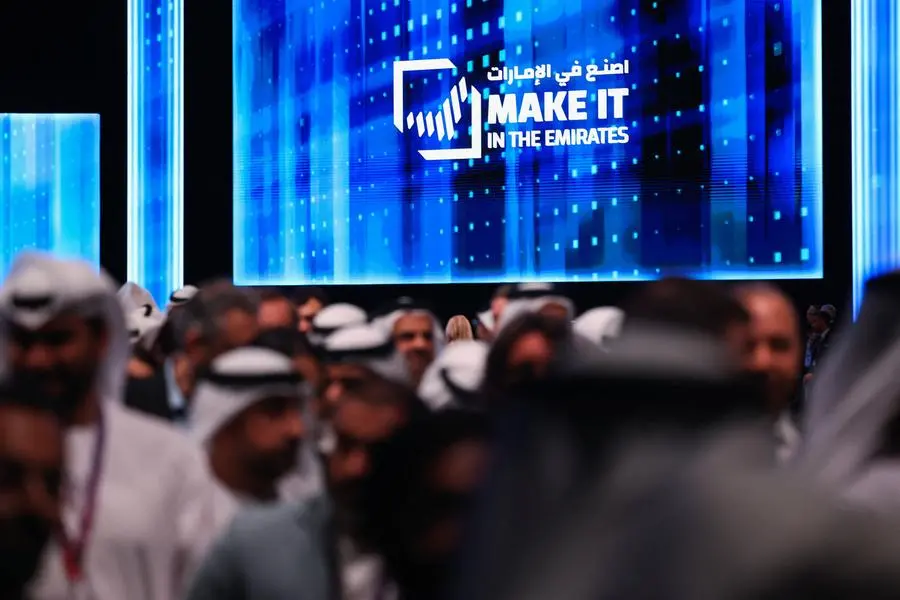
ABU DHABI: Make it in the Emirates 2026 opened on Monday with a clear message from UAE ministers and business leaders: the country's long-term investment in industrial sovereignty is paying off — delivering measurable gains in economic resilience and national security at a time of unprecedented global disruption.
Day 1, themed 'Industrial Sovereignty in a Strategically Connected World', began with Suhail Mohamed Al Mazrouei, UAE Minister of Energy and Infrastructure, addressing the UAE's recent departure from OPEC and OPEC+, and affirming that independence has not come at the cost of global responsibility.
"The UAE has always acted as a responsible producer," he said. "As an independent producer, we hope to enable growth and contribute to global stability between supply and demand."
Al Mazrouei added that the UAE would continue engaging with former bloc members, but on its own terms: "We will continue working with many nations, including OPEC and OPEC+ members, but through bilateral cooperation rather than within a formal group structure."
The conversation then turned to defense, where Faisal Al Bannai, UAE Presidential Advisor and Chairman of EDGE Group, revealed that UAE-made technology has been critical in thwarting recent attacks.
"Eighty-five percent of these drones were tackled with jammers developed and produced in the UAE," Al Bannai said, referring to attacks linked to the Iran conflict. He added that since EDGE was established six-and-a-half years ago, foreign orders for UAE defense products have surged from just 2% to 70% of total output — a figure he expects to grow dramatically, estimating the UAE's defense capabilities will multiply "100 times".
UAE defies expectations to top $1trn non-oil trade
The resilience story extended to trade, where the UAE is outperforming forecasts despite global headwinds. Dr. Thani Al Zeyoudi, UAE Minister of Foreign Trade, said non-oil foreign trade exceeded $1 trillion in 2025, growing 27% year-on-year, with the UAE now connected to more than 250 ports worldwide.
"Many expected our numbers to fall into negative territory. Instead, we ended the first quarter with growth even higher than last year. This is a very positive signal that we will continue progressing regardless of external challenges," Dr. Al Zeyoudi said.
In a fireside chat on entrepreneurial resilience, Dr. Ahmad Belhoul Al Falasi, Minister of Sports and Chairman of the Emirates Growth Fund, framed the UAE's track record of weathering crises as a competitive advantage for investors.
"The agility and ability of the UAE to weather every type of shock — whether a national disaster, warfare, or even a global pandemic — is, in many ways, a blessing in disguise," he said. "Coming out of this, the outlook is far more promising. If I were an investor in the region, I wouldn't choose any other place than the UAE."
A dedicated session on family businesses — which account for approximately 60% of national GDP and 80% of private-sector employment — examined how these firms are adapting to volatility. Two of the UAE's most prominent business leaders offered perspectives on endurance.
Mohamed Al Abbar, Founder and Managing Director of Emaar Properties, credited national leadership: "Our country has shown steadfastness and resilience under the directives of our leadership, and that is how we managed not only to navigate disruption, but to endure it."
Abdulaziz Al Ghurair, Chairman of Abdulla Al Ghurair Group, offered a direct lesson from experience: "In a crisis, you can easily lose control — and that is the biggest mistake you can make. But crises also create opportunities. My advice is simple: don't sell, be patient. Endure."
Closing the Vision Stage program, Badr Jafar, Special Envoy for Business and Philanthropy, delivered one of the day's most striking addresses, arguing that true sovereignty is measured in the essentials of daily life.
"The medicine in your hospital. The protein on your child's plate. The chip in your factory," he said. "We were told our soil could not feed us — and we grew gardens in sand. We were told oil would be our ceiling — and we made it our launchpad. Today, we hear it again: supply chains are fragile, trade is weaponized. We've heard this song before — and we know how to answer."
The day concluded with a conversation with Senator Ahmed Abou Hashima, Head of the Egyptian Senate Committee on Financial, Economic and Investment Affairs, who highlighted the UAE's growing role as a regional production hub. "The funding is from the UAE. We manufacture here, in what is effectively the AI capital of the world," he said, noting plans to manufacture 103 unique products in the UAE using Industry 4.0 technology.
Make it in the Emirates 2026 is hosted by the Ministry of Industry and Advanced Technology (MoIAT), in collaboration with the Ministry of Culture, the Abu Dhabi Investment Office, the ADNOC Group and L’IMAD, and organised by the ADNEC Group.