16 September 2009
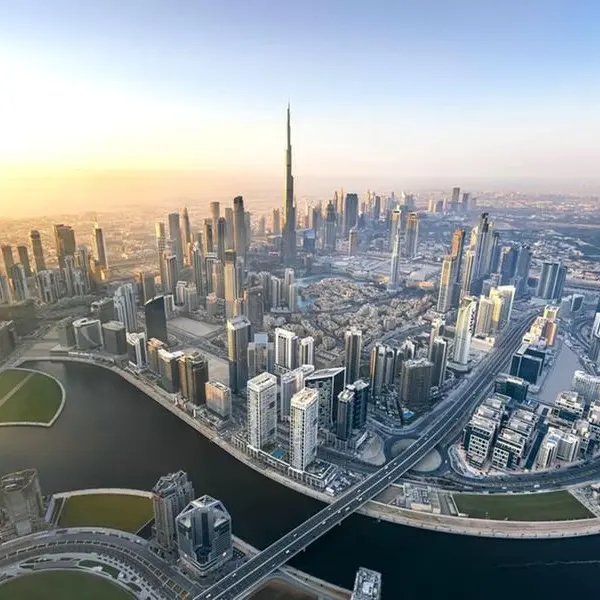
The number of vacant offices in Dubai will continue to rise until mid-2010, while the pace of decline of office rents will slow to 15 per cent in the third quarter of this year, according to a realty analyst.
"The rate of decline has eased off from 45 per cent in the first quarter to 25 per cent in the second quarter," Matthew Hammond, Head of Agency at Jones Lang LaSalle (JLL)?Mena, told Emirates Business. "And now I can see it coming down to 15 per cent in the third quarter.
"Many developments were started during 2007-2008 and by this time last year they had reached a stage where they could not be halted. They continued to be built even though the demand environment had changed drastically, so there will be a supply-demand imbalance for a period of time."
JLL estimates that average grade A office rents - excluding the Dubai International Financial Centre - have declined by 63 per cent to Dh225 per square feet from the highs of Dh550 to Dh600 per sq ft seen at the beginning of the year.
Asked how the agency determined prime average rents, Hammond said: "Every quarter we put a spot valuation on a basket of buildings such as Emaar Square, Emirates Towers, the Convention Centre, Monarch Tower and new buildings along Sheikh Zayed Road to arrive at an average rent for grade A space."
The size of the office market in mid-2008 was 23 million sq ft and it has now grown to 33 million sq ft. JLL further says 25 million sq ft of additional office space is expected to enter the market by the end of 2011.
"The market recently had a 50 per cent increase in stock and we think the majority of it has been grade A," he added. "The increase in grade A space will put pressure on rentals, which are likely to come down in the next few quarters.
"We believe rental increases will not be seen again until the later part of 2010 or 2011 because of the supply-demand dynamics."
The market currently consists of three landlord sectors - developers/investors, reluctant landlords and strata title owners. Institutional landlords - government-backed developers or Emirati families who own properties - are still looking for sustainable rents of Dh200 to Dh250 per sq ft and are not chasing the market down.
Reluctant landlords, or tenants who sublet space, are a new phenomenon, said Hammond. "They are the ones who expanded and subsequently shrunk and have fit-out space to let. Since members of this group are keen to cover costs they are not looking to achieve the best rents. The fit-out space is attractive and this segment has witnessed higher demand." The toughest landlords to track are the strata owners, many of whom are distressed and do not want to hold office space for long.
Asked if businesses were likely to relocate from old Dubai to grade A space in new Dubai, Hammond said: "We are not seeing a rush of Deira and Bur Dubai tenants coming south of the World Trade Centre roundabout, where the majority of the Grade A space is coming up. And that is because the majority of local businesses such as banks have been in Deira and Bur Dubai for a long time and do not want to leave their client base."
New Dubai businesses are primarily those that have not been in the city for long or have a licence from the free zone. "What we have found in the course of two to three years is that culturally many of the occupiers are different, so it could be seen as two different markets."
Hammond believes the status of a firm can get it concessionary rates in today's market condition, as institutional landlords take more sympathetic views on tenants. "It is comforting to know a lot of Emaar, Dubai World Trade Centre and the likes are taking a more sympathetic view on tenants. In many cases, the landlords are working with the tenant to achieve the goal," he added.
New free zones competitive
New free zones such as Jumeirah Lake Tower (JLT) and Dubai Silicon Oasis (DSO), which offer strata ownership, are becoming more competitive in terms of rents.
Matthew Hammond said he was aware of some transactions in JLT taking place at Dh100 per sq ft or lower, while other deals had been transacted in DSO at below Dh100 per sq ft.
"JLT and DSO are two new free zones where strata purchases were allowed from the word go, so the free zone authorities do not have a full grip on what rents the strata owner can charge," he added.
The number of vacant offices in Dubai will continue to rise until mid-2010, while the pace of decline of office rents will slow to 15 per cent in the third quarter of this year, according to a realty analyst.
"The rate of decline has eased off from 45 per cent in the first quarter to 25 per cent in the second quarter," Matthew Hammond, Head of Agency at Jones Lang LaSalle (JLL)?Mena, told Emirates Business. "And now I can see it coming down to 15 per cent in the third quarter.
"Many developments were started during 2007-2008 and by this time last year they had reached a stage where they could not be halted. They continued to be built even though the demand environment had changed drastically, so there will be a supply-demand imbalance for a period of time."
JLL estimates that average grade A office rents - excluding the Dubai International Financial Centre - have declined by 63 per cent to Dh225 per square feet from the highs of Dh550 to Dh600 per sq ft seen at the beginning of the year.
Asked how the agency determined prime average rents, Hammond said: "Every quarter we put a spot valuation on a basket of buildings such as Emaar Square, Emirates Towers, the Convention Centre, Monarch Tower and new buildings along Sheikh Zayed Road to arrive at an average rent for grade A space."
The size of the office market in mid-2008 was 23 million sq ft and it has now grown to 33 million sq ft. JLL further says 25 million sq ft of additional office space is expected to enter the market by the end of 2011.
"The market recently had a 50 per cent increase in stock and we think the majority of it has been grade A," he added. "The increase in grade A space will put pressure on rentals, which are likely to come down in the next few quarters.
"We believe rental increases will not be seen again until the later part of 2010 or 2011 because of the supply-demand dynamics."
The market currently consists of three landlord sectors - developers/investors, reluctant landlords and strata title owners. Institutional landlords - government-backed developers or Emirati families who own properties - are still looking for sustainable rents of Dh200 to Dh250 per sq ft and are not chasing the market down.
Reluctant landlords, or tenants who sublet space, are a new phenomenon, said Hammond. "They are the ones who expanded and subsequently shrunk and have fit-out space to let. Since members of this group are keen to cover costs they are not looking to achieve the best rents. The fit-out space is attractive and this segment has witnessed higher demand." The toughest landlords to track are the strata owners, many of whom are distressed and do not want to hold office space for long.
Asked if businesses were likely to relocate from old Dubai to grade A space in new Dubai, Hammond said: "We are not seeing a rush of Deira and Bur Dubai tenants coming south of the World Trade Centre roundabout, where the majority of the Grade A space is coming up. And that is because the majority of local businesses such as banks have been in Deira and Bur Dubai for a long time and do not want to leave their client base."
New Dubai businesses are primarily those that have not been in the city for long or have a licence from the free zone. "What we have found in the course of two to three years is that culturally many of the occupiers are different, so it could be seen as two different markets."
Hammond believes the status of a firm can get it concessionary rates in today's market condition, as institutional landlords take more sympathetic views on tenants. "It is comforting to know a lot of Emaar, Dubai World Trade Centre and the likes are taking a more sympathetic view on tenants. In many cases, the landlords are working with the tenant to achieve the goal," he added.
New free zones competitive
New free zones such as Jumeirah Lake Tower (JLT) and Dubai Silicon Oasis (DSO), which offer strata ownership, are becoming more competitive in terms of rents.
Matthew Hammond said he was aware of some transactions in JLT taking place at Dh100 per sq ft or lower, while other deals had been transacted in DSO at below Dh100 per sq ft.
"JLT and DSO are two new free zones where strata purchases were allowed from the word go, so the free zone authorities do not have a full grip on what rents the strata owner can charge," he added.
By Parag Deulgaonkar
© Emirates Business 24/7 2009