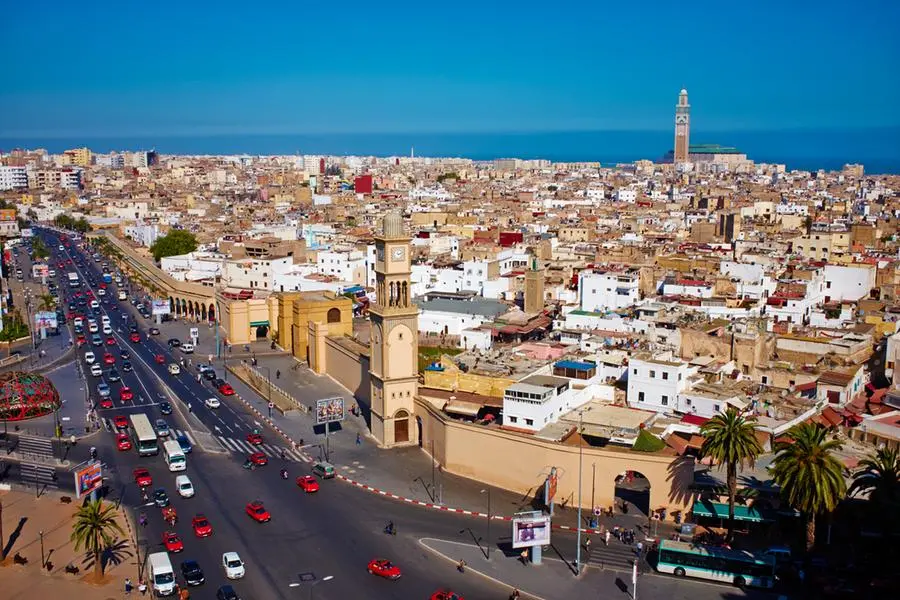
The recent announcement of the SR100 billion ($26.6 billion) King Abdullah Economic City that will come up in Rabigh, north of Jeddah, in what has been described as the biggest project of its kind in the Gulf region, represents a significant milestone toward helping creating sustainable growth, development and competitiveness. The city is part of Saudi Arabian General Investment Authority's (SAGIA's) ambitious plan to attract foreign funds, providing incentives and tax breaks for investors and removing hurdles facing them. In addition, SAGIA has concluded 17 agreements with various government departments aimed at knocking down hurdles for local and foreign investment. This will further promote and speed the development process in Saudi Arabia. This city and the support system SAGIA is providing can bring great opportunities for next generation of entrepreneurs in the region. The key challenge is how can the region's entrepreneurial ecosystem be enhanced.
In the Gulf Cooperation Council (GCC), there is little doubt that the current stock markets have left many investors frustrated and questioning where they should invest their earned money. In many developed and developing countries, angel investors are investing over billions in new emerging businesses each year. In the GCC and the Middle East this number is so little and would be substantially higher if these investors were better able to find, review and support emerging business opportunities.
Angel investors are the primary source of early stage businesses. Angels are private individuals that invest their own wealth in entrepreneurs who are not directly related to their family or prior friendship, with the mindset that they will get higher returns as the ventures get "discovered" down the road by an attractive buyer. In the United States, active angles usually make one to two deals per year, with investment ranging from $10,000 to $500,000, and an average being $175,000. For example, the first angel investor in Starbucks Coffee was a doctor who was introduced to its founders, Howard Schultz, through their wives. The doctor's investment grew to be worth more than $10 million.
Though not formally classified with the venture capital industry, angel investors are the largest pool of risk capital available to finance entrepreneurial activity in the United States, consisting of about $60 billion to $80 billion. Each year, as many as 250,000 active angel investors finance about 30,000 and 50,000 very early stage ventures with a total dollar investment between $7 billion and $20 billion. And according to one serial investor, as angel investors increasingly pool their funds and resources by connecting in networks, they are becoming more accessible to entrepreneurs. Studies indicate that there are as many as 170 formal and informal networks in the United States and Canada.
Some of the greatest opportunities start from under capitalized entrepreneurs who cannot get traditional financing from banks. In the United States, banks are lending less than ever to small businesses and start-ups while angel investors are increasingly disenchanted with underperforming equity markets and low interest rates. There now exists a greater opportunity than ever to bring both parties together to finance the next great enterprises of the Middle East. Whatever the idea, a network of angel investors can provide the place and space to choose a growing variety of investment opportunities. An angel network provides an opportunity to assist each other in making connections with companies and to make the most of those connections. An angel network is a group of successful business people who want to invest (their time and money) in the next generation of Saudi entrepreneurs. They provide:
knowledge and experience about building enterprises,
open doors and provide access to markets,
provide solutions and advice on how entrepreneurs can overcome difficulties they may encounter, and
knowledge about the talent and the right people for the entrepreneurs to hire.
Angel networks have long been an important resource for support and mentoring for early stage businesses as such businesses pursue individual (friends and family) and institutional venture capital in many parts of the world. The United States has a solid history of angel network groups. At present, there are about twenty angel groups in one state alone, Pennsylvania state, and more are likely to develop. The development of angel networks in Saudi Arabia into a region wide network (such as the Gulf Angel Network or the Middle East Angel Network) represents a logical progression of the evolution of a regional angel investment activity.
Angel networks help its members to capture the benefits of fostering entrepreneurship at its early stages. Angel network members will enable individual businesses to grow at a steady rate. In addition to this, Angel networks create the opportunity for its members to share in the considerable wealth of resources in our local or regional economy.
At one of the conferences held at Oxford University's business school, I was interested to see a speaker talking about the entrepreneurial ecosystem in Silicon Valley.
"The Silicon Valley remains the hub of innovation. The freshest of ideas and work continues to happen there. In part, it is due to the ecosystem that is already in place -- the entrepreneurs who are on their second, third or even fourth venture, the angels who provide not just the seed capital but also the mentoring, the venture capitalists, the university backdrop, and above all, the culture of risk. It is this mix that makes Silicon Valley unmatched. There may have more engineers in Bangalore, India and other parts of the world, but the ecosystem needed for innovation and start-up entrepreneurship is missing and will take time to build."
So, I leave the readers with the following question: Does Saudi Arabia need an angel network organization that can offer support to business angels and entrepreneurs in Saudi Arabia, the GCC and the Middle East?
By Dr. Adnan Soufi
© Arab News 2005