PHOTO
The euro dipped on Wednesday after a report that European Central Bank President Christine Lagarde planned to leave her role early, while the dollar was higher before the minutes from the Federal Reserve's January meeting.
The kiwi dollar slumped after the Reserve Bank of New Zealand held interest rates and said policy would need to remain accommodative, while the yen was a touch softer after the U.S. said Japan was financing three infrastructure projects.
The Financial Times reported that Lagarde planned to leave her job before the end of her term in October 2027, although the central bank said no decision had been taken.
"In the short term, we could see some volatility or tactical moves in the yield curve and FX markets if Lagarde steps down," said Roberto Cobo, head of G10 FX strategy at BBVA.
"However, the macroeconomic outlook and the broader political context remain the primary drivers of monetary policy expectations, arguably far more so than the identity of the President."
The euro was last down about 0.2% at $1.1836. It was also down 0.2% against the pound, buying 87.2 pence.
Lagarde took office in 2019 and oversaw aggressive policy tightening in 2022 and 2023 to bring inflation under control. But with inflation now back close to the ECB's target and interest rates expected to remain on hold through 2026, Lagarde could be leaving the ECB at a relatively tranquil time.
FED MINUTES, GEOPOLITICS IN FOCUS
With many markets in Asia closed for Lunar New Year holidays and the European economic calendar thin, investors were looking ahead to the Fed's minutes from its January meeting and other U.S. economic data for trading catalysts.
The Fed left rates unchanged last month, pausing after cuts in the three prior meetings. The minutes will likely reiterate that the Fed remains well-positioned to assess whether another rate cut is needed.
"We're seeing a bit of dollar strength in context of the FOMC minutes, durable goods, and maybe just squaring up some shorts ahead of that," IG market analyst Tony Sycamore said. "But I just feel like we're in a bit of a holding pattern."
The dollar index, which measures the greenback against a basket of currencies, rose 0.1% to 97.24, extending its advance to three days.
Focus also remains on geopolitics, with Iran and the U.S. reaching an understanding on the main "guiding principles" in a second round of indirect talks over their nuclear dispute on Tuesday, although a deal is not imminent, Iranian Foreign Minister Abbas Araqchi said.
Elsewhere in Geneva, negotiators from Ukraine and Russia concluded the first of two days of U.S.-mediated peace talks, with U.S. President Donald Trump pressing Kyiv to act fast to reach a deal to end the four-year conflict.
YEN SOFT, KIWI SLUMPS
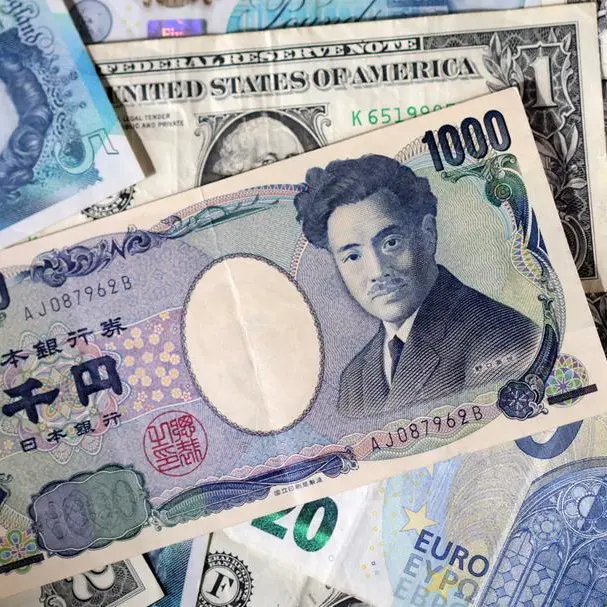
The Japanese yen was 0.3% weaker at 153.65 per dollar. It rose almost 3% last week, its biggest rise against the dollar in almost 15 months.
The Trump administration announced three projects valued at $36 billion to be financed by Japan, the first of some $550 billion in projects Tokyo agreed to undertake in order to lower U.S. tariffs.
"There was perhaps a view that these investments were never going to materialise but it looks like there are real projects," said ING global head of research Chris Turner.
"Investors are saying that if there is going to be a lot of direct investment into the U.S. from Japan, it could provide some support to dollar-yen," Turner added.
Elsewhere, the kiwi slumped 0.7% to $0.6006 after the Reserve Bank of New Zealand held its key rate unchanged at 2.25% in its first meeting chaired by Governor Anna Breman.
Policymakers said the monetary stance needed to stay accommodative to support the economic recovery.
The Australian dollar weakened 0.2% to $0.7072, while the pound was steady at $1.3574 after mixed UK inflation figures that showed an easing in headline consumer prices but stubborn services inflation.
(Reporting by Samuel Indyk and Rocky Swift. Editing by Lincoln Feast, Anil D'Silva and Mark Potter)