PHOTO
The dollar held above its recent lows on Thursday after minutes from the Federal Reserve showed policymakers appear to be in no rush to cut interest rates and several were open to hikes if inflation proved sticky.
Investors were also nervous about a reported buildup of U.S. forces in the Middle East and a potential U.S.-Iran conflict, which lifted oil prices and safe-haven assets.
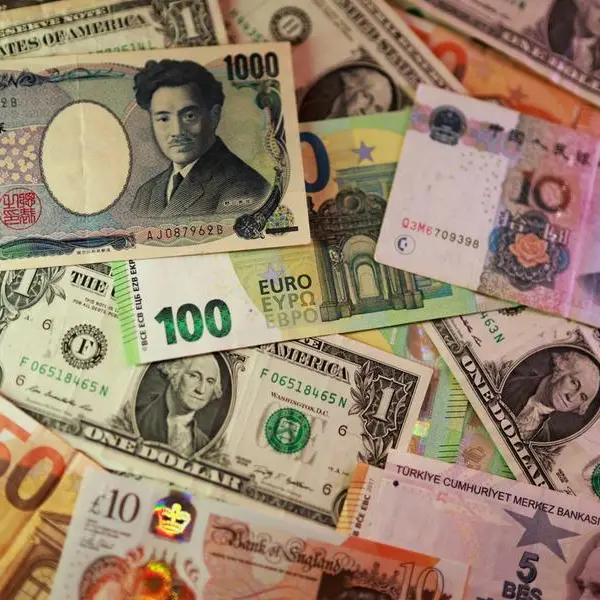
The euro, meanwhile, dipped marginally below $1.18, having fallen sharply the day before, following a report that European Central Bank President Christine
Lagarde planned to leave before her term ends in October next year.
Fed minutes released on Wednesday showed policymakers divided over where to take U.S. rates and suggested that the next chairman, due to start in May, will have a hard time pushing through rate cuts.
Several policymakers are expecting productivity gains to dampen inflation, the minutes said, but "most participants" cautioned progress may be slow and uneven. Several even indicated hikes are possible if inflation stays above target.
"This suggests there isn't a great deal of urgency to cut rates again, at least not until after current chair (Jerome) Powell's term ends in May," said Peter Dragicevich, Asia-Pacific currency strategist at Corpay.
Data on Wednesday showed U.S. factory production increased by the most in 11 months in January and rises in capex and housing starts. Markets are looking ahead to global purchasing managers' index figures and U.S. gross domestic product data, due on Friday.
EURO STABILISES AFTER LAGARDE CHATTER
The euro edged higher against most other currencies, having stabilised after the selloff triggered by speculation of Lagarde's early departure from the ECB that would give outgoing French leader Emmanuel Macron a say in picking her successor, according to the Financial Times.
Her term is due to end in October 2027 and potential successors are not expected to transform monetary policy, yet the speculation has arisen just as a change of guard materialises at the Fed.
"Given the number of countries at the table and the various deputies at the ECB, it may be the case that a change to the Fed is more important than a change to the ECB in terms of the direction that policy will take subsequent to that change," said Thierry Wizman, global FX and rates strategist at Macquarie Group.
"And she could be easily equally replaced by a dove as by a hawk. It's not clear what, because there weren't any front-runners effectively out there. I think that's why the market is not putting that much into this headline," he said.
The yen edged a touch higher, having taken a knock after the Trump administration announced projects valued at $36 billion as the first investments under Japan's pledge to invest $550 billion in U.S. projects.
It was last slightly stronger on the day at 154.63 to the dollar, having lost nearly 1.5% in value so far this week.
"Direct Japanese investment into the U.S. will be a key watch factor this year, and one which adds to the very mixed picture on USD/JPY," said Chris Turner, global head of research at ING.
"The question for FX markets this year is whether this investment proves a supportive dollar flow or something like Japan's FX reserves are used to guarantee new dollar loans and avoid pressure on the yen. The latter seems to be the preferred outcome for Tokyo."
Holidays for Hong Kong, China and Taiwan lightened Asia trade and the yuan was steady at 6.9 to the dollar in offshore trade in European hours.
(Additional reporting by Tom Westbrook in Singapore and Dhara Ranasinghe in London; Editing by Lincoln Feast, Shri Navaratnam and Anil D'Silva)