PHOTO
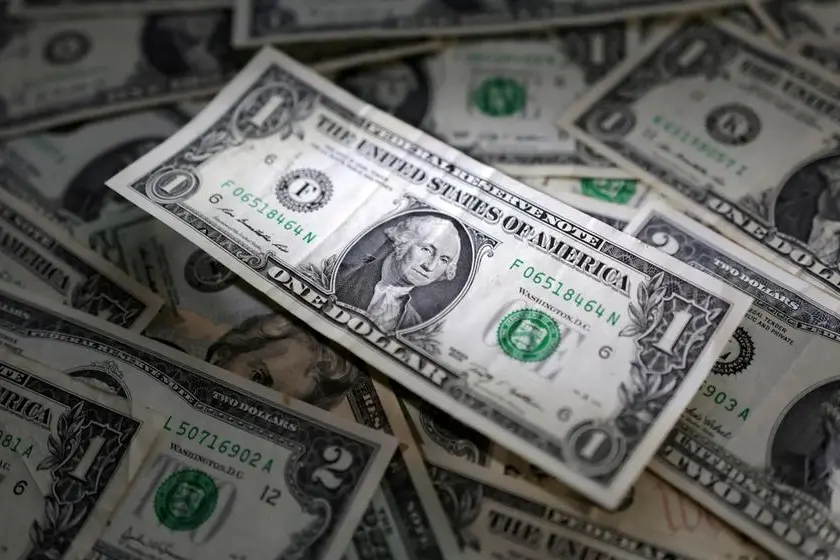
TOKYO: The dollar held its ground on Wednesday as geopolitical risks kept markets on edge and investors awaited minutes from the Federal Reserve for signals on future rate cuts.
The yen was steady after data showing a rebound in Japanese manufacturer sentiment and President Donald Trump announced the first tranche of mega-investments Tokyo is making in the U.S.
The kiwi dollar was the main mover in currency markets in the Asian morning, with sellers getting into the act after the Reserve Bank of New Zealand held pat on rates and said policy would need to remain accommodative.
The RBNZ's stance underscored the still-fragile state of the South Pacific nation's economy.
Financial markets were also keeping a close eye on geopolitics after Iran said progress had been made in nuclear talks with the U.S. in Geneva, while peace negotiations between Ukraine and Russia continued.
"Weaker risk sentiment, because of concerns around renewed geopolitical tensions in the Middle East and volatility in U.S. equity markets, briefly supported the USD," Samara Hammoud, a currency strategist at Commonwealth Bank of Australia, wrote in a note. "However, reports that the U.S. and Iran made progress and reached a 'general agreement' during nuclear negotiations in Switzerland helped ease those concerns."
Iran and the U.S. reached an understanding on the main "guiding principles" in a second round of indirect talks over their nuclear dispute on Tuesday, although a deal is not imminent, Iranian Foreign Minister Abbas Araqchi said.
Elsewhere in Geneva, negotiators from Ukraine and Russia concluded the first of two days of U.S.-mediated peace talks in Geneva, with Trump pressing Kyiv to act fast to reach a deal to end the four-year conflict.
With many markets in Asia remaining closed for Lunar New Year holidays, investors were looking ahead to the Fed's readout of its last meeting and key U.S. economic data for trading catalysts.
The Fed's Open Market Committee issues minutes from its January meeting later on Wednesday, while the Commerce Department on Friday will issue its first estimate for U.S. gross domestic product for the fourth quarter.
The dollar index, which measures the greenback against a basket of currencies, was little changed at 97.16 after a two-day advance. The euro slid 0.06% to $1.1846.
The yen held steady at 153.23 per dollar, and sterling weakened 0.07% to $1.3558, after a 0.5% slide in the previous session.
Data released earlier showed Japanese exports rose for a fifth consecutive month in January, while the Reuters Tankan poll also provided some cheer for a stuttering economy as confidence among the nation's manufacturers improved in February for the first time in three months.
The International Monetary Fund urged Japan to keep raising interest rates and avoid loosening fiscal policy further. The Trump administration announced three projects valued at $36 billion to be financed by Japan, the first of some $550 billion in projects Tokyo agreed to undertake in order to lower U.S. tariffs.
The Australian dollar weakened 0.1% versus the greenback to $0.7076, as the kiwi slid 0.4% to $0.6016.
The RBNZ held its key rate unchanged at 2.25% in its first meeting chaired by Governor Anna Breman, with policymakers saying the monetary stance needs to stay accommodative to support the economic recovery.
In cryptocurrencies, bitcoin fell 0.7% to $67,167.14, and ether declined 1.15% to $1,976.18. (Reporting by Rocky Swift; Editing by Stephen Coates and Shri Navaratnam)