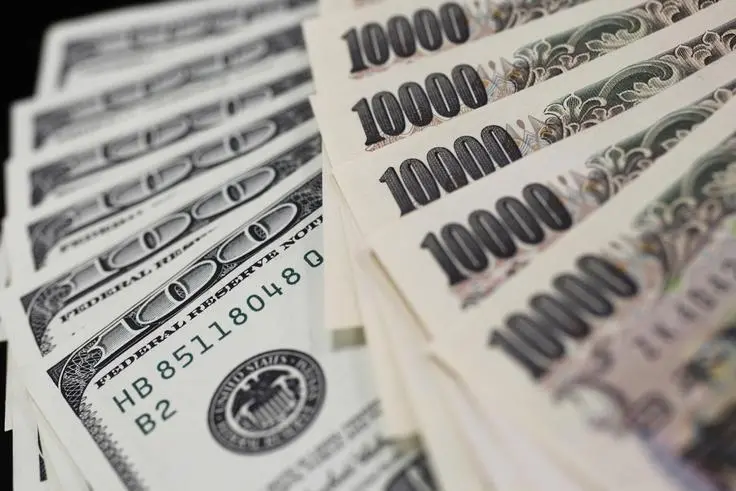
PHOTO
TOKYO: The dollar languished near three-week lows against the euro and Swiss franc on Wednesday after White House threats over Greenland triggered a broad selloff in U.S. assets, from the currency to Wall Street stocks and Treasury bonds.
The yen was equally on the ropes following a surge in Japanese government bond yields to record highs as investors fretted about fiscal largesse with Prime Minister Sanae Takaichi looking to expand her mandate in snap elections next month.
Declines in the dollar accelerated sharply overnight with a 0.53% slide in the dollar index - which measures the currency against six major peers - marking its worst single-day performance in six weeks. On Wednesday, it was flat at 98.541.
The greenback tumbled more than 1% against Europe's shared currency at one point on Tuesday to reach the lowest since December 30 at $1.1770 per euro. It was last changing hands at $1.1720.
The dollar plunged nearly 1.2% to reach 0.78795 Swiss franc on Tuesday, also the lowest since December 30, before recovering slightly to last trade at 0.78965 franc.
On Monday, U.S. President Donald Trump's renewed tariff threats against European allies over Greenland prompted a repeat of the so-called "Sell America" trade that emerged following U.S. tariff announcements last April.
Investors dumped dollar assets on "fears of prolonged uncertainty, strained alliances, a loss of confidence in U.S. leadership, potential retaliation and an acceleration of de-dollarisation trends," said Tony Sycamore, market analyst at IG in Sydney.
"While there are hopes the U.S. administration may soon de-escalate these threats, as it has with prior tariff announcements, it is clear that securing Greenland remains a core national security objective for the current administration," he said.
The S&P 500 and Nasdaq Composite dropped to their lowest points in a month on Tuesday, as investors returned from the U.S. long weekend. Treasury yields, which rise when bond prices fall, vaulted to multi-month peaks.
YEN SELLOFF
The dollar was steady against the yen, however, with the Japanese currency suffering its own selloff after Takaichi on Monday called snap elections for February 8 and pledged a wave of measures to loosen fiscal policy.
The longest tenors of Japanese government bonds were hit hardest, with the 40-year yield spiking 27.5 basis points to a record-high 4.215% on Tuesday, although on Wednesday that eased slightly to 4.145%.
The yen traded at a record low of 200.19 per Swiss franc on Tuesday, and languished at 185.50 per euro on Wednesday, very close to the record low of 185.575 from a week ago.
The Bank of Japan is due to decide monetary policy on Friday, but after hiking interest rates at the previous meeting in January, no change is expected.
Instead the focus will be on communication over the scope and pace of further tightening, with a hawkish-leaning stance likely with both the weak yen and political uncertainty raising inflation risks. (Reporting by Kevin Buckland; Editing by Jamie Freed)