Wednesday, Sep 26, 2012
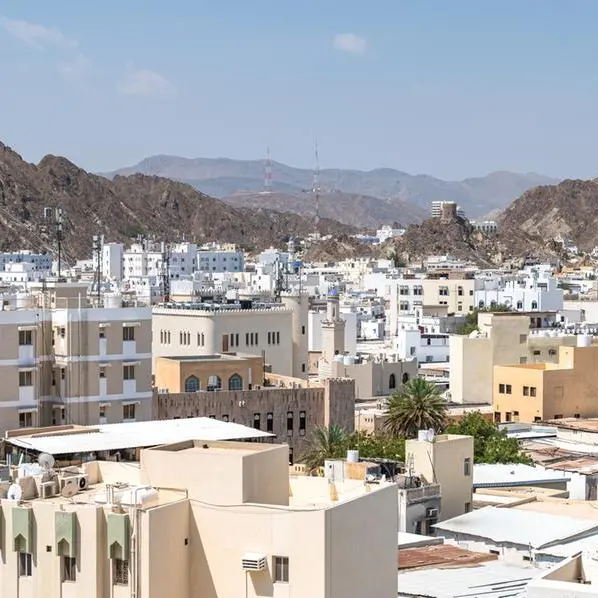
Muscat: Key installations in the Gulf region should be reviewed to ensure they will not be compromised in the event of seismic activity, a seismologist with the Sultan Qaboos University (SQU) recommended.
“Many areas in the Middle East have witnessed much increase in construction activities in recent years. It is important that structures such as telecommunication facilities, airports and harbours, hospitals, schools and other services should remain undamaged in the event of an earthquake shock,” said Dr Abdul Munem Al Syed Raef, seismologist and assistant professor in Geophysics in the Department of Earth Sciences at the College of Science at the SQU.
He added that it is important to review building codes and, if necessary, modify them specifically for major structures so that damages would be kept to a minimum in the event of a significant seismic event.
“In the centre of this effort there should be comprehensive site investigation before embarking upon construction of major structures,” Dr Raef said. “There has been significant advances in in-situ, non-invasive geophysical site characterisation in the last 10 years,” he added.
Dr Raef has been teaching earthquake seismology as an integral part of the syllabus of ‘Geol 743 introduction to geophysics’. He has also processed and interpreted exploration seismic data, where the physics of seismic wave generation and propagation is shared with earthquake seismology.
Analysing the tectonics of the region, he however observed that Oman could not be ranked as an earthquake-prone area. At the same time he cautioned that the northern parts of country had a proximity to the active tectonic boundary of the Arabian and Eurasian plates that elevated the probability of greater seismicity in that region when compared to the central and southern parts.
He also pointed out that Oman was part of the Arabian tectonic plate. “From tectonic settings point of view, northern Oman part comes under low to moderate category when it comes to the risk of experiencing quakes of intensity greater than or equal to 7 on the Richter scale. Intra-plate quakes are by far rare when compared to inter-plate events that originate as a result of active tectonic margins,” he said.
In his opinion, Khasab and Musandam Governorates are more susceptible to earthquakes since they are situated where the Arabian tectonic plates meet the Eurasian plates.
Northern Oman is in geographical proximity to the zone where events of greater seismic intensity cannot be ruled out because of the Arabian-Eurasian tectonic plate boundary which runs parallel to the Northwestern coast of Oman close to the Gulf of Oman.
“The Masafi earthquake which occurred in the UAE and some parts of northern Oman in 2002 is an example of intra-plate tectonic movement and is intimately related to the Arabian-Eurasian tectonic plate boundary tectonics, which has a great potential of re-activating on land faults,” he added.
Staff Report
Gulf News 2012. All rights reserved.