PHOTO
NEW YORK: US companies account for around 7 percent of all financial services firms operating in the Dubai International Financial Centre (DIFC) Authority since its establishment in 2004, DIFC Authority CEO Arif Amiri said.
He made the remarks to the Emirates News Agency (WAM) following a Dubai Chambers delegation visit to the United States, which included the Dubai Business Forum – USA and a series of meetings with public- and private-sector representatives.
Amiri said Dubai and the DIFC Authority offer American businesses and investors a gateway to the Middle East, Africa, and South Asia (MEASA) region—a market of 77 countries, about 3.8 billion people, and an estimated $11.2 trillion in GDP.
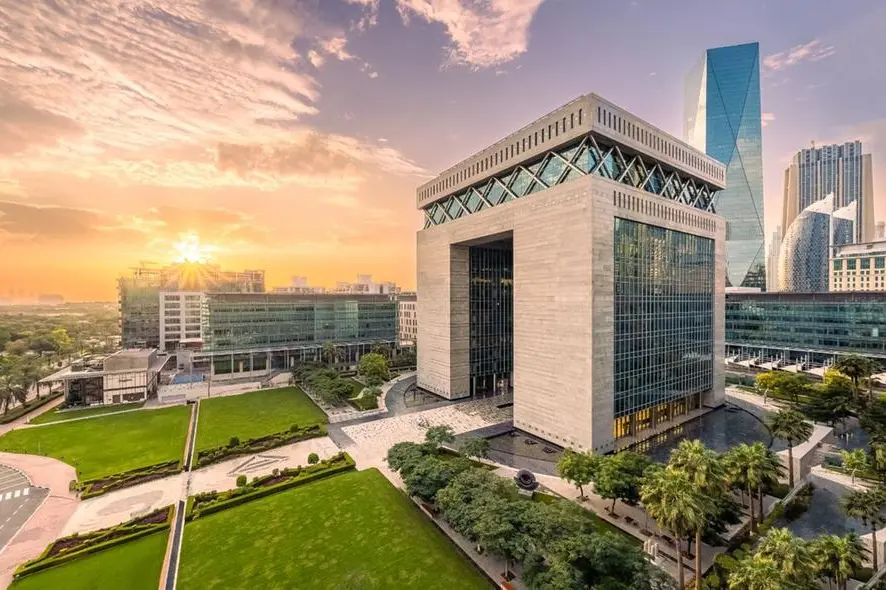
He highlighted the DIFC, the region's largest financial centre, as an "unparalleled platform" connecting global businesses with promising growth markets. Dubai’s status as a hub for talent and innovation further strengthens its appeal to US companies seeking regional expansion, he added.
Amiri said Dubai has established itself as a unique global centre for alternative investments, providing US hedge funds with a mix of regulatory transparency and a secure legal environment, characteristic of advanced financial centres, alongside direct access to high-growth emerging markets.
Nearly two-thirds of the hedge funds in the DIFC originate from the United States and the United Kingdom, including some of the world’s largest. Global firms such as Cambridge Associates, PIMCO, Lighthouse Partners, Blue Owl Capital, and Walleye Capital have established operations in the centre. They join major US banks like Citibank, J.P. Morgan Private Bank, and Morgan Stanley, which offer investment banking and wealth management services.
Amiri stated that the DIFC ecosystem includes over 470 wealth and asset management firms, comprising 85 hedge funds, 69 of which manage assets exceeding $1 billion. This collective represents the region's largest concentration of alternative investment and asset management companies.
In a recent move to foster cooperation with US institutions, the DIFC partnered with the Institute of International Finance (IIF) to host the inaugural Dubai Future Finance Week in May 2026.
Amiri noted the DIFC also partnered with the IIF to host a workshop for 50 American and global companies to explore the future of non-bank financial intermediation and private credit. The sessions received positive feedback due to the growing importance of private credit as an emerging asset class, particularly in the MEASA region.
He added that assets under management (AUM) in the DIFC rose to $700 billion in 2024, a 58 percent increase from 2023, with over 10,000 funds domiciled or marketed through the centre.
Amiri suggested US institutions can leverage this expanding ecosystem to acquire and manage assets for a growing number of high-net-worth individuals and family offices, noting Dubai hosts the highest concentration of private wealth among Middle Eastern cities, according to a recent Henley & Partners report.