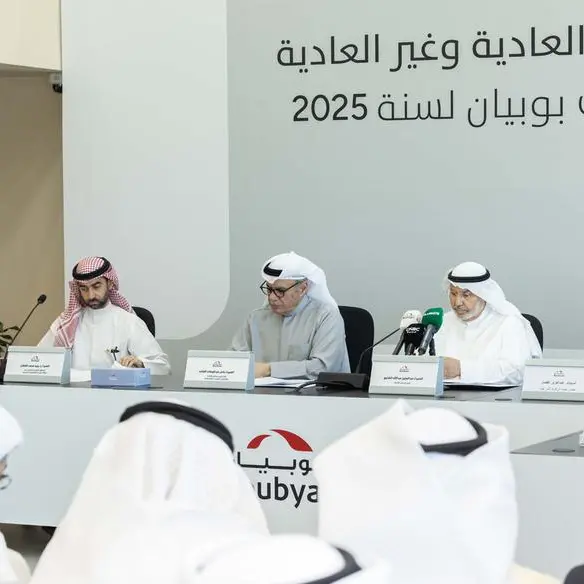
Tuesday evening's two-part event explored the importance of defining research philosophies and ethics, then delved into cutting-edge research about the implications of board diversity.
This past Tuesday, September 25th, several dozen Strathclyde Business School UAE students, alumni and friends converged at the Strathclyde Abu Dhabi centre for a research themed evening with guest speaker Dr Nada Kakabadse.
A Professor of Policy, Governance and Ethics at Henley Business School, Dr Kakabadse's research interests range from leadership and boardroom effectiveness to governance, ethics, policy, diversity, and more. She is currently conducting research in the UAE with Strathclyde Business School Senior Lecturer Dr Katerina Nicolopoulou, who is a resident academic at Strathclyde Abu Dhabi and who hosted Tuesday's 'Research Squared' evening.
The event began with a mini master class about the application of philosophy to research. Aimed at those interested in the pursuit of high level academic research, the class explored how the ways we think about research, seek answers, and define truths create individualized parameters through which our research methodologies are created and lenses through which our research outcomes are interpreted. After presenting a wide variety of tools and constructs for determining personal outlooks and narrowing down inquiries into a given research topic, Dr Kakabadse also discussed the importance of thoroughly considering such concepts prior to submitting a PhD proposal or committing to an academic advisor.
Following a coffee/tea networking break, the evening continued with Dr Kakabadse's presentation of her own research into gender-based board diversity in the UK, US and Ghana. After sharing extensive background research on the breakdown of international board diversity (or often, lack thereof) along the lines of gender, age, ethnicity, and other factors, Dr Kakabadse revealed surprising outcomes regarding her recent study. Examining aggregate data accumulated through interviews with top-50 listed companies, she found that boards with three or more women were actually correlated with lower share prices than their counterparts with predominantly male boards.
In the Question & Answer session that followed, this finding was further explained as being not necessarily any reflection of gender capabilities, but rather - in large part - a likely repercussion of criteria for appropriate board member selection often being ignored under pressures of affirmative action or positive discrimination. The study's findings thus encourage organisations to pursue ideals of board diversity without sacrificing adherence to best practices when it comes to seeking and evaluating potential board members.
Please contact Strathclyde UAE PR Manager Deborah Blinder, dblinder@hct.ac.ae, with any questions about this event.
About Strathclyde UAE
Winner of the Times Higher Education UK University of the Year 2012-2013, the University of Strathclyde is one of only 57 institutions in the world to hold all three major international accreditations (AMBA, AACSB, and EQUIS) for its MBA programme, which is also accredited by the UAE Ministry of Higher Education & Scientific Research. In the recent 2013 Financial Times Global MBA rankings, Strathclyde Business School ranked in the top 100 MBA programmes in the world, and in the top 25 in Europe. The University of Strathclyde was established in 1796 as 'the place of useful learning' and this remains its mission today: to combine academic excellence with social and economic relevance. The university is committed to the advancement of society through the pursuit of excellence in research, education and knowledge exchange, and through creative engagement with partner organizations at local, national and international levels. With a UAE presence that was established in 1995, Strathclyde Business School offers part-time executive MBA programmes via state-of-the-art campuses in both Dubai and Abu Dhabi. For more information, please log on to www.strath.ae.
© Press Release 2013