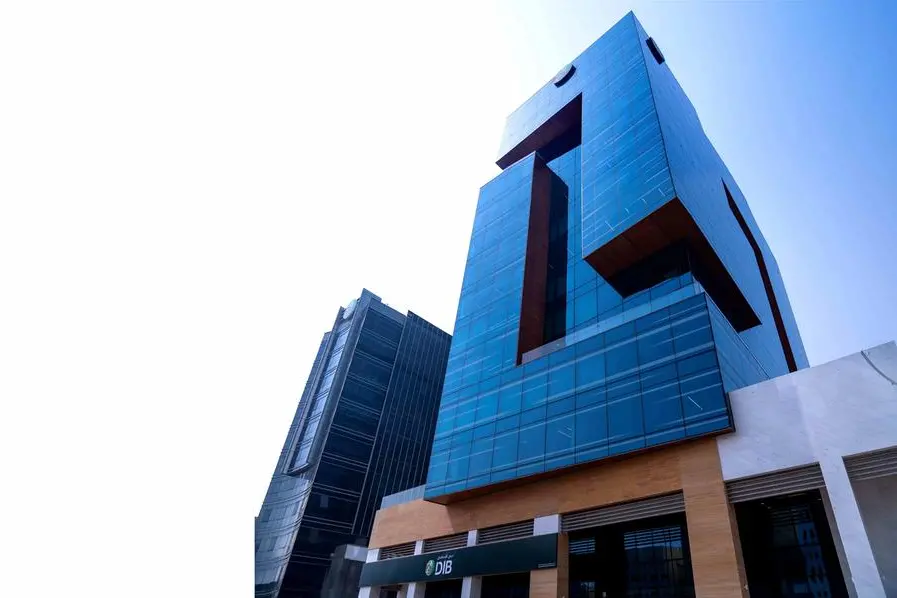
Exploiting opportunities in battle-weary Algeria is not for the faint-hearted.
Still a young country, having gained independence in 1962 after a brutal civil war, Algeria casts its eyes north towards the Mediterranean, and the European markets beyond.
Behind, the desert wastes of the Sahara that cover two-thirds of this vast country conceal the mineral wealth driving the country's economic aspirations.
Algiers reflects Algeria's French colonial history. Elegant, whitewashed arcades along the waterfront give way to the winding streets of the qasba snaking up the hillside above.
Bustling coastal towns stretch west to the port city, Oran, and east, below the green hills of the Kabylia, to Tunisia.
The prospects facing firms seeking to do business here are, however, mixed. This sprawling country, the size of western Europe, boasts generous reserves of oil and gas, a young, educated population and a gradually growing consumer demand.
Yet, ask outsiders to associate one word with Algeria, and, inevitably, that word is 'war'.
Algeria is still struggling to cast off a reputation for instability and internal strife.
Installed as the military candidate in 1999, President Abelaziz Bouteflika returned to power after controversial elections in 2004.
Claiming popular mandate, he has sought stability, launching economic restructured consultating with the World Bank and the IMF. He now aims to rebuild Algeria's public image to attract foreign direct investment.
The challenges ahead include: among the highest unemployment in MENA estimates between 12-24%; housing shortages; unreliable power supplies; corruption and red tape; calls for autonomy from the Kabyle Berber community and continuing internal military clashes.
That's the bad news.
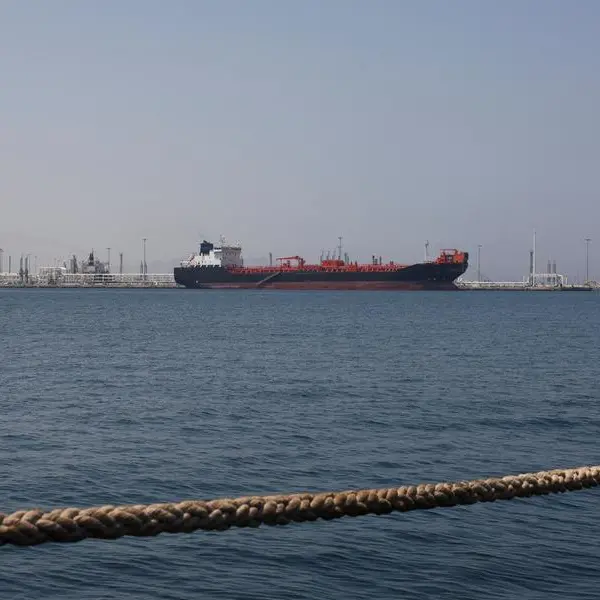
Algeria, however, also holds the eighth-largest reserves of natural gas worldwide and the 18th largest oil reserves.
It is the fourth-largest exporter of natural gas and is investing $1billion in oil and gas pipelines to 2017.
Soaring world oil prices have boosted government coffers, creating a trade surplus and reducing external debt to below 10% in 2006.
Hydrocarbon wealth is a double-edged sword, however, generating 60% of budget revenues, nearly one-third of GDP and more than 95% of its export earnings.
Algeria is under pressure to diversify, striving to upgrade infrastructure and liberalize banking and telecoms to lure private investment.
Job creation is an urgent priority. A quarter of the population lived below the poverty line in 2005. Industry employs just 13% of the workforce, nearly a third 32% working for the state, 14% in agriculture, 15% in trade, 13% in construction and public works and 16% in other industries.
For investors, however, that means a ready supply of cheap labor as well as an openes to new businesses.
Trade Partners UK says British firms are investing in a range of sectors including tourism, power supply, textiles, timber, aerospace, pharmaceuticals, agricultural equipment, lubricants and nickel mining.
UK oil giant BP is the single largest foreign investor in Algeria, with two active ventures.
In Salah Gas is Algeria's largest dry gas joint venture, developing seven gas fields in the Sahara desert since 2004, and producing some 9 billion m3 of gas a year.
BP also brought a vast dry gas project on stream this year at In Amenas, expected to produce 9 billion m3 of gas and 50,000 barrels of liquids a year. Together, these two BP ventures will generate 75% of Algeria's forecast 75% increase in gas exports to 2010, a BP spokesman says.
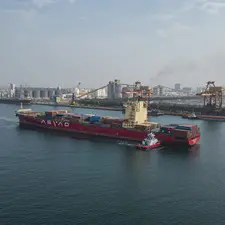
In 2001, Algeria signed an association treaty with the European Union to reduce tariffs and boost trade. HE Sheikha Lubna Al Qasimi, UAE Minister for Economy and Trade, visited Algiers this summer, promoting DP World's bid to manage the Port of Algiers. Iran's President Ahmedinejad arrived soon after, promoting closer trade ties between Algeria and Iran.
Dubai's Emaar Properties has announced a $20 billion property venture in Algiers. It plans to build a new town, Sidi Abdellah, redeveloping prime waterfront real estate to create Colonel Abbes tourist resort and Staoueli health resort on the capital's western outskirts.
Emaar also plans a university, a hospital, a medical school, housing, sports and retail centres, a marina and a golf course.
Where investors go, PR and ad agencies follow. Orient Planet PR has just opened in Algiers.
"We see tremendous potential, especially after the government's liberalization and privatization initiatives in recent years," says MD Nidal Abou Zaki.
"Algeria's investor-friendly policies and favourable economic conditions have triggered a wave of investment... [with] multinational companies showing a keen interest. We have identified a definite market for PR and marketing communications services and would like to gain first-mover advantage."
J Walter Thomson (JWT) entered in 2004, when the country was finally emerging from what Christophe Lucius, JWT MD, Algeria, describes as "a long and dark period".
It needed to service its client, Orascom, one of Algeria's the most prominent foreign investors.
Today, JWT's Algerian client portfolio includes Orascom Telecom Algeria, Unilever, Shell, Arla Foods, soft drinks company Ifri, Turkish FMCG player Hyatt and Cevital. The agency sees further opportunity for growth in sectors such as telecoms, automotives, banking, retail as well as consumer electronics.
Media budgets remain low, Lucius cautions. The last decade has seen Algerian audiences turn away from the state-owned radio and TV network, embracing pan-Arab and French satellite broadcasters. On the other hand, billboard advertising is growing, driven by state tenders.
National newspapers offer spirited editorial, but their advertising is reined in by the state, as the government-owned Agence Nationale d'Edition et de Publicit (ANEP) allocates all advertising spend from state-owned companies. These companies generate more than 50% of national ad spend.
National newspaper El Watan sought, however, to free itself from this constraint, when it launched its own ad agency in 1995, aiming to boost its financial independence. The newspaper says that private advertisers are increasing spend, with mobile phones, IT, and carmakers including Renault, Peugeot and Toyota emerging as the new heavy hitters.
Although Algeria is opening slowly, investors should proceed with caution. The case of Carrefour, which heralded its entry into the market with much fanfare, reveals crucial insights.
In 2006, it announced an ambitious plan to open 18 huge stores across Algeria by 2012.
In July this year, however, the Algerian media discovered that Carrefour was scaling back to just four large cities Algiers, Oran, Annaba and Constantine and had suspended a high-profile campaign to recruit managers. Troubles with distribution into its first store in Algiers had reportedly dismayed its suppliers.
The news followed a report from UK consultants Baker & McKenzie on retail prospects in Algeria that concluded that the market was too underdeveloped to support hypermarkets.
It found that the typical Algerian shopper preferred to shop daily rather than weekly, the informal economy undercutting big-name international brands.
JWT's Lucius advises newcomers to approach with caution. "A sound middle class is not [yet] born," he says. "The situation remains fragile. Money has to cascade down, to build a reliable society. Brandwise, people think more about the origins of a product Made in Germany/France/Morocco than in terms of brands.
"Counterfeit brands are extremely developed, while Turkish, Greek and regional companies are offering decent value-for-money brands... without paying premium prices.
"Most international agencies are moving in...as if it were the golden rush...but I believe a lot will be disappointed as budgets are extremely low," he says.
Switching to radio
Harris Corporation, an international communications and IT company, has been awarded a $15 million contract to deploy two turnkey, MW radio transmission stations for the Algerian Governments Telediffusion DAlgerie (TDA), the Algerian public broadcasting corporation. The stations at Fkirina and Sidi Bel Abbes are, reportedly, part of the governments programme to modernise the countrys TV and radio infrastructure.
The project, to be completed in 2009, includes the design and construction of the two radio transmission stations, the procurement and installation of the towers and the antenna systems, as well as the delivery and installation of 600kW medium-wave AM transmitters.
We are very excited about the new Harris transmitters as they provide us with much lower operating costs, significantly improved coverage and audio quality, and an opportunity to move towards DRM when this is needed, said Abdelmalek Houyou, managing director, Telediffusion DAlgerie.
Gulf Marketing Review 2007