PHOTO
Egypt’s external position is showing growing resilience, supported by rising foreign reserves, improving foreign asset balances, and easing risk premiums, according to a research note by HC Securities.
Net international reserves rose around 2% month-on-month to a record $52.6 billion in January, while foreign currency deposits excluded from official reserves jumped about 33% to $13.7 billion, financials analyst and economist at HC Heba Monir said.
Egyptian banks’ net foreign asset position also widened roughly 8% month-on-month (MoM) to $25.5 billion in December, she added.
Foreign currency inflows remain stable and are improving, with worker remittances up about 13% year-to-date despite a 3% monthly dip in November to $3.6 billion, reflecting continued confidence in foreign exchange liquidity, as per the note.
Suez Canal revenues climbed around 18% year-on-year to $365 million in January 2026, while the tourism sector posted record arrivals in 2025.
Egypt’s current account deficit narrowed by about 45% year-on-year (YoY) to $3.24 billion in the first quarter (Q1) of fiscal year (FY) 2025/2026, while the country’s one-year credit default swap (CDS) spread fell sharply to 176 basis points from 336 basis points a year earlier.
Together, these factors helped the Egyptian pound appreciate roughly 8% YoY against the US dollar, Monir noted.
On the domestic front, the purchasing managers’ index slipped to 49.8 in January from 50.2 in December. Monir said the reading remains constructive, as cost pressures softened, with total input costs rising at the slowest pace in 10 months, allowing firms to cut selling prices for the first time in more than five years.
HC expects inflation to cool to an average of 9.5–10% in 2026 and estimates January inflation eased to 11.4% YoY, helped by favorable base effects and broadly in line with the central bank’s target range of 7% plus or minus 2% by Q4 2026.
Egypt’s carry trade remains attractive, Monir said, noting that the latest 12-month treasury bill yield of 23.5% implies a positive real interest rate of nearly 9% based on HC’s inflation forecast and after accounting for taxes on foreign investors.
The recent decline in CDS spreads is also expected to lower the yield required by foreign buyers of local debt, she pointed out.
While geopolitical risks persist, Monir said they have eased somewhat following renewed US-Iran talks, US signals of a desire to end the Ukraine war by mid-2026, and the Gaza ceasefire that took effect in October 2025, despite intermittent breaches.
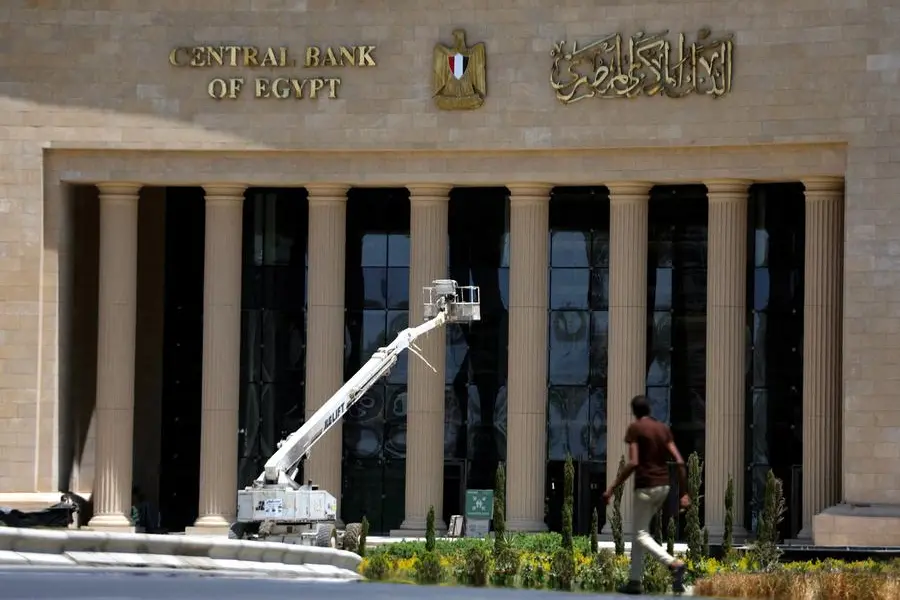
Against this backdrop, HC sees room for the Central Bank of Egypt (CBE) to cut policy rates by 150–200 basis points at its February 12th meeting, citing the stronger external position, currency appreciation, high real interest rates, easing cost pressures, and a declining inflation outlook.
© 2026 All Rights Reserved Arab Finance For Information Technology Provided by SyndiGate Media Inc. (Syndigate.info).