PHOTO
NEW YORK - The American economy has a familiar feel to it. Consumers and Uncle Sam went on a spending spree in the second quarter while business investment fell. That combination caused GDP growth to drop by a percentage point from the preceding period, to 2.1%. That’s near its long-term average, and well below President Donald Trump’s cherished 3% goal.
The latest data will heighten Federal Reserve Chair Jerome Powell’s concerns that trade tensions would sap business confidence. Private domestic investment fell at a 5.5% pace in the latest quarter, with spending on non-residential buildings tumbling 10.6%.
Individuals and the federal government, on the other hand, are opening their wallets freely. Personal-consumption spending rose by 4.3%, a pace exceeded in only two quarters in the past five years, while Washington outlays jumped 7.9%, by far the highest rate in that period.
Those tailwinds have legs. Unemployment stands at the lowest level in a half century and consumer confidence is at a 15-year high, helping Starbucks and McDonald’s to report blowout quarterly U.S. sales on Friday. The Trump administration and Congress, meanwhile, agreed this week on a two-year budget deal that lifts caps on federal spending.
Investment represents a smaller share of the economy, but it’s vitally important. Without more spending on plant, equipment, software and the like, the United States is unlikely to lift its long-term growth potential, which Fed policymakers estimate at a modest 1.9%.
Investors now make it a dead certainty that Powell and his colleagues will cut rates next week. Interest-rate futures indicate an 81% probability of a quarter-point reduction and a likelihood of one or two more cuts by December, according to CME’s FedWatch.
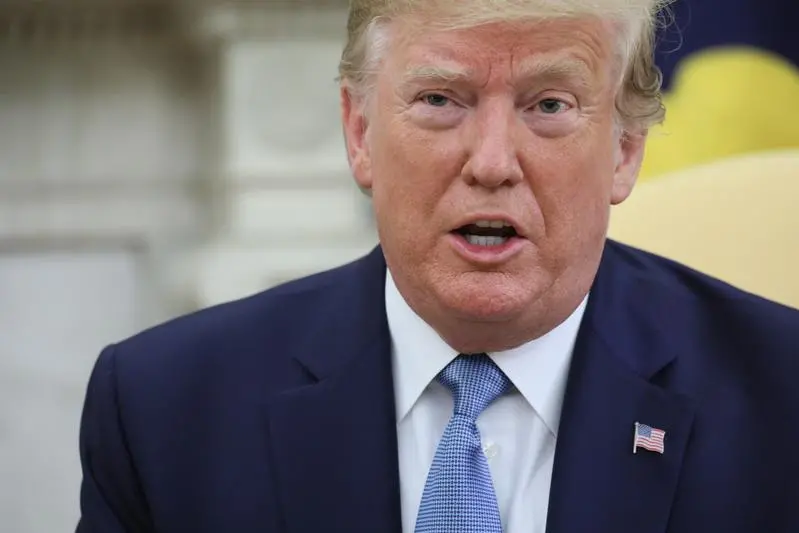
The president, who called the Fed an “anchor” on the economy after the GDP report, may draw comfort from that. But his tax cuts and deregulation have yet to produce the economic transformation he promised, perhaps because his trade policies are working at cross purposes. Since he took office, private investment has ticked up by less than a percentage point from the 4% rate from 2013 to 2016, when Barack Obama was in office. And the latest quarter’s growth rate is a tenth of a point below the average during that period.
That leaves the president heading into an election year with an economy looking as tepid as his predecessor’s.
CONTEXT NEWS
- U.S. real gross domestic product increased at an annual rate of 2.1% in the second quarter, according to an advance estimate from the Commerce Department’s Bureau of Economic Analysis on July 26.
- The expansion was led by consumer spending, which rose at a 4.3% pace, and federal government spending, which increased at a 7.9% clip. Gross private domestic investment fell at a 4.5% rate, compared with growth of 6.2% in the previous quarter.
- The price index for personal-income expenditures excluding food and energy, the main inflation measure tracked by the U.S. Federal Reserve, rose 1.8% in the second quarter compared with a rise of 1.1% in the preceding quarter, and was up 1.5% from the same period a year earlier.
(Editing by Antony Currie and Amanda Gomez)
© Reuters News 2019