PHOTO
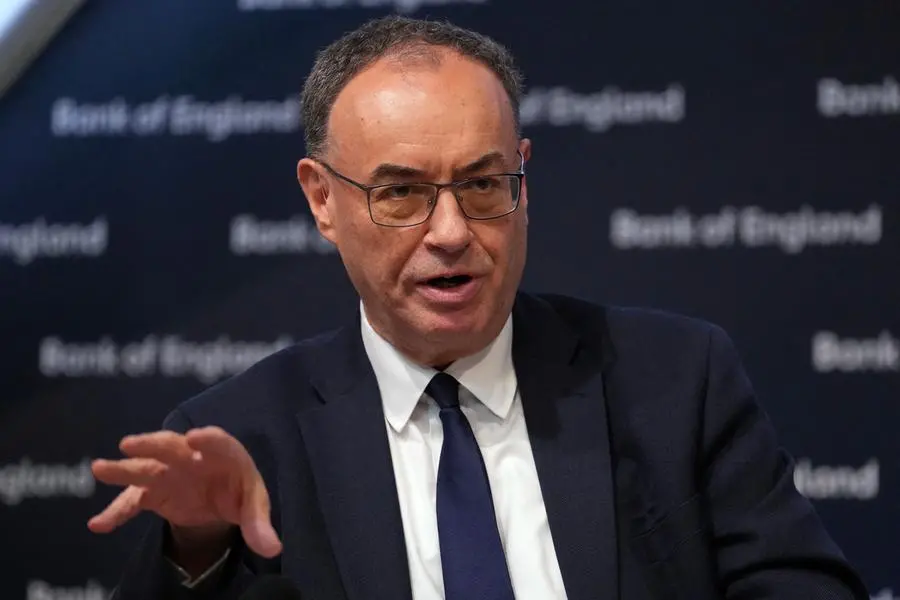
Bank of England Governor Andrew Bailey said on Friday that allowing inflation to run above the central bank's 2% target is justified given the uncertainty about the impact of the Iran war on the economy and the weak pace of growth.
"But that tolerance would weaken if signs of second-round effects begin to emerge," Bailey said in the text of a speech he was due to deliver at a conference in Reykjavik organised by Iceland's central bank.
The BoE's Monetary Policy Committee kept interest rates on hold on April 30 as it waited to see the economic impact of the Iran war.
In his speech on Friday, Bailey reiterated comments that he made last week in which he said that the BoE had tightened monetary policy by taking rate cuts off the table "and that is already affecting the economy."
"We have to monitor the situation in the Middle East and how it affects the UK economy and inflation very closely and adjust policy as required," he said in Reykjavik.
Bailey and most of his colleagues on the MPC have previously signalled they are in no rush to raise borrowing costs.
By contrast, policymakers at the European Central Bank have signalled a likely rate rise in June after it cut rates by more than the BoE before the war.
Financial markets are fully pricing one BoE quarter-point rate hike and a roughly one-in-three chance of a second one over the remainder of 2026.
(Writing by William Schomberg; Editing by Alistair Smout)