PHOTO
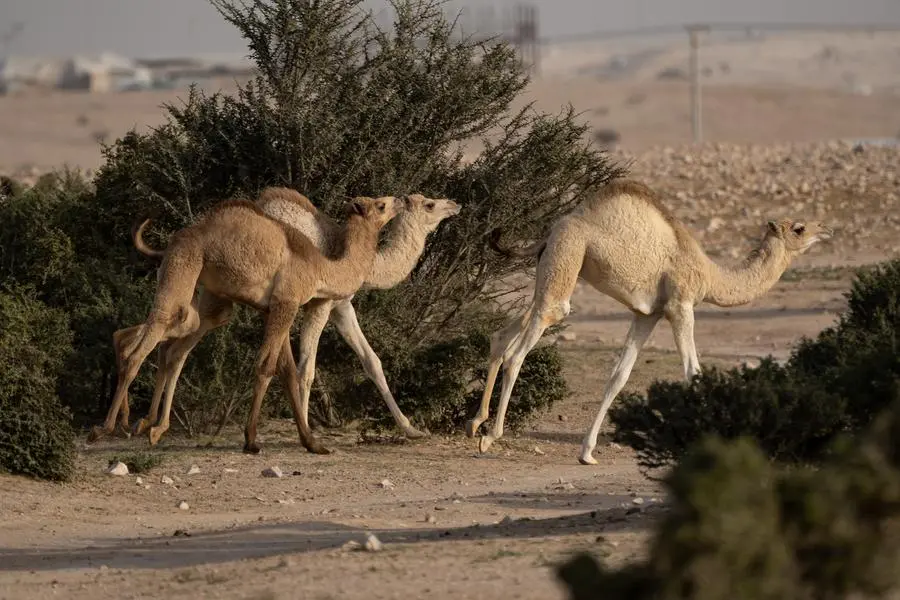
DOHA: The Ministry of Environment and Climate Change affirmed that the recent seasonal rains in the country have contributed to the renewal of vegetation cover and the revitalization of plant growth cycles in the meadows and desert areas. This has positively impacted the expansion of vegetation and the return of life to vast areas of the Qatari desert.
In a statement, the ministry said that the environmental improvement was not solely due to climatic factors, but rather the result of continuous efforts within an integrated system of protection and rehabilitation measures, field monitoring, and cultivation activities, in addition to the implementation of regulations governing hunting and grazing.
The ministry pointed out that the meadows are among the most sensitive environments in the Qatari desert, given their low-lying geographical nature, which makes them sites for rainwater collection and natural seed reservoirs. It emphasized that these meadows are managed according to precise controls to ensure the optimal utilization of rainwater and its protection from human pressures.
The statement added: “In this context, the ministry has intensified its field visits to the meadows, where indicators have shown a marked improvement in the density of vegetation cover and the return of natural seedlings to growth in many locations. Citizens and residents are encouraged to visit the meadows while adhering to environmental regulations, including using designated paths, avoiding grazing and vehicle trampling, refraining from lighting fires or cutting wood, and maintaining cleanliness.”
Dr Farhoud Hadi Al Hajri, director of Public Relations and Communication at the ministry, confirmed that the ministry has intensified its field awareness efforts since the beginning of the winter season, noting that community awareness is a fundamental pillar in the success of protection efforts and that preserving the meadows is a collective responsibility.
For his part, Hamad Salem Al Nuaimi, director of the Wildlife Department, explained that rainfall is a key factor in initiating environmental recovery, but its continuation depends on protecting the sites from harmful practices. He indicated that continuous field monitoring has contributed to restoring vegetation cover and enhancing the regeneration capacity of wild trees and shrubs.
For his part, Saleh Hassan Al Kuwari, director of the Natural Reserves Department, said that the implementation plans contributed to protecting the vegetation cover within the reserves, especially after the rainy season, indicating that the sites that were subjected to protection measures showed a higher ability to recover compared to the areas that were previously trampled or tampered with, which highlights the importance of monitoring in preserving environmental gains.
© Copyright Qatar Tribune. All Rights Reserved. Provided by SyndiGate Media Inc. (Syndigate.info).