PHOTO
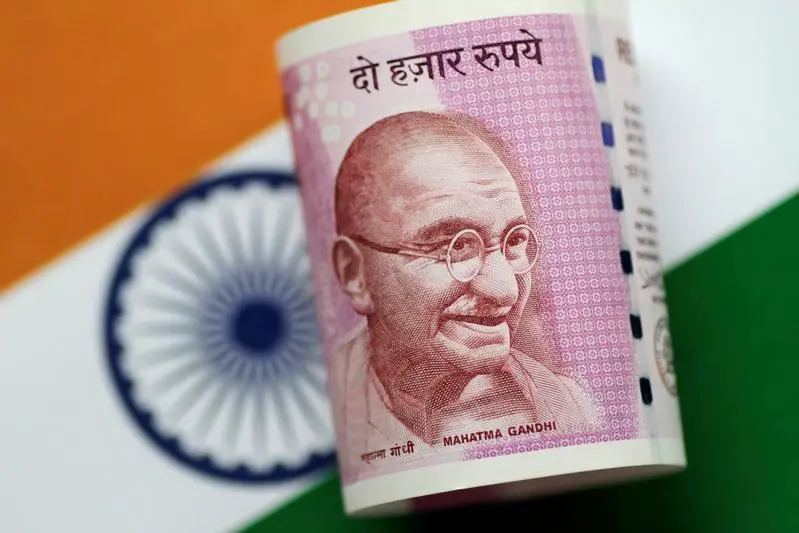
The Indian federal government's outstanding market borrowings have risen to over 100 trillion rupees ($1.2 trillion), a reflection of the country's high debt-to-GDP ratio and the wider fiscal deficit it has been running since the pandemic, analysts said.
India's domestic borrowings will continue to rise as the fiscal deficit is set to decline only gradually and as hefty bond maturities in the coming years will need to be refinanced, they said.
"The jump in central government borrowing took place during the pandemic, and fiscal deficit shot up sharply," said A Prasanna, head of research at ICICI Securities Primary Dealership.
"It remains a problem, as it is coming down very slowly."
The federal government's outstanding borrowings via bonds doubled to 100.18 trillion rupees between June 2017 and October 2023.
The debt rose to 58% as a percentage of GDP in 2022-23 from 47% in 2017-18.
Over 40% of the government's tax and non-tax revenues are being utilised to make interest payments, compared with 34% before the pandemic.
"A faster pace of fiscal consolidation will be needed in the next few years," said Prasanna.
"The tax numbers look good and particularly on the income tax side there are structural improvements, so that advantage could definitely be leveraged for faster pace of fiscal consolidation."
Over a quarter of the outstanding debt will mature in the next five years and over half in the next 10 years, data from India's latest public debt report showed.
To be sure, the government has been trying to elongate the maturity of its debt.
On Friday, it sold 50-year bonds, its longest maturity ever.
"Participation from insurance and pension funds in long bonds have increased drastically in last five years, and consequently, government has increased issuance of longer duration bonds to 35% of overall borrowing programme," Rahul Bhuskute, chief investment officer at Bharti AXA Life Insurance, said.
The government's large borrowings will also be supported by India's inclusion in JPMorgan's emerging market debt index, which should bring around $20 billion-$25 billion in the next fiscal year, as per analysts' estimates. ($1 = 83.2252 Indian rupees)
(Reporting by Dharamraj Dhutia; Editing by Mrigank Dhaniwala)