PHOTO
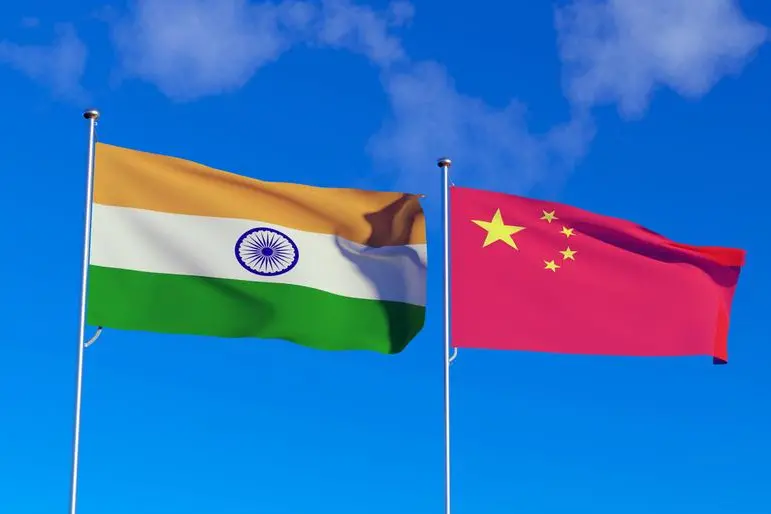
India's finance ministry plans to scrap five-year-old restrictions on Chinese firms bidding for government contracts, two government sources said, as New Delhi seeks to revive commercial ties in an environment of reduced border tensions.
The curbs, imposed in 2020 after a deadly clash between the countries' troops, required Chinese bidders to register with an Indian government committee and obtain political and security clearances.
The measures effectively barred Chinese firms from competing for Indian government contracts that were estimated to be worth $700 billion to $750 billion.
Reuters is the first to report on the plan to ease the restrictions.
One of the sources said officials were working to remove the registration requirement.
Both sources, who declined to be named as they were not authorised to speak publicly, said Indian Prime Minister Narendra Modi's office will make the final decision.
India's finance ministry and the prime minister's office did not respond to Reuters requests for comment.
THE RESTRICTIONS LED TO SHORTAGES AND DELAYS
The restrictions had a significant impact: months after they were made public, China's state-owned CRRC was disqualified from bidding for a $216 million train-manufacturing contract.
The Ministry of Finance's plan to ease the curbs followed requests from other government departments that face shortages and project delays due to the 2020 restrictions, the sources said.
A high-level committee headed by a former cabinet secretary, Rajiv Gauba, has also recommended easing the restrictions. Gauba is a member of a prominent government think tank.
Soon after India imposed its restrictions, the value of new projects awarded to Chinese bidders fell 27% from a year earlier to $1.67 billion in 2021, according to a 2024 report from the Observer Research Foundation.
Specifically, curbs on imports from China of equipment for the power sector have hindered India's plans to raise its thermal power capacity to about 307 GW over the next decade.
Shares of equipment manufacturer Bharat Heavy Electricals ended 10.5% lower and infrastructure giant Larsen & Toubro fell 3.1% at Thursday's close after the Reuters report raised the prospect of increased competition from Chinese firms in contracts.
IMPACT OF US TARIFFS ON INDIA'S TIES WITH CHINA
Last year, Modi visited China for the first time in seven years and agreed to foster deeper commercial ties with Beijing following U.S. President Donald Trump's 50% tariff on Indian goods and in light of Washington's warming relations with Pakistan. Following the visit, India and China restarted direct flights and New Delhi cut red tape to speed up approvals for business visas for Chinese professionals.
Even though ties between the two Asian giants have improved, India's approach is cautious as restrictions on foreign direct investment from Chinese firms remain in place. Meanwhile, the U.S. continues to send mixed signals about signing a Washington-New Delhi trade deal, which analysts said could allow the India-China relationship to improve.
($1 = 89.8460 Indian rupees)
(Reporting by Sarita Chaganti Singh and Nikunj Ohri in New Delhi; Editing by Thomas Derpinghaus and Barbara Lewis)