PHOTO
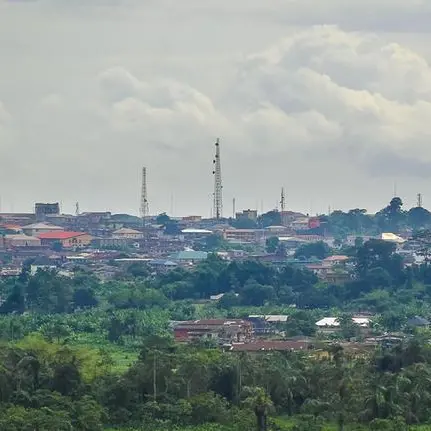
In Tanzania, Kilombero Valley is known as the country’s food basket because of its large-scale production of staple crops. It also stands as a vital case study for East Africa on balancing agricultural growth with environmental conservation.
Located in south-central Tanzania, Kilombero Valley — 14,918 square kilometres —produces 40 percent of the country’s sugar and 30 percent of its rice, sustains water supply for 1.6 million people, and provides 81 percent of the water feeding the Nyerere Hydroelectric Power Plant.
Kilombero’s economy is primarily driven by crop cultivation, including pigeon peas, sesame, maize, rice, cocoa, bananas and sugarcane, alongside significant contributions from large-scale farms such as Kilombero Sugar Company and Kilombero Plantations Ltd.
It is also the only region in East Africa that grows cocoa, supplies more than 60 percent of Tanzania’s sugar needs, produces bananas exported to Kenya, and forms a major water catchment area critical to the country’s hydropower.
Dunstan Kyobya, Kilombero district commissioner, emphasises its importance as both a wetland and a critical wildlife corridor, especially for elephants.“If you destroy Kilombero, you destroy Tanzania. It is, therefore, our duty to maintain peace and security, while also promoting economic empowerment,” the DC said.
The Julius Nyerere Hydropower Station, formerly Stiegler’s Gorge Dam, is a 2,115MW project located along the Rufiji River within the Selous Game Reserve.
It receives much of its water from the Kilombero River, a major tributary of the Rufiji.“This valley lies slightly above sea level, and its water supply is available year-round, making it one of the key ecosystems in south-west Tanzania,” said Clarence Msafiri, landscape manager at the African Wildlife Foundation (AWF) in Ifakara.
As the country’s flagship energy project, its nine Francis turbines are fully operational, making it central to Tanzania’s energy independence.
Beyond its wildlife, Kilombero in the Morogoro Region is home to about half a million people, most of whom rely on subsistence farming for their livelihoods.
Agriculture — with rice and maize as the dominant crops — remains the primary subsistence activity and source of income for both small- and large-scale farmers.
Accompanied by AWF agribusiness officer Alexander Mpwaga and community conservation project assistant Nyota Kimario, we visited several farms in the valley.“We produce two types of rice here: ‘Kula na Bwana’ and ‘Bawa Mbili’. They are named so because anything that was sweet and delicious was traditionally shared between husband and wife — and this rice is no exception. The other variety resembles two wings when ready for harvest,” said Ali Mnola, a cocoa and rice farmer.“The two types of rice are very sweet and release a rich aroma when cooked.”Farmers’ challengesBut farmers in Kilombero face a dual challenge: Ensuring food security while improving rural incomes. Yet many remain trapped in low-return mono-cropping systems that undermine soil health and long-term sustainability.“This is why, since establishing our programme in Ifakara in 2015, AWF has been promoting community-based conservation in Kilombero Valley by integrating sustainable agriculture, watershed management and land-use planning,” Msafiri said.
Despite its importance, the agriculture sector faces challenges such as soil degradation, low productivity and vulnerability to climate shocks, limiting smallholder farmers’ ability to sustain livelihoods.
Amid climate change, population growth and rising land-use conflicts, the Tanzanian government is increasingly prioritising sustainable environmental planning. This presents an opportunity to integrate conservation and agriculture at a landscape level, promoting systems that protect biodiversity while sustaining both people and wildlife.
Cocoa farming focuses on ultra-premium, single-origin cacao.“We are conducting research on 36 cocoa varieties to identify the best-performing species for farmers in Kilombero,” said Pius Kilasi, a researcher at the Tanzania Agricultural Research Institute (Tari Kilombero).“We plant bananas alongside cocoa because they provide shade for young cocoa trees. Cocoa takes about three years to mature, by which time farmers are already harvesting bananas.”Farmers emphasise climate-smart agroforestry and centralised processing to improve efficiency and secure premium prices, but challenges persist.“The main challenge is theft — cocoa is often stolen from farms. It is also labour-intensive and requires significant water, fertiliser and care. It takes three years to mature, making it a long-term investment,” said Rugano Nelson Mwajembe, a farmer.
Although Tanzania’s cocoa production remains small compared to West African producers such as Cote d’Ivoire, Kilombero cocoa is highly valued by international craft chocolate makers for its bright, fruity and toffee-like flavour profiles.“To improve marketing, we have formed cooperative societies that provide seedlings and collect cocoa from farmers before selling through structured channels,” said Shem Mrembe Msuya, chairman of Mbingu Organic Cocoa Agricultural Marketing Cooperative Society Ltd.
Their customers include high-end chocolate makers such as Chocolate Naive (Lithuania), Mast Brothers (US), Dandelion Chocolate, Letterpress Chocolate and Omnom Chocolate (Iceland).
The Ikwambi River — a vital link between Udzungwa Mountains National Park and community conservation areas — had previously dried up due to over-extraction.
Five water user associations now operate across the valley’s river systems, supported by about 250 trained community water monitors, roughly half of whom are women.
A valley-wide catchment management plan provides governance, while digital monitoring systems deliver real-time water data to irrigation schemes.
If this sounds like an easy enterprise, it is only because one has not experienced the realities of rural Tanzania.
© Copyright 2026 Nation Media Group. All Rights Reserved. Provided by SyndiGate Media Inc. (Syndigate.info).