PHOTO
As global steelmakers accelerate their shift toward lower-carbon production, pressure is expected to intensify on the availability of high-grade iron ore pellets, a senior executive of UAE-based EMSTEEL said.
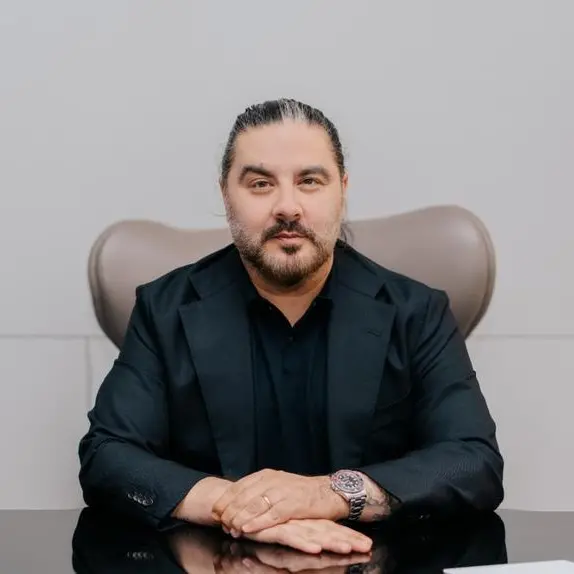
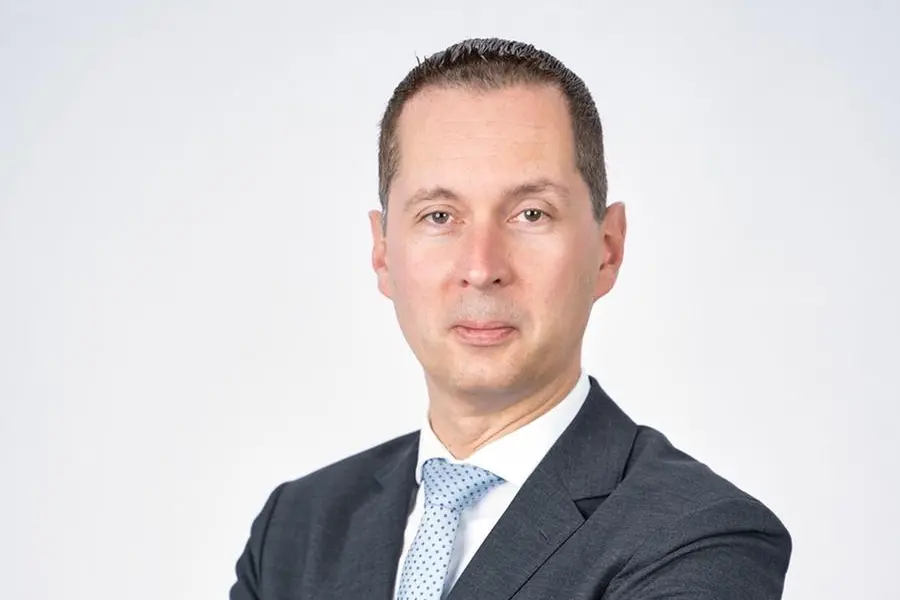
Chief Commercial Officer Michael Rion told Zawya Projects that despite softer global growth forecasts for 2026, he does not expect pellet premiums to fall.
“We don’t foresee any specific surge in the premium over the next two to three years,” he said on the side lines of Fastmarkets’ Middle East Iron & Steel 2025 event in Dubai. “Once decarbonisation kicks in - especially in Europe - and the switch from blast furnace to EAF and DRI accelerates, demand for iron oxide pellets will rise - that is where we see some tension in the market.”
On the other hand, steelmakers without upstream mining assets remain exposed to price-setting by major global miners.
“Not having access to mining, not securing upstream could potentially be a risk for the steel producer,” he said.
UAE rebar boom
A surge in UAE rebar demand - forecast to grow more than 40 percent this year, one of the fastest globally - has ensured Emirates Steel is operating at full capacity.
“Pre-COVID we were at 2.5 million tonnes; now we are at 5.5 million tonnes,” he said. “The market has more than doubled while our capacity has not, so competitors are pushing more material into the country; but remain well-balanced.”
While rebar will continue to play a big role in the coming years due to demand from infrastructure, housing and industrial projects, Rion stressed that Emirates Steel is not overly reliant on the product.
“Our priority is to move away from commoditised products and into high-value-added steel,” he said, adding that EMSTEEL’s Asset Enhancement Programme, launched in February 2025, is a step in that direction.
Asset Enhancement Programme
The company’s two-phase Asset Enhancement Programme, valued at around AED 625 million ($170 million), aims to upgrade rolling mills and expand capacity for advanced steel grades.
Phase 1 includes:
- Upgrading existing rolling mills for the production of high strength rebars for sustainable construction
- Producing quenched and self-tempered (QST) and thermo-mechanically controlled processed (TMCP) heavy-section steel for applications across high-rise buildings, large-scale infrastructure projects, and energy projects.
Phase 2 includes:
- Installation of a new wire rod outlet with a capacity up to 500 KTPA, and upgrade of a cooling conveyor at existing rolling mills to enable the production of Value-Added (VA) and High-Value-Added (HVA) wire rods, as well as High Tensile Rebar in Coil.
Rion said the company is also actively talking to downstream partners to secure offtake for the new wire rod portfolio.
Updated codes and fair trade
The senior executive called for updated standards and building codes to encourage end-users to shift to value-added steel products.
“We need to work closely with the government and the municipalities to ensure product standards, building codes, and technical norms that allow and encourage better materials – steel with better weldability, better ductility, better seismic performance and a lower carbon footprint.”
He noted that Dubai’s rising seismic requirements are already pushing the market toward higher-performance steel. “This is how we can push ahead of the competition,” he said.
The Emirates Steel CCO also stressed on the need to safeguard domestic steel manufacturers from cheap imports priced below value. The UAE government has recently initiated anti-dumping probe of heavy-section steel from Chinese mills.
“The UAE has always had a free, open market, but openness also means fairness,” he said. “We can advocate for trade barriers whenever it's necessary.”
Scaling hydrogen pilot
Rion said EMSTEEL’s green hydrogen steelmaking pilot with Masdar demonstrated the technical viability of substituting natural gas with hydrogen in the DRI process.
“We partnered with Masdar to ensure a Minimum Viable Product, and it worked - we produced and supplied our first H2-based rebar for the net-zero carbon mosque on Yas Island.”
He clarified that the product wasn’t sold at a green premium, as it was proof of concept rather than a test of commercial viability.
“To move beyond proof of concept, we need to scale it up for which we need further technology and investment,” he explained, “But we cannot continue decarbonising without eventually passing part of the cost to end-users.”
Rion pointed out that green premiums will be difficult to apply to highly commoditised products. “That’s why we are moving toward higher-grade materials, because it is easier to pass on a green premium for a product which is less reactive to market cycles,” he concluded.
(Reporting by Anoop Menon; Editing by SA Kader)
Subscribe to our Projects' PULSE newsletter that brings you trustworthy news, updates and insights on project activities, developments, and partnerships across sectors in the Middle East and Africa.