PHOTO
China’s Gotion High-Tech Group is preparing to launch the construction of the first and largest factory for electric vehicle (EV) batteries and renewable energy storage in Africa, with an allocated budget of around $5.5 billion.
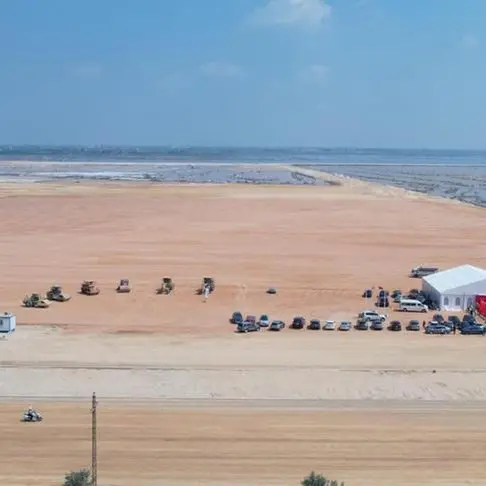
Gotion’s Morocco Director, Khalid Qalam, revealed that preparatory work on the site has already been completed, noting that construction will begin soon, with production expected to start in the third quarter of 2026.
The factory will be built in Kenitra, northwestern Morocco, and will transform the Kingdom into a major supplier of batteries primarily destined for the European market, in a move that highlights Morocco’s growing economic role as a bridge between Africa and Europe, Qalam said.
According to Sabah Agadir newspaper, the plant will include production lines for batteries, cathodes, and anodes, with Europe as the main export destination, while the local market will also benefit. The factory’s initial production capacity is expected to reach 20 GWh per year, enough to equip hundreds of thousands of EVs with batteries, before gradually rising to 100 GWh per year.
In November 2024, Zawya Projects reported that ACWA Power had signed a Joint Development Agreement (JDA) with Gotion Power Morocco to develop a 500MW wind power plant, incorporating a 2,000 MWh BESS solution, at a cost of $800 million.
In April 2024, Reuters reported that the Chinese electric battery maker BTR New Material Group had been given the green light to build a factory near Tangier to produce key component cathodes.
The Moroccan government said it was in talks to attract more electric battery manufacturers as it seeks to adapt its growing automotive sector to increasing demand for electric vehicles, Industry and Trade Minister Ryad Mezzour said. The automotive sector tops Morocco's industrial exports at $14 billion in 2023, up 27 percent.
In the same month, the Chinese manufacturer CNGR Advanced Material said it expected to build a cathode plant in Jorf Lasfar, 100 kilometers south of Casablanca, where the government had allocated 283 hectares to electric battery industries.
(Writing by N Saaed; Editing by Sona Nambiar)
Subscribe to our Projects' PULSE newsletter that brings you trustworthy news, updates and insights on project activities, developments, and partnerships across sectors in the Middle East and Africa.