PHOTO
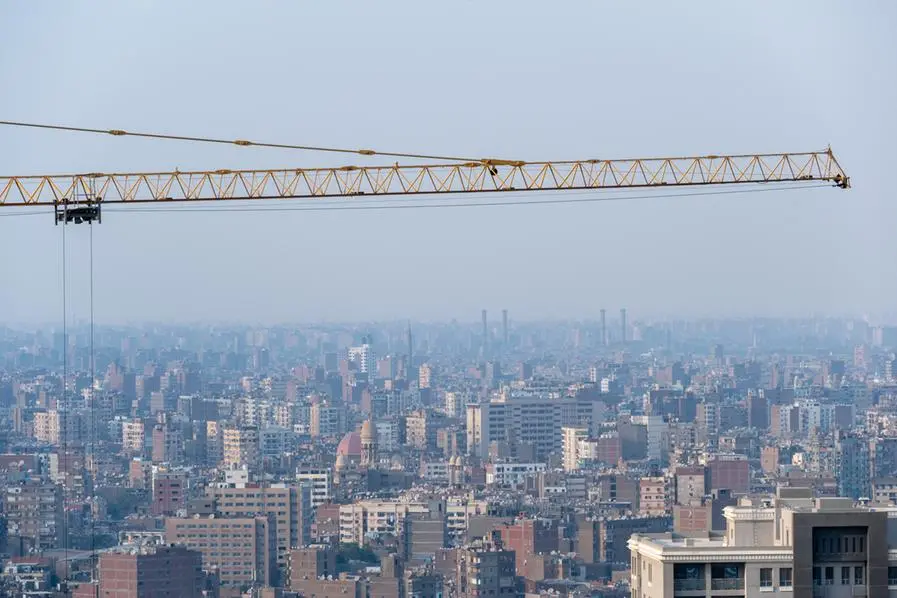
A new housing finance proposal could help Egypt’s lower and middle income groups access affordable homes through state-backed loans with interest rates linked to unit size, according to Tarek Shokry, Head of the Real Estate Development Chamber at the Federation of Egyptian Industries (FEI).
He said housing demand in the Arab world’s most populous country is “real,” driven by population growth exceeding 110 million and 900,000 marriages annually. However, high monthly installments remain a challenge for most home buyers.
Conventional mortgage rates range between 25 and 30 percent even as some developers are providing extended repayment periods of 10–12 years.
Shokry said the proposal, which he has presented before the Cabinet, offers one subsidised loan per family, with interest rates scaled by unit size: 8 percent for homes up to 100 square metres, 10 percent for 100–150 sqm, and 12 percent for larger units.
"This proposal takes into account the social dimension,” he explained. “Citizens who purchase a small unit with limited capacity should receive a lower interest rate, as their goal is housing, not investment."
The industry expert said his proposal mainly targets the middle class, "the backbone of Egyptian society," adding that lower-interest loans would enhance their purchasing power, stimulate property development, generate higher tax revenues, create jobs, and increase demand for construction-related materials.
“When citizens' purchasing power increases, the market thrives,” he said.
He also disclosed that the Prime Minister Mostafa Madbouly has promised to hold a meeting soon with the Governor of the Central Bank of Egypt (CBE) to discuss this proposal, which is supported by a comprehensive economic and social feasibility study conducted by the Chamber.
Currently, Mortgage Finance Initiative, an affordable home programme run by the CBE in partnership with the Egyptian Social Housing and Mortgage Finance Fund since 2014, offers subsidised home loans with long repayment periods for low, middle and upper middle income groups at 3 to 12 percent interest.
Property bubble
Shokry rejected claims of a property bubble, noting that only a handful of high-end coastal villas, priced up to EGP 500 million, distort perceptions of the wider market.
“These are limited to a few units in the first row on the North Coast within only three or four projects, which translates to approximately 50 to 100 units for a market with a population of 110 million.”
Terming speculations about excessive profits margins of developers as incorrect, he said profit margins of listed developers range between 10–15 percent over a typical project implementation period of four to six years.
The cost-break up includes land cost, which accounts for approximately 30-35 percent of the project value, the cost of buildings, facilities, and landscaping (35-45 percent); marketing and sales (approximately 10 percent) and administrative and engineering expenses (3-5 percent).
“Based on this distribution, the total cost represents approximately 90 percent of the unit selling price, leaving developers a profit margin of approximately 10 percent,” Shokry explained.
“If a developer relies on bank financing, a part of this margin goes to interest payments. With financing costs averaging at least 5 percent, profits may drop to 7 percent or 8 percent, and in some cases, some developers may even lose money.”
He said the exceptional sales surge in 2024 was driven by the Egyptian pound’s flotation and investors seeking a hedge against inflation, and that sales in 2025 have stabilised to pre-flotation levels.
Egypt’s top 10 developers accumulated EGP 1.17 trillion ($25 billion) in gross contracted sales in 2024, marking a 135 percent increase compared to the previous year, according to a February 2025 Daily News Egypt report.
Shokry also contrasted Egypt’s limited mortgage exposure with the over-leveraged U.S. real estate market preceding the 2008 crisis, when housing loans reached up to 105 percent of a property’s value. These high-risk loans were securitised and sold as overvalued financial instruments, a process that ultimately triggered the global financial crisis.
He pointed out that the situation in Egypt is completely different as real estate financing does not exceed 3-4 percent of the market size, and 2.5 percent of this is directed toward social housing.
“The Egyptian real estate market is logical, balanced, and far from any exaggerated profits,” he said, adding that the sector contributes more than 20 percent of GDP and employs about a quarter of the workforce through over 100 linked industries.
Strong and sustainable
The industry expert said the real estate sector remains “strong and sustainable,” adding that Egyptian developers’ expansion into the Saudi and Omani markets highlights their credibility and the attractiveness of their business models.
Moreover, sales of Egyptian real estate to foreign buyers rose sharply to $1.5 billion in 2025 from $500 million the previous year, reflecting the sector’s momentum and growing confidence among global investors.
He said upcoming reforms include the fractional ownership system, under the Financial Regulatory Authority’s supervision, to allow multiple investors to share ownership of a single property unit.
(1 US Dollar = 47.56 Egyptian Pounds)
(Reporting by Eman Hamed; Editing by Anoop Menon)
Subscribe to our Projects' PULSE newsletter that brings you trustworthy news, updates and insights on project activities, developments, and partnerships across sectors in the Middle East and Africa.